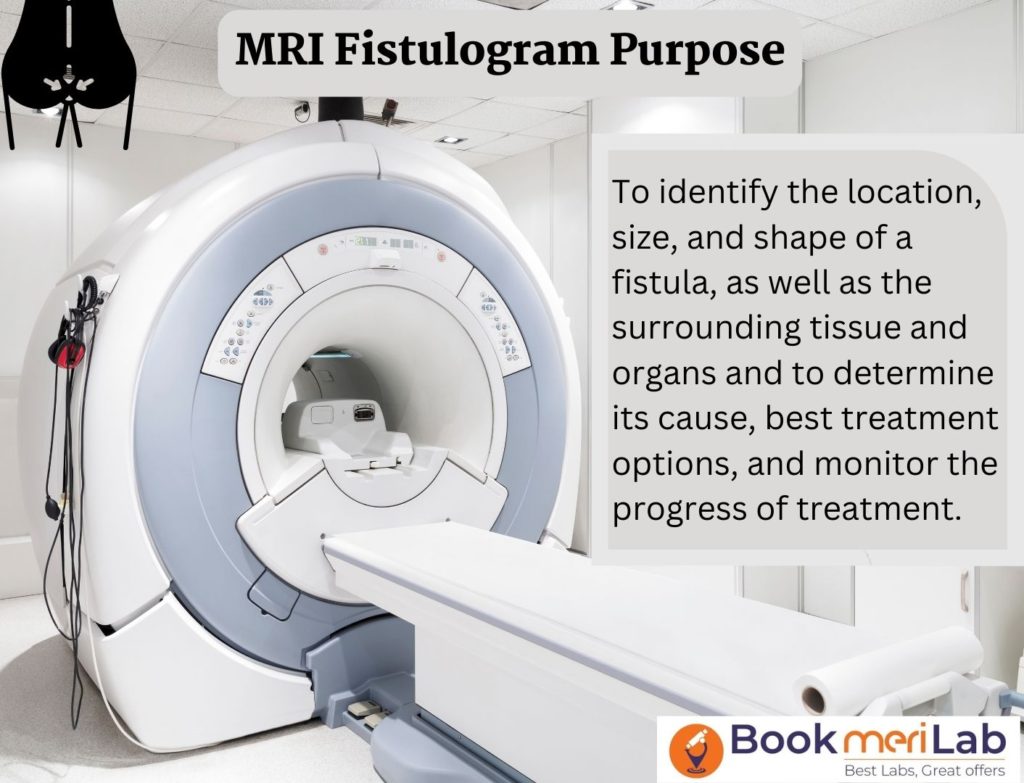
MRI Fistulogram is an imaging technique that uses MRI to help to identify the location, shape, and size of a fistula, as well as the surrounding tissues and organs. It is typically performed to diagnose and evaluate fistulas and plan for their treatment. Fistulas are abnormal connections between blood vessels, organs, or other structures in the body.
A fistulogram is a medical imaging test that uses contrast material and x-ray imaging to create detailed pictures of fistulas. MRI fistulogram is a specific type of fistulogram that uses MRI instead of x-ray imaging to create images of fistulas. It is often used to assess fistulas that are difficult to visualize with other imaging techniques, such as deep within the body or having complex anatomy. The price of an MRI Fistulogram varies between Rs 4000 and Rs 10000 on average.
In simple terms, an MRI Fistulogram is an exact and safe imaging procedure by which a radiologist examines fistulas in precise detail. It clearly shows the fistula’s course, size, and any hidden branches with respect to neighboring organs and tissues. Hence, the treatment or surgery can be accurately planned or there is a reduction in the chance of incomplete treatment or recurrence. This is a non-invasive, painless procedure that involves no harmful radiation and can be repeated as the situation demands. Generally, patients find this test quite comfortable, and the reliability of the results is very high. If you choose to go to a very credible diagnostic center, they would certainly deliver accurate imaging with expert interpretation delivered on a timely basis so that physicians can build upon this knowledge to institute definitive treatment for patients with difficult or relatively concealed fistulas.
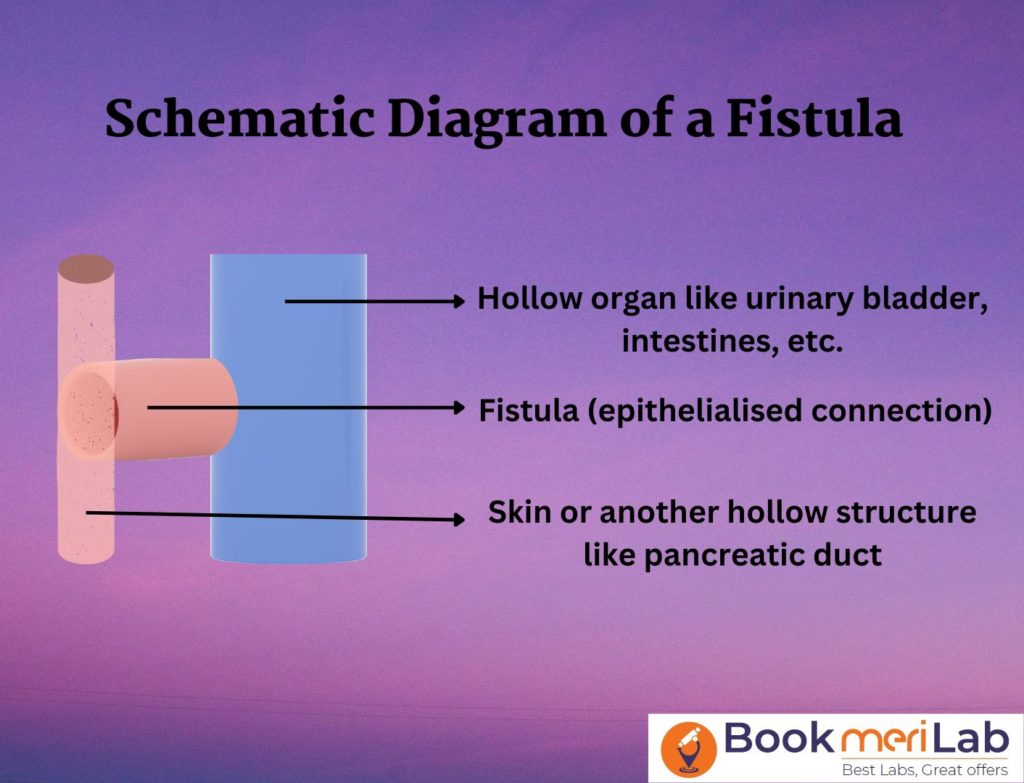
A fistula is an abnormal connection between two hollow spaces (technically, two epithelialized surfaces), such as blood vessels, intestines, or other hollow organs.
Enteroenteral fistula is a communication occurring between two parts of the intestine.
Enterocutaneous Fistula is a communication occurring between the small intestine and the skin.
A perianal fistula is a tunnel-like structure that forms in the tissue around the anus. This type of fistula is typically the result of an infection or inflammation of the perianal area.
A rectovaginal fistula is a communication between the rectum and vagina in females. Similarly, anovaginal fistula is a communication between the anus and the vagina. They occur due to radiation therapy, inflammatory bowel disease, or surgical trauma.
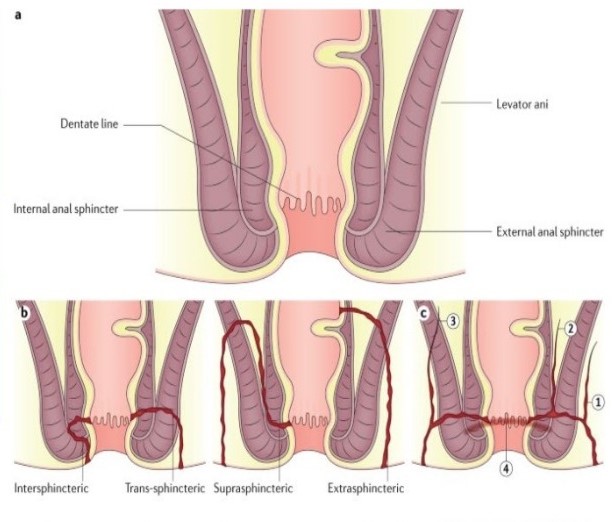
An anal fistula forms a small tunnel between the end of the bowel and the skin near the anus. It is a common complication of anal abscesses and can cause symptoms such as pain, swelling, and discharge. Treatment typically involves surgical removal of the fistula. According to Park’s classification, anal fistulas can further be of the following types-
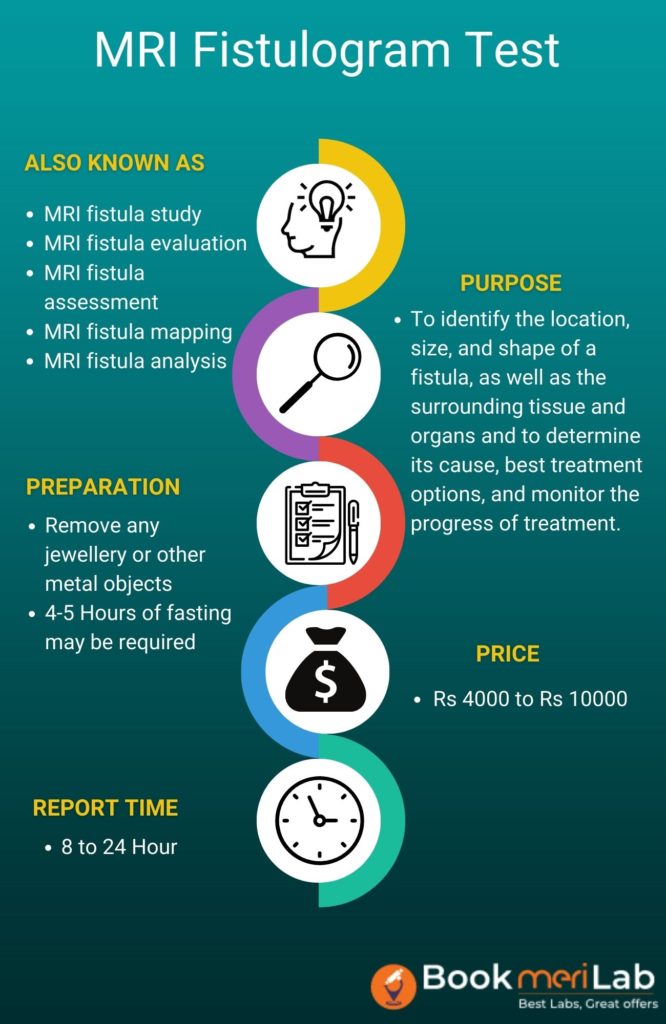
| Also Known As | MRI fistula study, MRI fistula evaluation, MRI fistula assessment, MRI fistula mapping, MRI fistula analysis |
| Purpose | To identify the location, size, and shape of a fistula, as well as the surrounding tissue and organs and determine its cause, best treatment options, and monitor the treatment progress. |
| Preparation | Remove any metallic object on your body like hair clips, clothes with metallic hooks or buttons, watch, etc. Inform your doctor about any metallic implant in your body, including pacemakers and the medications you are taking. |
| Fasting | 4-6 hours of fasting may be required. |
| Machine Used | MRI Machine |
| Reporting Time | 8 to 24 Hrs. |
| Cost | Rs. 4000 to Rs. 10000 |
Due to its specialised nature, MRI Fistulogram is available only at a few MRI scan centres. Due to its specialised nature, limited availability and requirement of an experienced doctor, it is a usually expensive test. However, the actual cost would depend on the MRI centre, city, machine and Doctor.
This section provides prices of MRI fistulogram in various diagnostic centers in India:
| Diagnostic Centres | Prices |
|---|---|
| Janta X-Ray Clinic | Rs 3249 |
| Mahajan Imaging | Rs 10200 – Rs 10800 |
| Aarthi Scans | Rs 4050 |
| Pulse Imaging | Rs 5250 |
| Shree Krishna Diagnostics | Rs 5600 |
| Vijaya Diagnostic Centre | Rs 7000 |
| NM Medical | Rs 7650 |
This section provides the price range of MRI fistulogram across major cities in India:
| Cities | Price Range |
|---|---|
| MRI Fistulogram Price in Delhi | Rs 3000 – Rs 10,800 |
| MRI Fistulogram Price in Gurgaon | Rs 4050 – Rs 10800 |
| MRI Fistulogram Price in Noida | Rs 6000 – Rs 8000 |
| MRI Fistulogram Price in Mumbai | Rs 3000 – Rs 7650 |
| MRI Fistulogram Price in Bangalore | Rs 4050 – Rs 8000 |
| MRI Fistulogram Price in Kolkata | Rs 4050 – Rs 6650 |
| MRI Fistulogram Price in Chennai | Rs 4050 – Rs 4500 |
The doctor will look for signs of incontinence and tissue damage in the affected area. The patient may also be asked to undergo a urine or stool test to check for abnormalities if a fistula is suspected in the reproductive, urinary, or gastrointestinal system. If the diagnosis is confirmed, the patient will be referred to a specialist for treatment.
Some potential benefits of an MRI fistulogram include the following:
Before an MRI Fistulogram, the patient will typically be asked to do the following:
Give a detailed history- The patient should also inform their doctor of any medications they are taking, allergies they have, and any previous reactions to contrast material.
Remove any metal objects: The patient should remove any metal objects, such as jewellery, watches, or hair clips, before the procedure. These objects can interfere with the MRI machine and cause damage to the patient or the machine.
Wear loose, comfortable clothing: The patient should wear loose, comfortable clothing to the procedure. They will be asked to wear a hospital gown during the actual imaging.
Avoid eating or drinking: The patient may be asked not to eat or drink anything for a certain period of time before the procedure. This is because the contrast material used in the MRI Fistulogram can cause nausea or vomiting if the patient’s stomach is full.
It is important to follow the instructions provided by the doctor or technologist to ensure a safe and successful MRI Fistulogram.
The procedure for an MRI fistulogram typically involves the following steps:
Blood tests to test the functioning of kidneys (KFT) are performed before the test if contrast media is to be used since most contrast dyes are excreted through the kidneys and may affect them.
Inserting an IV line: An intravenous (IV) line will be inserted into a vein in the patient’s arm or hand. This line will be used to inject contrast material, which helps improve the fistulas’ visibility in the images.
Lying on the MRI machine: The patient will then lie down on a table that can be moved into the MRI machine. The table will slide into the machine, which is a large, tube-shaped machine that produces a strong magnetic field.
Imaging: During the imaging, the patient will be asked to remain still and may be given headphones to wear to block out the loud noises made by the MRI machine. The radiologist or technologist will control the imaging from a separate room, using a computer to take the images. The contrast material will be injected through the IV line, and the images will be taken as it flows through the fistulas. After the imaging is complete, the IV line is removed, and the patient is allowed to rest for a few minutes before being discharged.
The entire procedure usually takes about 30-60 minutes. It is painless and does not involve any radiation, making it a safe and effective option for imaging fistulas.
After the procedure, the patient will be monitored for any reactions to the contrast material, and the IV line will be removed. A few patients may experience some mild side effects such as dizziness or a warm sensation due to the contrast material, but these should resolve quickly. The patient can then go home and resume their normal activities unless instructed otherwise by their doctor. The doctor will discuss the results of the fistulogram with the patient and provide any necessary follow-up care.
MRI Fistulograms are considered a safe test to closely examine fistulas. These tests present clear pictures of the fistula and nearby areas that allow the physician to observe the exact location, size, and hidden passages. No pain is involved in this test, there is no surgery, and it is safe and comfortable for patients.
There are some benefits of MRI Fistulogram:
Although MRI Fistulograms are generally safe and well-tolerated, patients should be aware of some potential risks and side effects. These include the following:
Discomfort during the procedure: The MRI machine can be loud, and the patient may feel confined or claustrophobic inside the narrow tube. The patient may also experience discomfort from lying still for an extended period of time.
Risk of allergic reactions to contrast material: The contrast material used in the MRI Fistulogram can cause allergic reactions in some patients. Symptoms of an allergic reaction may include rash, hives, itching, swelling, difficulty breathing, and chest pain.
Risk of kidney damage: In rare cases, the contrast material used in an MRI Fistulogram can cause kidney damage, particularly in patients with pre-existing kidney disease. Symptoms of kidney damage may include decreased urine output, swelling in the legs and ankles, and fatigue.
The resulting images can be used to evaluate the fistula’s size, shape, and location, as well as the presence of any other abnormalities or blockages in the surrounding tissues or vessels. The interpretation of a fistulogram will depend on the specific findings seen in the images. Some possible findings that may be noted on a fistulogram include:
Here is the sample report for MRI Fistula:-
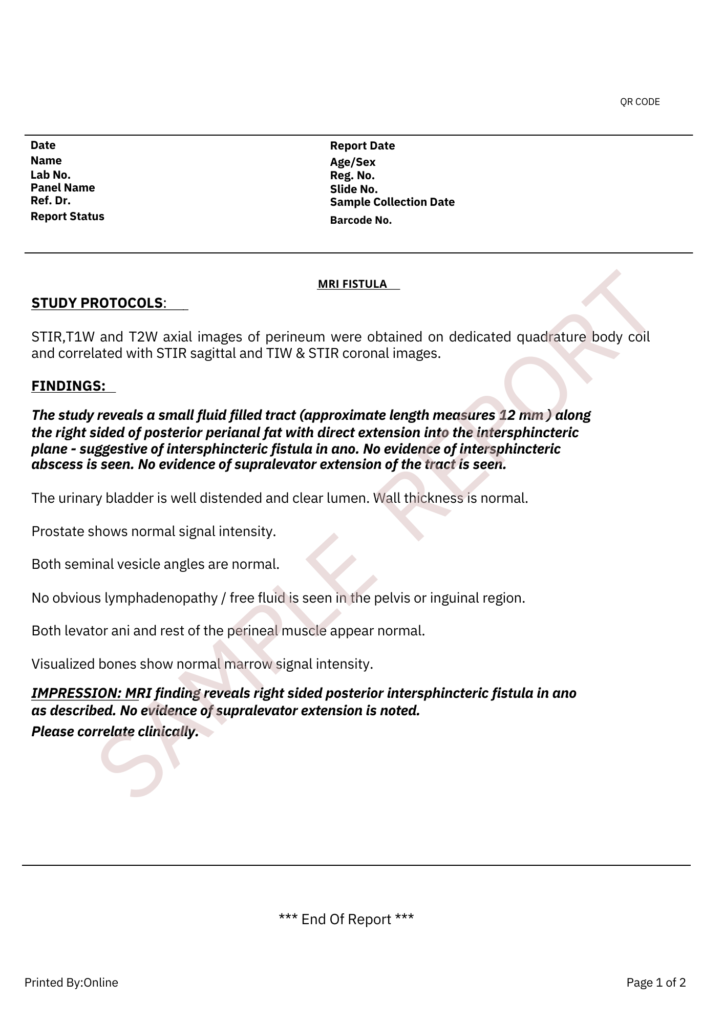
In conclusion, an MRI Fistulogram is a valuable tool for diagnosing and evaluating fistulas and for planning their treatment. It is important to note that an MRI Fistulogram is just one tool that may be used to evaluate a fistula. Other tests, such as an angiogram or a CT scan, may also be used to provide additional information about the fistula and its surrounding structures. Discussing the results of a fistulogram with a healthcare provider is important, as they can provide more detailed information about the specific findings and their potential implications for your health.
An MRI Fistulogram is a safe and non-invasive tool in revealing the understanding of fistulae in all of their size, course, and connection with adjoining tissues. It is particularly useful for complex and deep-seated fistulae that are very difficult to assess by any other method. The detailed images aid the doctor in planning treatment more effectively, be it through surgery or medical interventions. While the procedure remains very comfortable and does away with harmful radiation, it is imperative that patients adhere to any preparation instructions given by their doctor. Selecting an accredited diagnostic centre guarantees correct imaging and reporting at the right time, the cornerstone to making informed treatment decisions and, in the end, to safe and effective management of fistulas.
An MRI fistulogram is a medical imaging test that uses magnetic resonance imaging (MRI) to visualize and assess the anatomy of a fistula. A fistula is an abnormal connection between two body tissues or organs, usually between an artery and a vein. An MRI fistulogram is typically used to diagnose or monitor the treatment of arteriovenous fistulas (AVFs), which are abnormal connections between an artery and vein in the body.
An MRI fistulogram is performed by placing the patient on an MRI machine and obtaining a series of images of the fistula using a magnetic resonance angiogram (MRA). During the MRA, the patient will be asked to lie still on the examination table while the MRI machine captures images of the fistula. The patient may be given a contrast agent to help improve the visibility of the fistula on the MRI images.
An MRI fistulogram is generally not painful. The MRI machine produces a strong magnetic field and radio waves, which are used to create images of the inside of the body. The patient may feel a slight sensation of pressure or warmth during the procedure, but this is typically not painful.
An MRI fistulogram typically takes 30-60 minutes to complete. The length of the procedure may vary depending on the patient’s specific needs and the complexity of the fistula being examined. An MRI fistulogram typically takes 30-60 minutes to complete. The length of the procedure may vary depending on the patient’s specific needs and the complexity of the fistula being examined.
An MRI fistulogram is generally considered a safe and noninvasive procedure. However, some patients may experience a reaction to the contrast agent used during the procedure. Symptoms of a reaction may include nausea, vomiting, hives, or difficulty breathing. These reactions are usually mild and can be treated with medications. More serious reactions may occur in rare cases, so it is important to inform the healthcare team if you have had any previous reactions to contrast agents.
An MRI fistulogram in India usually costs between ₹4,000 and ₹10,000. The cost depends on the hospital, the city, and whether a special dye is used.
After the scan, a radiologist examines the images and prepares a report. Your doctor will review it and suggest treatment, surgery, or additional tests if necessary.
This scan is for people with fistulas near the anus or in soft tissues. It shows the exact path of the fistula before treatment or surgery.
Most of the time, you don’t need to fast. You can eat and drink normally unless your doctor tells you otherwise.

Dr Garima Saroj is a dentist from Manipal college of dental sciences. She has previously worked at ESIC dental college and hospital Delhi and Dentecare multispecialty dental clinic Gurugram. She has a passion for writing for patient education and awareness.
A Discount Providing Platform on all Diagnostic Services at your nearest Labs. 100's of Certified Labs, Assured Quality & Great Discounts.