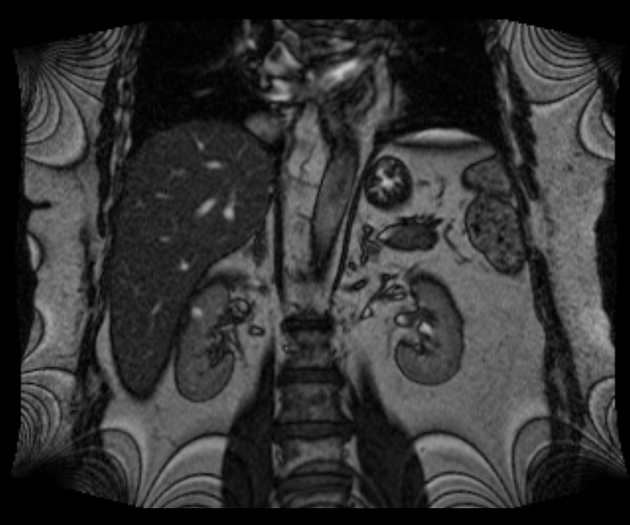
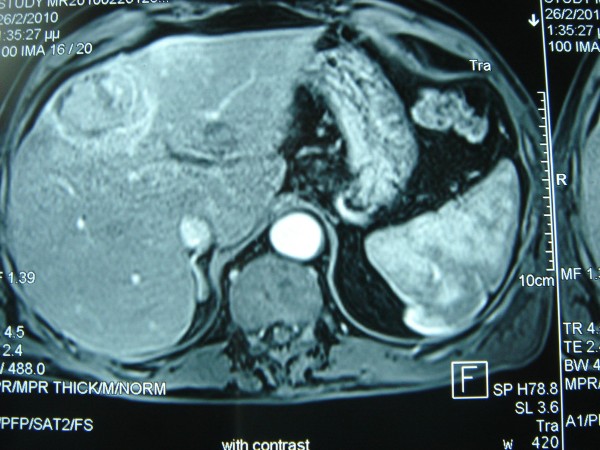
MRI abdomen or pelvis is a Magnetic resonance imaging of the abdominal and pelvis area of the body. It produces detailed pictures of abdominal organs like the Liver, Gall bladder, Pancreas, Stomach, Intestines, Kidneys, and Reproductive organs. This test can help in the diagnosis of Abnormal growths, Vascular problems, cirrhosis, Cancer, Hydronephrosis, etc.
It is a non-invasive imaging technique that uses a magnetic field, radio waves, and a computer to visualize and create detailed images of the internal structures of the abdomen. MRI stands for Magnetic resonance imaging. It is safer than X-rays, and CT scans as it does not use ionizing radiation (x-rays). MRI also provides a clearer image of the soft tissues comparatively. MRI Abdomen price ranges from Rs 4500 to Rs 14400.

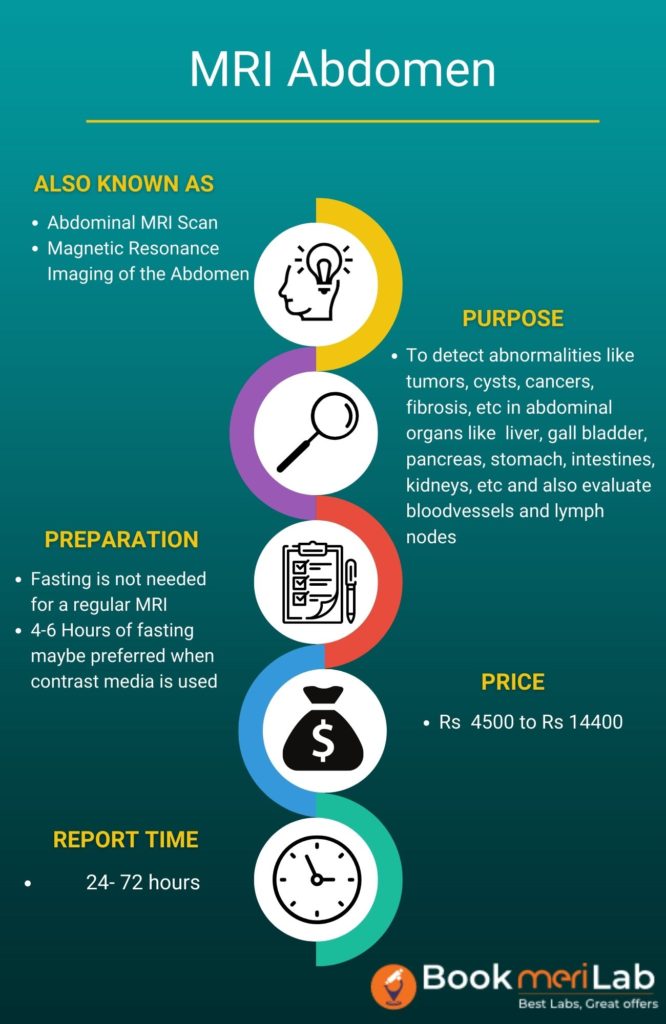
| Also Known As | Abdominal MRI, MRI of Abdomen and pelvis, CEMRI Abdomen, MRI Whole abdomen |
| Purpose | To distinguish normal, healthy tissue from diseased tissue in the abdomen and hence detect abnormalities in organs like the liver, gall bladder, pancreas, stomach, intestines, kidneys, reproductive organs, etc. |
| Preparation | 4-6 Hours of fasting is required |
| Fasting | Normal MRI: Yes Contrast MRI: Yes |
| Machine Used | MRI machine (of varying strengths like (0.5T,1.5T, 3T) |
| Reporting Time | 8 to 24 Hrs. |
| Cost | Rs. 4500 to Rs. 14400 |
MRI Abdomen
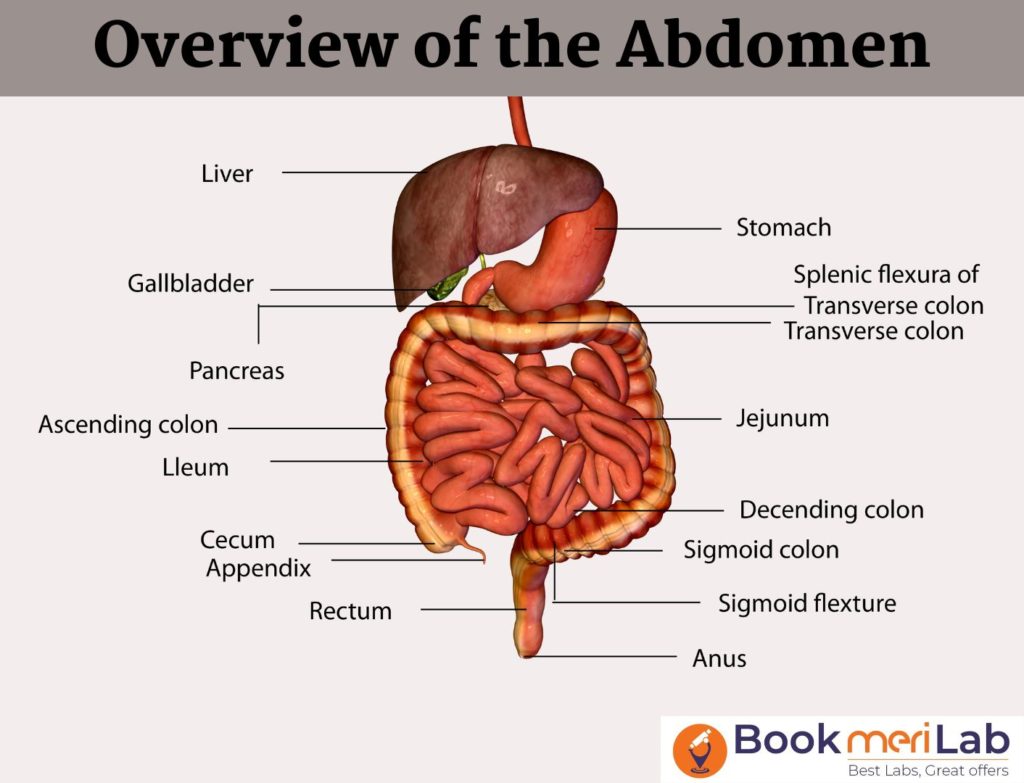
The abdomen is the body region between the thorax (chest) and the pelvis. It can further be divided into the upper and lower abdomen.
MRI Upper Abdomen includes Spleen, pancreas, gallbladder, liver, stomach, and small intestines.
MRI Lower Abdomen includes the intestines, ureter, urinary bladder, female reproductive organs (uterus, ovaries, fallopian tube), and prostate in males. There is a lot of overlapping in the pelvis and lower abdomen organs.
MRI Pelvis
Detailed Article on MRI Pelvis
It helps assess organs enclosed in the hip bone (pelvic girdle) like the urinary bladder and the reproductive organs such as the uterus and ovaries in females and the prostate gland in males. A pelvic MRI can be used to help visualize and stage cervical, uterine, bladder, rectal, prostate, and testicular cancers, as well as diagnose pelvic abscesses.
If a doctor wants a complete scan, she often recommends an MRI of the abdomen and pelvis region.
This section provides the list of MRIs for the whole abdomen (Abdomen and pelvis) in various diagnostic centers and cities.
| Name of Lab | Test Price |
|---|---|
| Aarthi Scan | Rs 4500 – Rs 14400 ( City-based ) |
| Mahajan Imaging | Rs 14400 |
| City X-Ray | Rs 11200 |
| Shree Krishna Diagnostics | Rs 6650 |
| Pulse Imaging | Rs 9100 |
| Vijay Diagnostic | Rs 11000 (City-based) |
The MRI Abdomen cost depends upon the one recommended by your healthcare professional. The cost varies depending on the lab and the city.
| City | Test Price |
|---|---|
| MRI Abdomen Price in Delhi | Rs 4500 to Rs 14400 |
| MRI Abdomen Price in Mumbai | Rs 4500 to Rs 9100 |
| MRI Abdomen Test Price in Bangalore | Rs 4500 |
| MRI Abdomen Test Price in Hyderabad | Rs 4500 to Rs 8500 |
| MRI Abdomen Test Price in Gurgaon | Rs 4500 to Rs 14400 |
| MRI Abdomen Test Price in Chennai | Rs 4500 to Rs 4500 |
| MRI Abdomen Test Price in Kolkata | Rs 4050 to Rs 5090 |
Persistent symptoms in the abdomen like
You may not need to fast before the scan. However, in the case of an MRI Abdomen with contrast, you should fast for 4-6 hours before the test and carry your latest creatinine and urea blood test reports.
The MRI Abdomen scan can be performed on an outpatient (OPD) or inpatient (IPD) basis.
An MRI of the abdomen takes between 30-60 minutes, depending upon the information needed for your scan that is requested by your doctor.
MRI is a safe procedure if followed under appropriate guidelines. Some of the associated risks are –
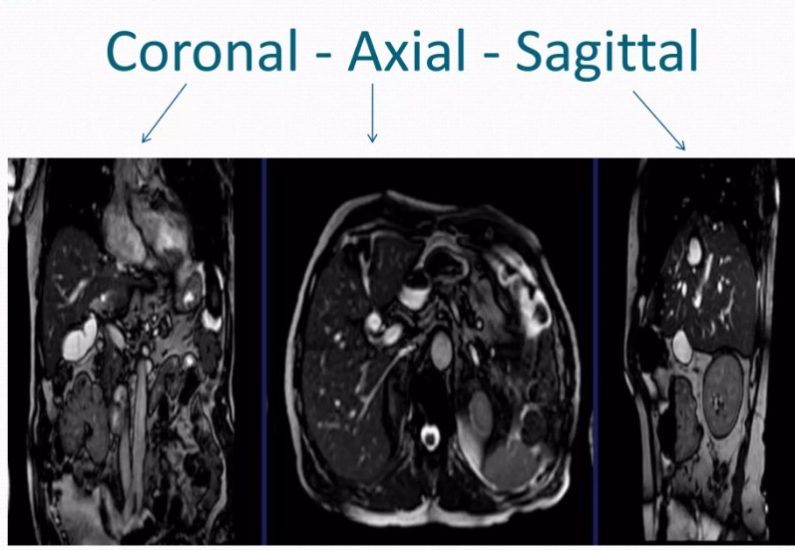
MRI images may be obtained in coronal, axial and sagittal planes.
The results are reported as normal when the anatomic structures, function, soft tissue density, and biochemical constituents of body tissues, including blood flow/rate, all appear within normal limits. For an abdominal MRI, the organs of consideration are liver, gallbladder, spleen, pancreas, kidneys, adrenals, stomach, and bowel loops.
Any abnormality in the anatomy of soft tissues in the abdomen is seen on the MRI as an abnormal or exaggerated signal.
An abnormal result may be due to:
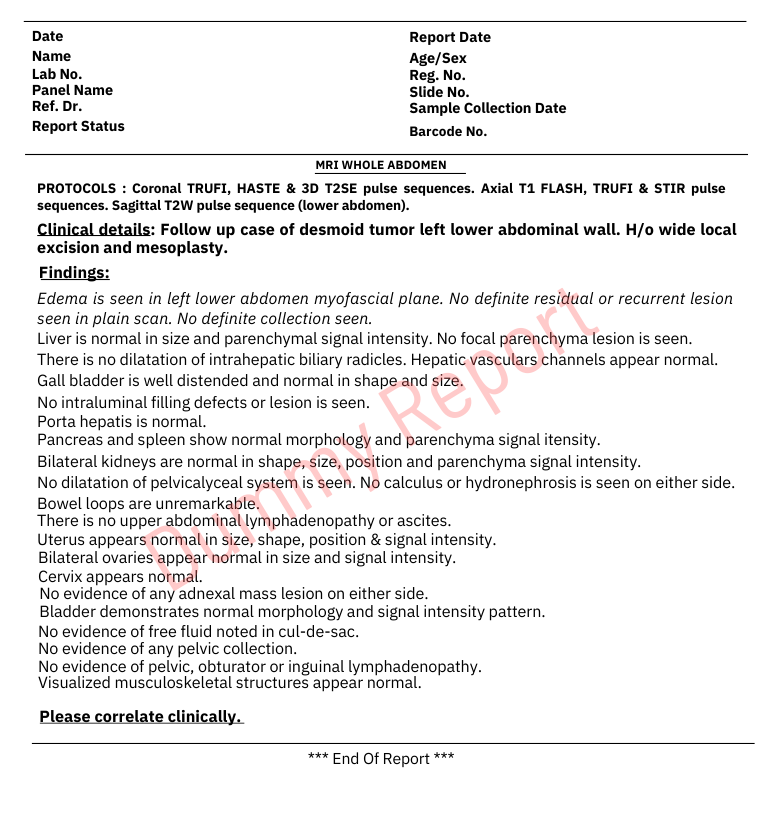
Here is the sample report for the MRI of the whole abdomen-
Each modality has its own benefits and risks. Often a mix of all modalities may be used.
| USG Abdomen | CT Abdomen | MRI Abdomen |
|---|---|---|
| Ultrasound does not pose any risk of radiation like in the CT scan. | A CT scan of the Abdomen uses ionizing radiation and is hence contraindicated in pregnancy. It is otherwise the preferred imaging technique for diagnosing the cause of persistent abdominal pains. | MRI is superior in most cases in which differentiation of soft tissues is necessary. |
| It is a simple, quick, and effective method to visualize the abdomen for preliminary checkups in case of abdominal pain. | A CT with contrast provides even clearer images of the underlying structures like any calcifications in kidneys, etc. Since it is quicker, it is preferred in trauma and emergency cases. | It can view organs that may be obscured by bone or foreign bodies on conventional x-rays or CT scans. |
| It is safe in pregnancy and is the preferred technique to monitor the growing fetus. | CT may be a better technique to view the function of the small and large bowel (intestines). | It is capable of showing the tissues from multiple viewpoints and is a noninvasive way to evaluate blood flow. |
Some studies suggest that ultrasound provides the most accurate diagnoses in investigating gallbladder disease; MRI provides the most accurate diagnoses in investigating hepatic, adrenal, and pancreatic disease; and either CT or MRI may be the most appropriate first imaging study for the detection of renal disease.
In conclusion, MRI Abdomen Scan is an important tool to diagnose various abdominal conditions and to detect any abnormalities in the abdomen. It helps doctors to diagnose and treat various abdominal conditions, such as tumors, infections, and diseases. It also helps to monitor the progress of treatment. Before getting an MRI Abdomen Scan, discussing the procedure and its risks with your doctor is important.
When it comes to choosing a diagnostic centre for an MRI Abdomen Scan, it is important to choose the advanced machine and experience radiologists so that accurate results are produced. In addition, patients should inquire how the MRI will be performed and whether contrast is required. Depending on requirements, contrast may affect the preparation and the total cost. By comparing MRI Abdomen prices from various centres, patients can determine the best affordable options without sacrificing quality care. Given that the scan is non-invasive and does not contain harmful radiation, it is one of the safest imaging options for patients who may need to undergo repeated imaging. Always listen to your doctor’s advice before any imaging and follow-up instructions for the best outcome. MRI Abdomen can play an important role in maintaining long-term overall health if completed in a timely manner with proper directives.
A tri-phasic MRI scan is a scan that shows three different stages of dye uptake in the body. The first phase will be before the injection of the dye; the second stage will be when the dye is in the arteries (roughly 20 seconds after injection), and the third phase will be when the dye has reached the veins. It helps to view the detailed images of abdominal structures and their blood supply.
MRCP stands for Magnetic Resonance Cholangiopancreatography. It is a specialized type of MRI that helps visualize and diagnose diseases of the hepatobiliary and pancreatic systems. The structures included are -the liver, gallbladder, bile ducts, pancreas, and pancreatic duct.
MRI Abdomen Enterography or MRE, is a specialized type of MRI that also uses contrast media along with a strong magnetic field to view the detailed images of the small intestine. The contrast helps light up the small intestine, thus increasing clarity. It helps diagnose diseases of the small intestine.
Doctors use MRI to help diagnose or monitor treatment for conditions such as tumors of the abdomen or pelvis; diseases of the liver, such as cirrhosis, and abnormalities of the bile ducts and pancreas; inflammatory bowel diseases such as Crohn’s disease and ulcerative colitis
The test lasts about 30 to 60 minutes, but it may take longer.
Yes, you can usually drink water before an abdominal MRI. But if contrast dye is needed, the doctor may ask you not to eat for a few hours.
A whole abdomen MRI in India usually costs between ₹4,500 and ₹14,400. The price depends on the city, the lab, and if contrast dye is needed.
MRI is safe in pregnancy because it does not use harmful radiation. But doctors usually avoid it in the first three months unless it is really needed.
You will need to lie still inside the MRI machine. The test does not hurt, and after it is done, you can go back to your normal routine right away.
No, the scan does not hurt. You might hear loud tapping or buzzing sounds, but you will usually get earplugs or headphones to stay comfortable.

A Discount Providing Platform on all Diagnostic Services at your nearest Labs. 100's of Certified Labs, Assured Quality & Great Discounts.