
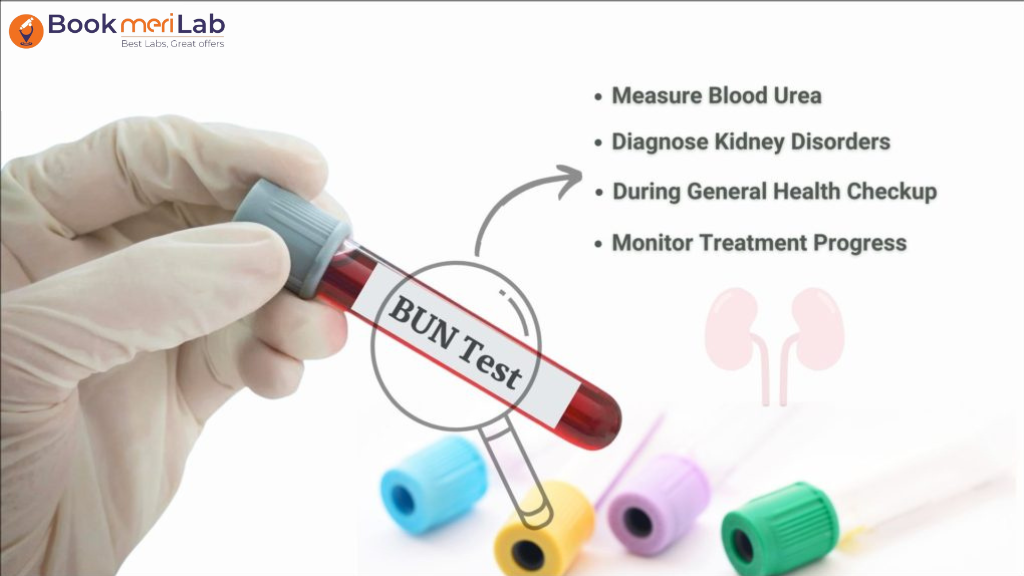
The Blood Urea Nitrogen (BUN Test), also called the Urea Test, measures the amount of urea nitrogen in your blood. It is a simple and essential test to check your kidney health. If you experience symptoms like swelling, changes in urination, or constant fatigue, your doctor may recommend this test. BUN test price usually ranges from Rs 100 to Rs 200. You can also avail in-home collection. It is also a common part of the kidney function test package, which costs slightly higher.
The BUN test measures the amount of urea nitrogen in your blood, which is a byproduct of protein metabolism in the liver. This waste is filtered out by your kidneys and excreted through urine. Abnormal levels of BUN may indicate kidney or liver dysfunction.
Your doctor may recommend the BUN test if you experience the following symptoms:
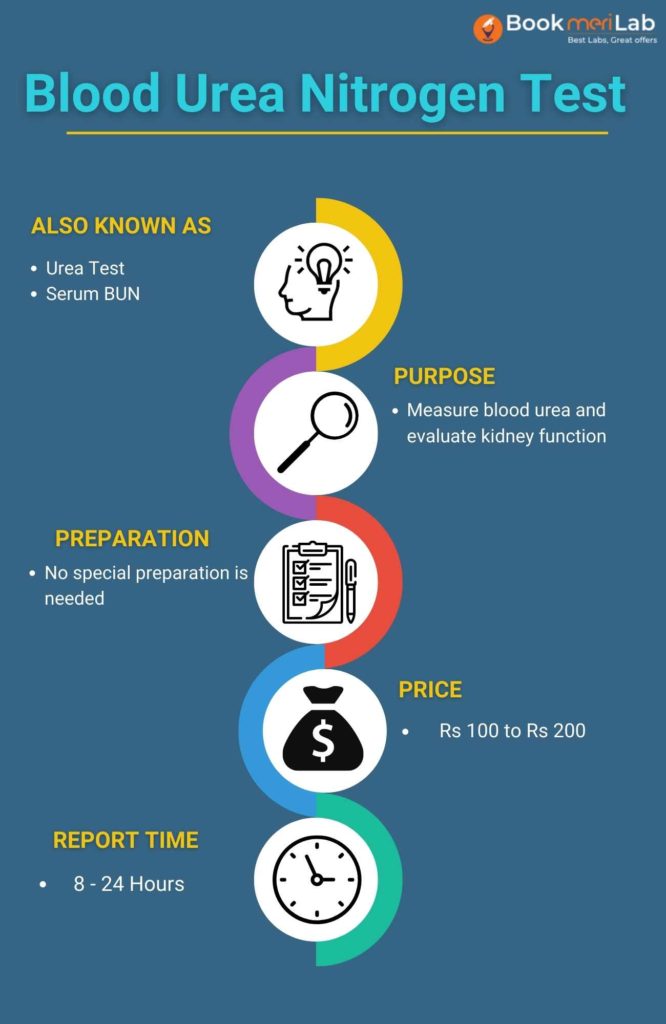
| Also known as | Serum BUN, Blood urea nitrogen, Urea Test |
| Purpose | Measure blood urea and evaluate kidney function |
| Preparation | Fasting is not needed. No special preparation |
| Cost | Rs 100 to Rs 200 |
| Reporting time | 8 to 24 hours |
BUN or Urea is comparatively an inexpensive test, and its price usually ranges from Rs 100 to Rs 200. However, the actual cost will depend on the diagnostic centre and city.
Doctors usually recommend BUN as part of the Kidney function test, which costs range from Rs 400 to Rs 700.
The table below lists the prices at popular diagnostic centres in India.
| Name of Lab | Test Price |
|---|---|
| Aarthi Scan | Rs 3285 – Rs 14400 ( City-based ) |
| Mahajan Imaging | Rs 14400 |
| City X-Ray | Rs 11200 |
| Shree Krishna Diagnostics | Rs 6650 |
| PULSE IMAGING | Rs 9100 |
| Janta X-Ray Clinic | Rs 8025 |
The BUN test cost depends upon the one recommended by your healthcare professional. The cost varies depending on the lab and the city.
| City | Test Price |
|---|---|
| MRI Abdomen Test Price in Delhi | Rs 3285 to Rs 14400 |
| MRI Abdomen Test Price in Mumbai | Rs 3285 to Rs 9100 |
| MRI Abdomen Test Price in Bangalore | Rs 3285 |
| MRI Abdomen Test Price in Hyderabad | Rs 3285 to Rs 8500 |
| MRI Abdomen Test Price in Gurgaon | Rs 3285 to Rs 14400 |
| MRI Abdomen Test Price in Chennai | Rs 3285 to Rs 4500 |
| MRI Abdomen Test Price in Kolkata | Rs 4050 to Rs 5090 |
To understand the importance of BUN in kidney function, let’s briefly understand the urea excretion cycle.
Your doctor may have advised this test for any of the following reasons
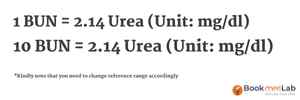
BUN (Blood urea nitrogen) and Urea test are the same; these terms are used interchangeably. You can calculate blood Urea levels from your BUN test report using the molecular weight of Urea and nitrogen. To state simply, Urea is 2.14 times BUN for an mg/dL unit.
No special preparation is needed. You may drink and eat normally before the test. Do inform your doctor if you are taking any medicines, both prescription and non-prescription, ayurvedic, etc.
Kindly note that a doctor usually recommends a BUN or Urea test and other tests like creatinine, LFT and KFT, which may require overnight fasting.
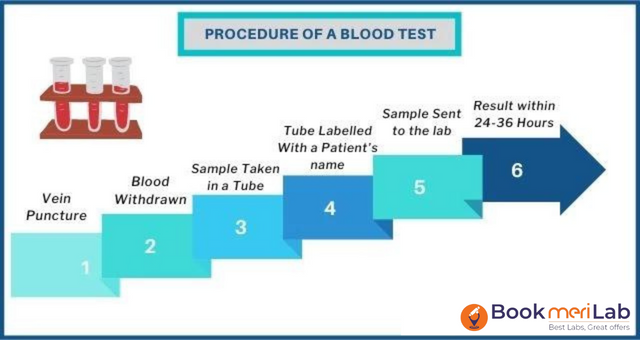
It is a fairly simple diagnostic blood test. A blood sample is taken from the vein in your arm or hand by the following steps-
The entire procedure takes only a few minutes.
It is a very simple and safe test. The risks involved are the same as that in any other blood test. These include-
Minor pain and bruising that might occur will resolve on their own in a very short time.
Test results are essential for the diagnosis of Kidney and Liver disorders. However, your results should be interpreted by a qualified doctor based on clinical findings.
The normal Blood Urea Nitrogen range is between 7 and 21 milligrams per decilitre (mg/dL). The range may vary among different laboratories.
| Test Name | Normal Range |
|---|---|
| BUN (Blood Urea Nitrogen) | 7-21 mg/dL |
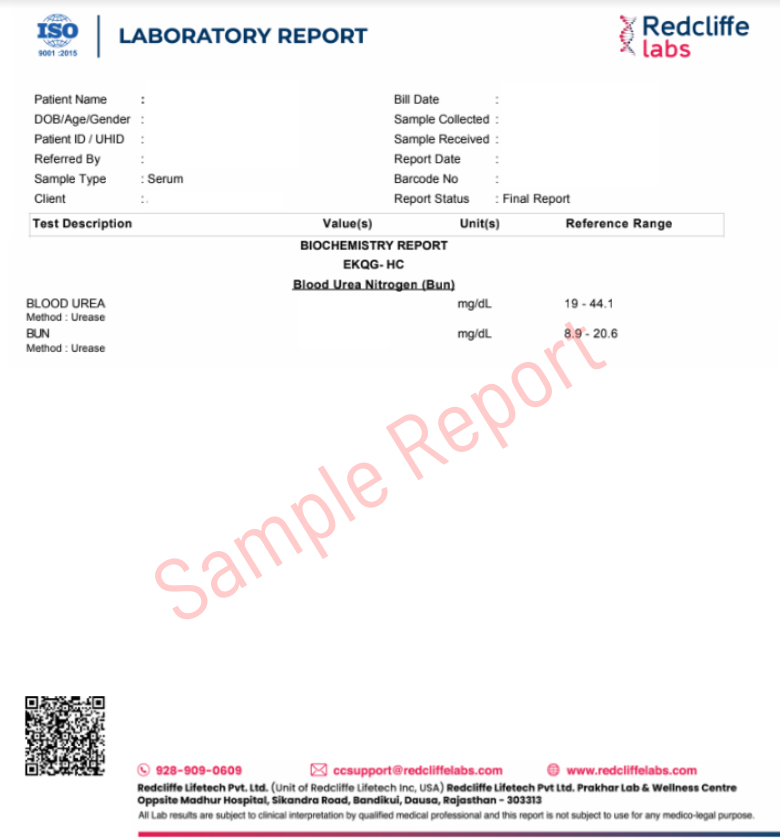
A higher or lower than normal level of urea (BUN) may indicate a problem in the kidney or liver.
Increased levels of BUN can be due to the following reasons
Decreased levels may be seen due to –
Since BUN levels may be elevated in conditions like dehydration, burns, or taking certain medications or even a high protein diet, it may not be a reliable indicator of kidney disease. Creatinine levels are also measured along with BUN for a definitive diagnosis.
Also, BUN values remain within the normal range until there is more than 50% of renal function loss. Within that range, however, doubling the values (e.g., BUN rising from 8 to 16 mg/dl) may mean a 50% fall in kidney function.
The BUN test plays a vital role in the detection of kidney diseases. It may be raised due to other factors as well. It is best to give a proper history of symptoms, diet, and medications being taken to your healthcare provider and discuss the reason for any abnormality in the BUN level with them.
Early detection and proper guidance are possible to manage and cure every disease.
Book your tests with us and stay updated on what is happening in your body!

No, fasting is not required before a BUN test. You can eat and drink normally, but inform your doctor about any medications you’re taking.
Yes, a BUN test helps detect kidney issues by measuring the level of waste products in the blood, which can indicate kidney dysfunction.
Yes, the BUN test is very safe. It’s a routine blood test with minimal risks, such as slight bruising or infection at the needle site.
The BUN test usually costs between Rs 100 to Rs 200, though the price may vary depending on the lab and city.
The BUN test measures blood urea nitrogen levels to assess kidney function and detect potential issues like kidney disease or dehydration.
Normal BUN levels typically range from 7-21 mg/dL. Age doesn’t significantly affect BUN levels, though factors like hydration and diet can impact results.
High BUN levels may cause symptoms like swelling in the hands and feet and fatigue. Other signs include nausea and changes in urination.
To reduce high BUN levels, stay hydrated, manage kidney health through a balanced diet, and avoid medications that stress the kidneys. Consult a doctor for proper treatment.
References
https://nchmd.org/health-library/articles/prc-20198841/
https://myhealth.ucsd.edu/Search/167,urea_nitrogen_serum
BUN Test
Dr Garima Saroj is a dentist from Manipal college of dental sciences. She has previously worked at ESIC dental college and hospital Delhi and Dentecare multispecialty dental clinic Gurugram. She has a passion for writing for patient education and awareness.
A Discount Providing Platform on all Diagnostic Services at your nearest Labs. 100's of Certified Labs, Assured Quality & Great Discounts.
