
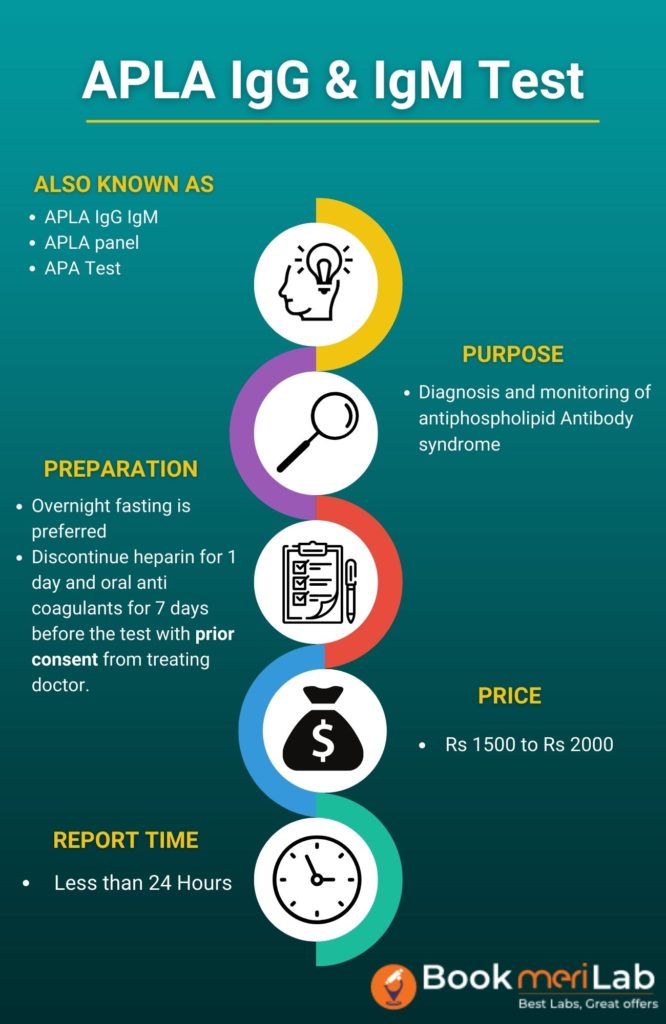
APLA test (antiphospholipid antibody) is a blood test to detect increased levels of autoantibodies IgG and IgM. It helps to diagnose antiphospholipid syndrome (APS). The APLA IgG and IgM combined Test Prices usually range from Rs 1500 to Rs 2000. The cost of the individual test is nearly half and varies between Rs 750 to Rs 1000. In most cities in India, in-home sample collection is available.
Antibodies are usually created by the immune system to fight infections. However, when the immune system mistakes the body’s own part for a harmful substance, it makes antibodies known as autoantibodies. Antiphospholipid antibodies are an example of autoantibodies that attacks the body’s phospholipids. Phospholipids are a type of lipid (fat) found in blood vessels.
| Also known as | APLA IgG IgM, APLA panel, APA Test |
| Purpose | Diagnosis and monitoring of antiphospholipid Antibody syndrome |
| Preparation | Overnight fasting is preferred. Discontinue heparin for 1 day and oral anti-coagulants for 7 days before the test with prior consent from the treating doctor. |
| Cost | Rs 1500 to Rs 2000 |
| Reporting time | <24 hours |
The APLA IgG and IgM Test Prices usually range from Rs 750 to Rs 1000 separately and the cost for the combined test is between Rs 1500 to Rs 2000. The cost of the APLA IgG and IgM test each will be nearly half of the combined prices. The actual price depends on the diagnostic centre and the city. Bookmerilab partners with more than 200 diagnostic centers across India. We provide a 10-50% discount on medical diagnostic tests.
The table below lists the prices in different centres. You can click on the ‘price’ in the respective column to get the list of diagnostic centres in your city with their price and discount.
| Name of the Lab | APLA IgG Test Price | APLA IgM Test Price | APLA IgG & IgM Test Combined Price |
|---|---|---|---|
| Redcliffe Labs | 880 | 800 | 1680 |
| Metropolis Healthcare | 900 | 900 | 1800 |
| SRL Diagnostics | 1000 | 1000 | 2000 |
| Dr Lal Path labs | 800 | 800 | 1600 |
The table below lists the prices in different cities. You can click on the ‘price’ in the respective column to get the list of diagnostic centers in your city with their price and discount.
| City | APLA IgG Test Price | APLA IgM Test Price | APLA IgG & IgM Test Combined Price |
|---|---|---|---|
| Delhi | 600-1400 | 600-1400 | Rs 1200 to Rs 2800 |
| Mumbai | 600-1000 | 600-1000 | Rs 1000 to Rs 1200 |
| Bangalore | 600-900 | 600-800 | Rs 1200 to Rs 1600 |
| Hyderabad | 600-1100 | 600-1100 | Rs 1200 to Rs 2200 |
| Gurgaon | 600-1000 | 600-1000 | Rs 1200 to Rs 2000 |
| Chennai | 600-900 | 600-800 | Rs 1200 to Rs 1600 |
| Kolkata | 600-900 | 600-800 | Rs 1000 to Rs 1200 |
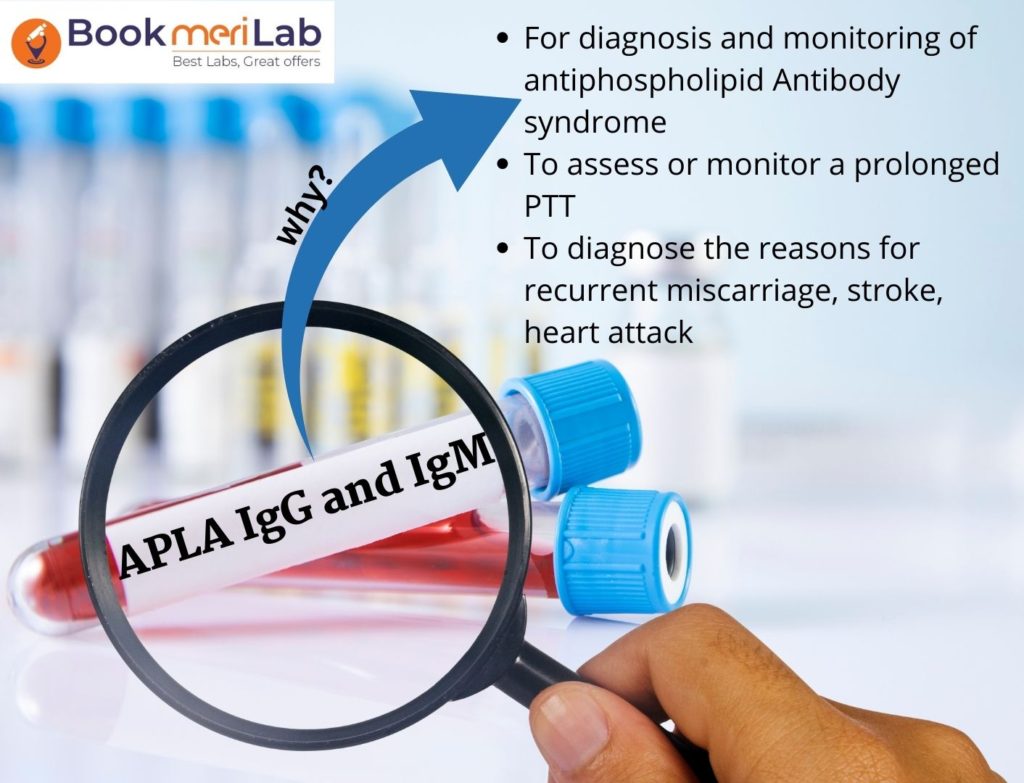
APLA IgG and IgM tests may be ordered by your doctor in the following cases.
Antiphospholipid antibodies are of various types but the three most widely measured ones are-
There are mainly two classes or isotopes of APLA antibodies,
Thus, the doctor often recommends an APLA profile test which includes
A detailed APLA profile test can also include
Do inform your doctor if you are taking any medicine both prescription and non-prescription, ayurvedic, etc. Your doctor may advise you to stop the ones that can affect the test results like antihypertensives ( drugs used for high BP). DO NOT stop any medication on your own.
During an APLA panel test, Overnight fasting is preferred. A duly filled Coagulation Requisition Form is mandatory. It is recommended that the patient discontinues Heparin for 1 day and Oral Anticoagulants for 7 days prior to sampling as these drugs may affect test results. Discontinuation should be with prior consent from the treating Physician.
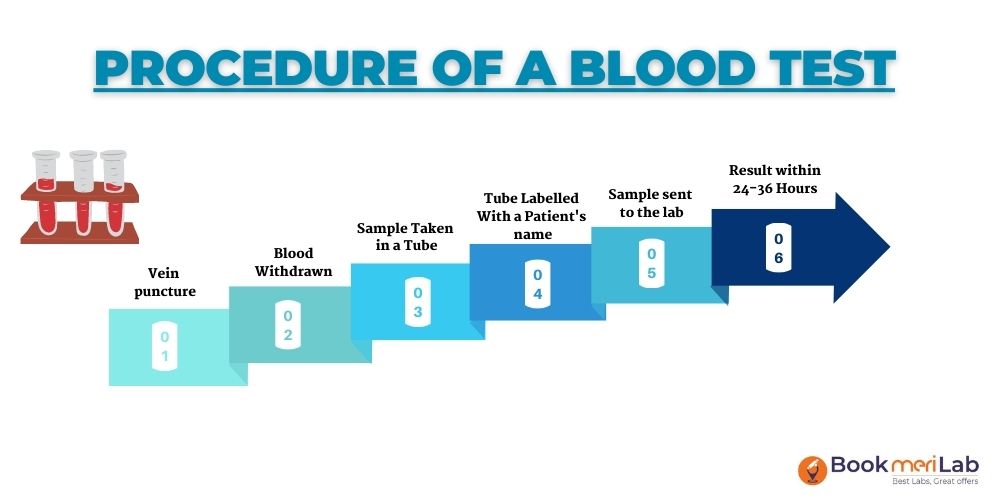
It is a fairly simple diagnostic blood test. A blood sample is taken from the vein in your arm or hand by the following steps-
The entire procedure takes only a few minutes.
It is a very simple and safe test. The risks involved are the same as that of any other blood test. These include-
Minor pain and bruising that might occur will resolve on their own in a very short time.
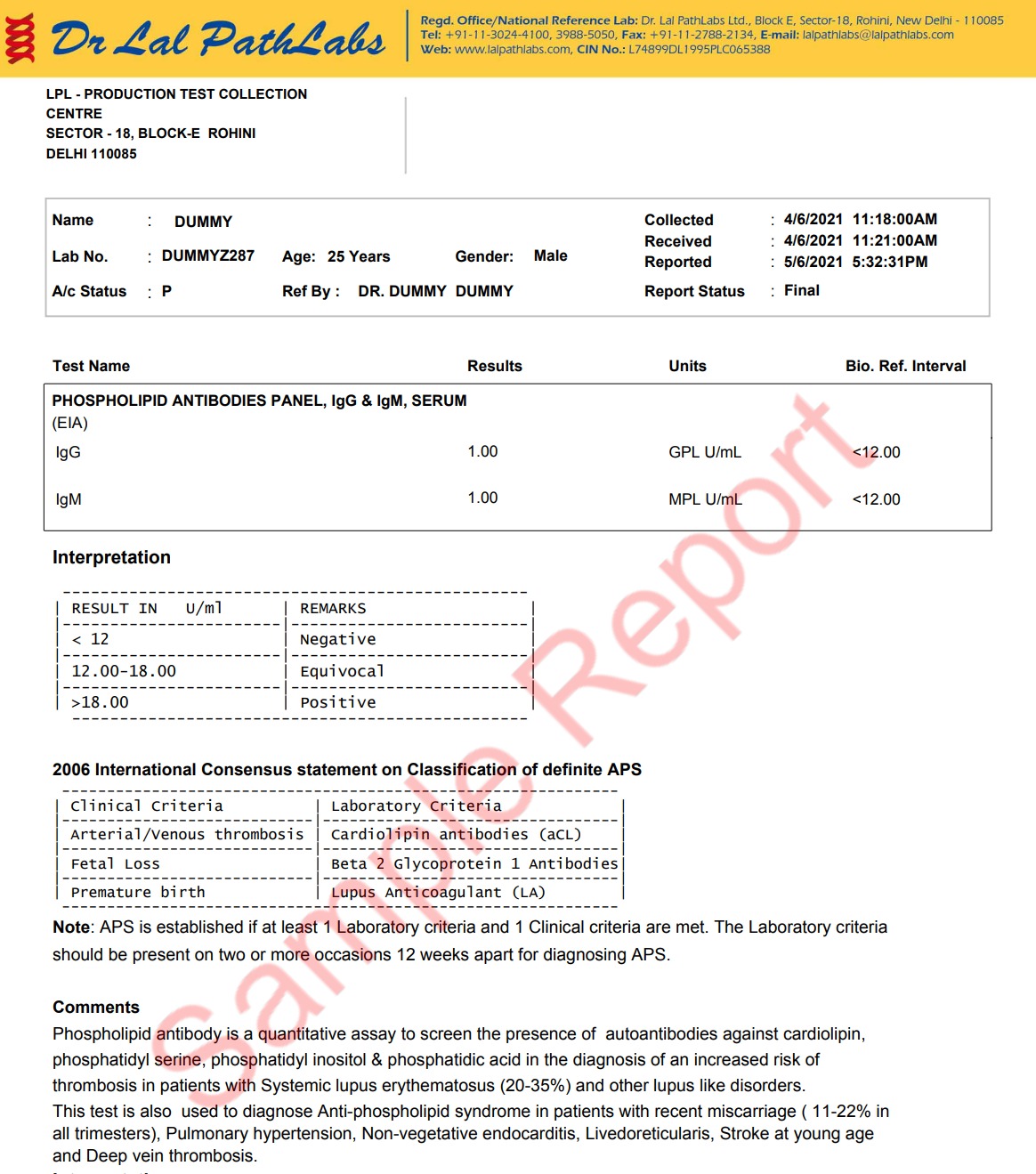
The following table represents the results and values of the APLA Test.
The normal range for both antiphospholipid antibodies IgG and IgM is less than 12 Units per milliliter.
| Parameter | Range | Unit |
|---|---|---|
| IgG | <12.00 | GPL/mL |
| IgM | <12.00 | MPL/mL |
| Result in U/mL | Remarks |
|---|---|
| <12 | Negative |
| 12.00-18.00 | Equivocal |
| >18 | Positive |
It means that you do not have these antibodies.
This may mean that the antibodies are present due to a recent health problem like a viral infection or medicine that you may have taken.
This may indicate a higher risk for blood clots. It may indicate the presence of autoimmune disorders like antiphospholipid antibody syndrome, SLE, etc. Higher levels in the case of an existing antiphospholipid syndrome (APS) may point to an increased risk of blood clotting. APLA syndrome can have clinical manifestations like
A diagnosis of Antiphospholipid Syndrome can only be made after 2 abnormal blood test results, with at least a 12-week gap between them. This is because harmless antiphospholipid antibodies can sometimes develop temporarily in the body due to an infection or side effects of medicines like Penicillin, phenytoin, etc. Also, tests done for syphilis use substances that have phospholipids and can cause a false positive APLA test if done at the same time.
Thus, once antiphospholipid antibodies are detected in a test, their presence needs to be confirmed by another test
The detection of a specific type and class of anti-phospholipid antibodies helps in determining the cause of the condition and managing it appropriately. These test results have to be interpreted after correlating with the clinical signs and symptoms. It is therefore essential for you to discuss them with your healthcare provider for a better understanding and course of action.
Exercise, meditate, breathe, and sleep well! We wish you a happy, healthy, and relaxed life!
APS is an autoimmune condition. This means the immune system, which usually protects the body from infection and illness, attacks healthy tissue by mistake. In APS, the immune system produces abnormal antibodies called antiphospholipid antibodies. These target proteins are attached to fat molecules (phospholipids), which makes the blood more likely to clot. It’s not known what causes the immune system to produce abnormal antibodies. As with other autoimmune conditions, genetic, hormonal, and environmental factors are thought to play a part.
Antiphospholipid syndrome is mostly treated with the help of anticoagulants such as warfarin.
Disclaimer: This is NOT medical advice but only for general understanding. Always take medicines as prescribed by your doctor ONLY.
A phospholipid is a type of lipid molecule with a phosphate group that forms a major part of the cell membrane(the outermost covering of a cell). Each Phospholipid consists of two fatty acids – one is the phosphate group and the other is the glycerol molecule. Phospholipids line themselves up in two parallel layers called Phospholipid bilayer and make up the cell membrane. The phospholipid is crucial to the cell’s ability to function.
Beta-2 glycoprotein 1 antibody tests are primarily used along with cardiolipin and lupus antibody to help diagnose:
-Antiphospholipid syndrome (APS)
-The cause of an unexplained blood clot (thrombotic episode)
-Reason for recurrent miscarriages in women
https://www.nhlbi.nih.gov/health/clotting-disorders
https://pubmed.ncbi.nlm.nih.gov/32543059?

APLA (IgG and IgM)
A Discount Providing Platform on all Diagnostic Services at your nearest Labs. 100's of Certified Labs, Assured Quality & Great Discounts.
