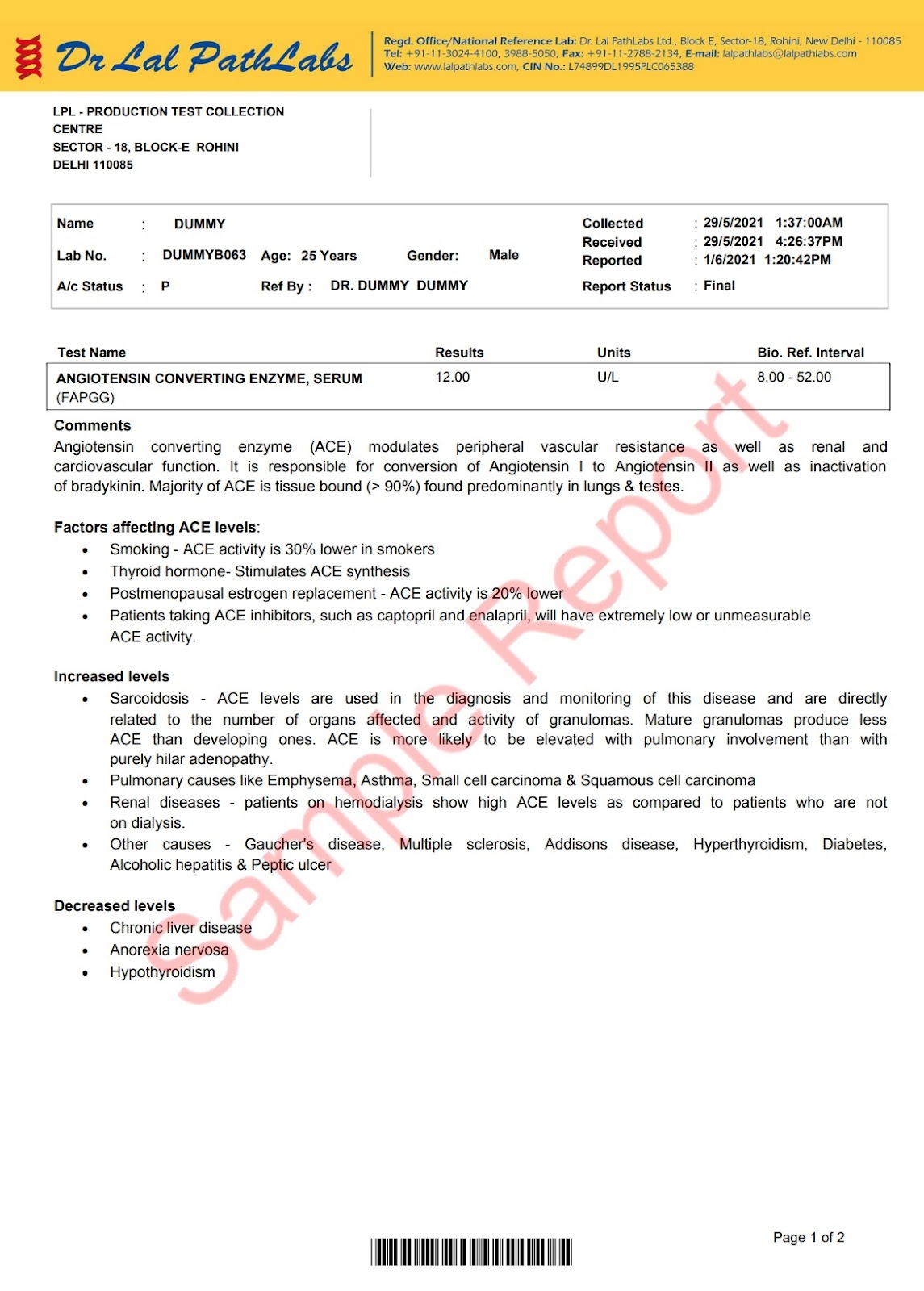
The ACE test measures how much angiotensin-converting enzyme is present in your blood. The test helps to diagnose and monitor a condition called sarcoidosis. Sarcoidosis is a systemic disorder (affecting the entire body) of unknown cause that often affects the lungs. It may also affect other body organs including the eyes, skin, lymph nodes, nerves, liver, spleen, and heart. The ACE Test Price usually ranges from Rs 900 to Rs 1200 and in-home sample collection may be availed.
ACE is an enzyme that helps to convert angiotensin I into angiotensin II. This angiotensin II helps increase blood pressure by causing the small blood vessels in the body to narrow down. Thus, it helps control blood pressure.
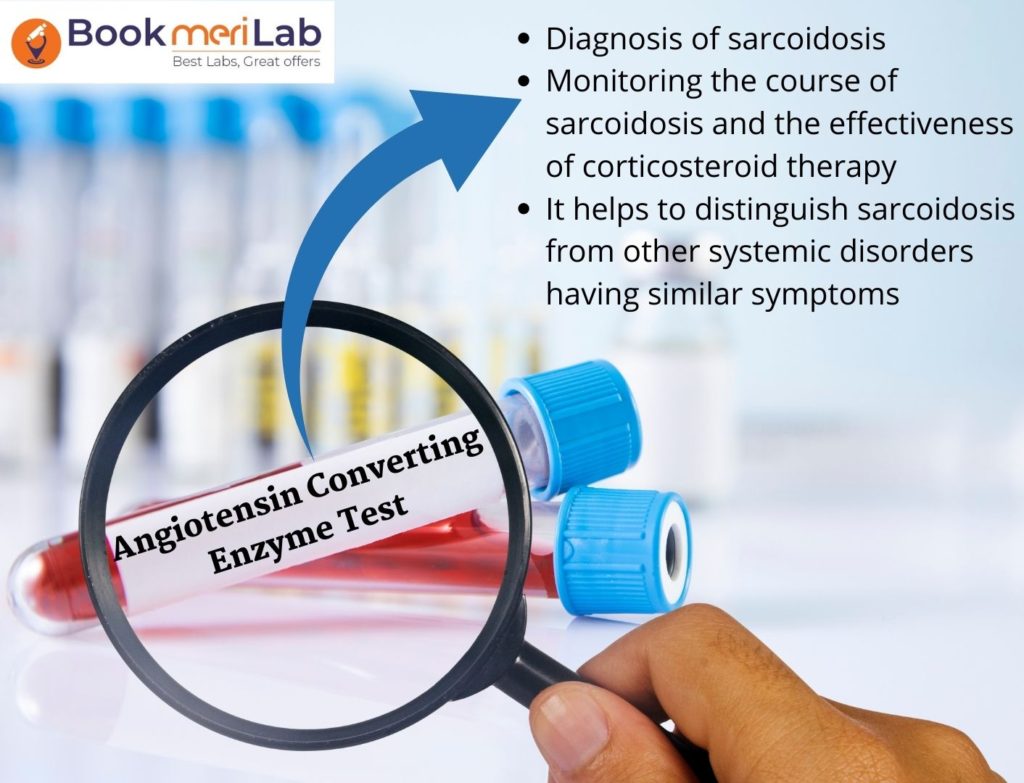
| Also Known As | Serum angiotensin-converting enzyme test, SACE Test |
| Purpose | Diagnosis and monitoring of sarcoidosis |
| Preparation | Overnight fasting is preferred |
| Fasting | Yes |
| Reporting Time | 8 to 24 Hrs. |
| Cost | Rs. 900 to Rs. 1200 |
The ACE Test Price usually ranges from Rs 900 to Rs 1200. The actual price depends on the diagnostic center and the city. Bookmerilab partners with more than 200 diagnostic centers across India. We provide a 10-50% discount on medical diagnostic tests.
The table below lists the ACE prices at a few popular diagnostic centers.
| Name of Lab | Test Price |
|---|---|
| Redcliffe Labs | Rs 1000 |
| Dr Lal Path labs | Rs 1000 |
| Metropolis Healthcare | Rs 1100 |
| SRL Diagnostics | Rs 1200 |
| Vijaya Diagnostics | Rs 1200 |
The table below lists the prices in different cities. You can click on the name of the city to get the list of diagnostic centres with their price and discount.
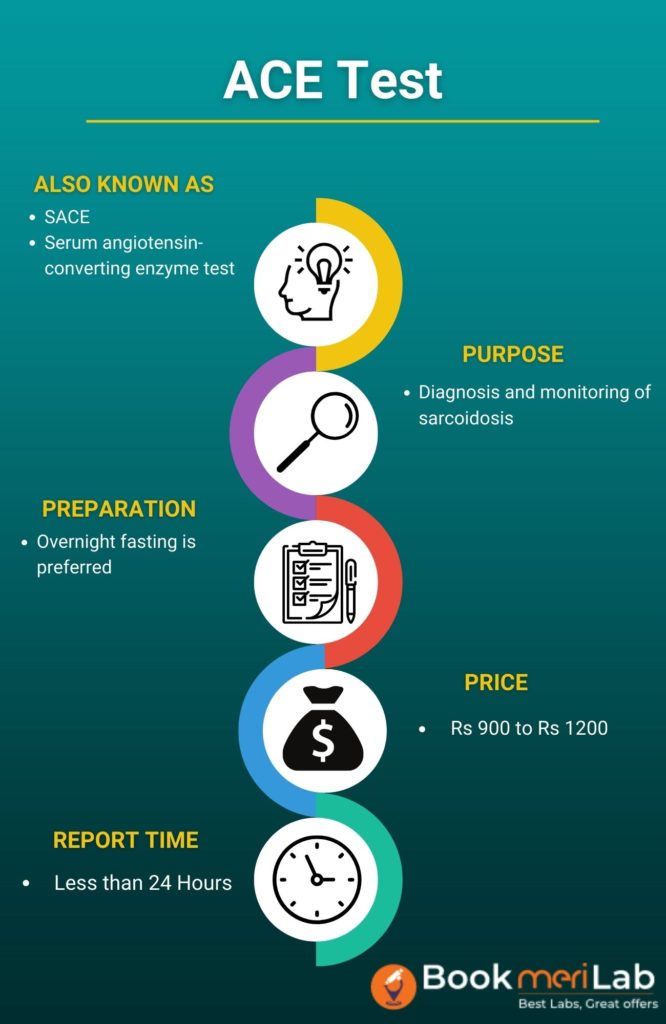
Angiotensin-converting enzyme (ACE) Test may be ordered by your doctor mainly for
People with sarcoidosis or high ACE level may show the following symptoms:
Overnight fasting is preferred for the ACE test.
Do inform your doctor if you are taking any medicine both prescription and non-prescription, ayurvedic, etc. Your doctor may advise you to stop the ones that can affect the test results like antihypertensives ( drugs used for high BP). DO NOT stop any medication on your own.
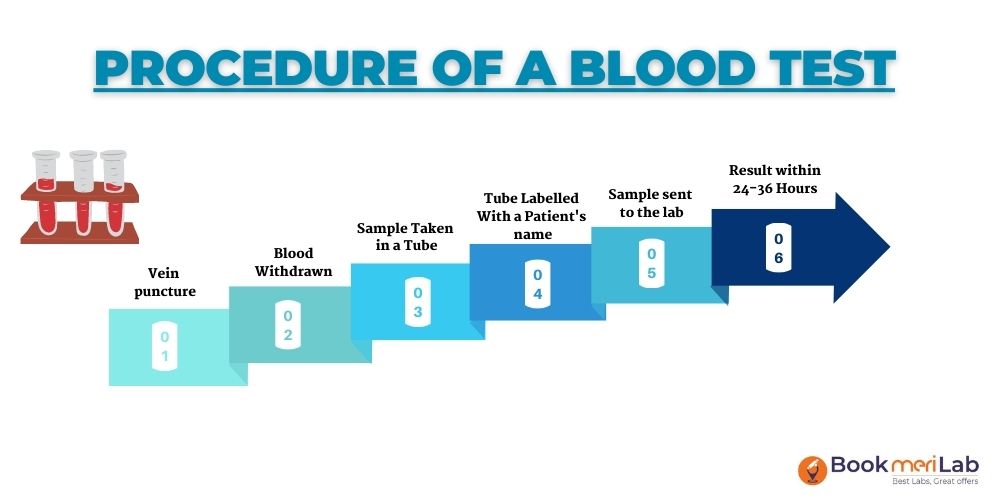
It is a fairly simple diagnostic blood test. A blood sample is taken from the vein in your arm or hand by the following steps-
The entire procedure takes only a few minutes.
It is a very simple and safe test. The risks involved are the same as that of any other blood test. These include-
Minor pain and bruising that might occur will resolve on their own in a very short time.
Have a look at the table below for the range of angiotensin-converting enzymes.
The normal range of angiotensin-converting enzymes is between 8 to 52 units per liter.
| Parameter | Range | Unit |
| Angiotensin-converting enzyme(ACE) | 8.00-52.00 | U/L |
Sometimes deviation in ACE levels may also be seen in individuals due to the following factors-
Increased levels of ACE may be found in-
Decrease levels of ACE may be seen in
ACE levels will be higher in 50 to 80% of individuals with active sarcoidosis. However, normal ACE levels cannot be used to rule out sarcoidosis because it may be present without an elevated ACE level if the disease is in an inactive state or the cells do not produce an increased amount of ACE. ACE may also be normal in cases of chronic sarcoidosis.
The measure of Angiotensin-converting enzyme levels will help your doctor diagnose and monitor systemic diseases like sarcoidosis and Gaucher’s disease. It can also indicate other disorders but more tests may be needed for their diagnosis. Regardless of the results, it is essential for you to discuss them with your healthcare provider for a better understanding and course of action.
Exercise, meditate, breathe, and sleep well! We wish you a happy, healthy, and relaxed life!
ACE test helps to diagnose and monitor a condition called sarcoidosis. Sarcoidosis is a systemic disorder (affecting the entire body) of unknown cause that often affects the lungs.
Increased levels of ACE may be found in-
–Sarcoidosis
-Lung-related (Pulmonary) causes like asthma, emphysema, etc
-Patients undergoing hemodialysis
–Gaucher’s disease
–Hodgkin’s lymphoma (cancer of lymph tissue)
–Multiple sclerosis ( a condition affecting the brain and the spinal cord)
-Hyperthyroidism ( increased levels of thyroid hormone)
–Addison’s disease (decreased cortisol levels)
-Alcoholic hepatitis (liver inflammation due to chronic consumption of alcohol)
-Peptic ulcers ( ulcers in the lining of the stomach or duodenum)
Yes. Overnight fasting (8-12 hours) is preferred.
The cells surrounding granulomas (formed under the skin and in organs throughout the body in patients with sarcoidosis) can produce increased amounts of ACE and the blood level of ACE may increase when sarcoidosis is present.
The normal range of angiotensin-converting enzyme is between 8 to 52 units per liter.
ACE blood test Information | Mount Sinai – New York
ACE blood test | Canoe.Com

ACE Test
Dr Garima Saroj is a dentist from Manipal college of dental sciences. She has previously worked at ESIC dental college and hospital Delhi and Dentecare multispecialty dental clinic Gurugram. She has a passion for writing for patient education and awareness.
A Discount Providing Platform on all Diagnostic Services at your nearest Labs. 100's of Certified Labs, Assured Quality & Great Discounts.