
The fructosamine test is a blood test that is helpful in the short-term monitoring (2-3 weeks) of diabetes. This test measures the amount of fructosamine (a glycated protein) in the blood. Since albumin is the major protein in the blood, glycated albumin (GA) is the major component of fructosamine. The fructosamine test price usually ranges from Rs 500 to Rs 1000 and in-home sample collection is generally available.
It is especially useful when the HbA1c test (a common test used to diagnose diabetes) cannot be used. Unlike the HbA1c test, the fructosamine test is not used as a screening test for diabetes.

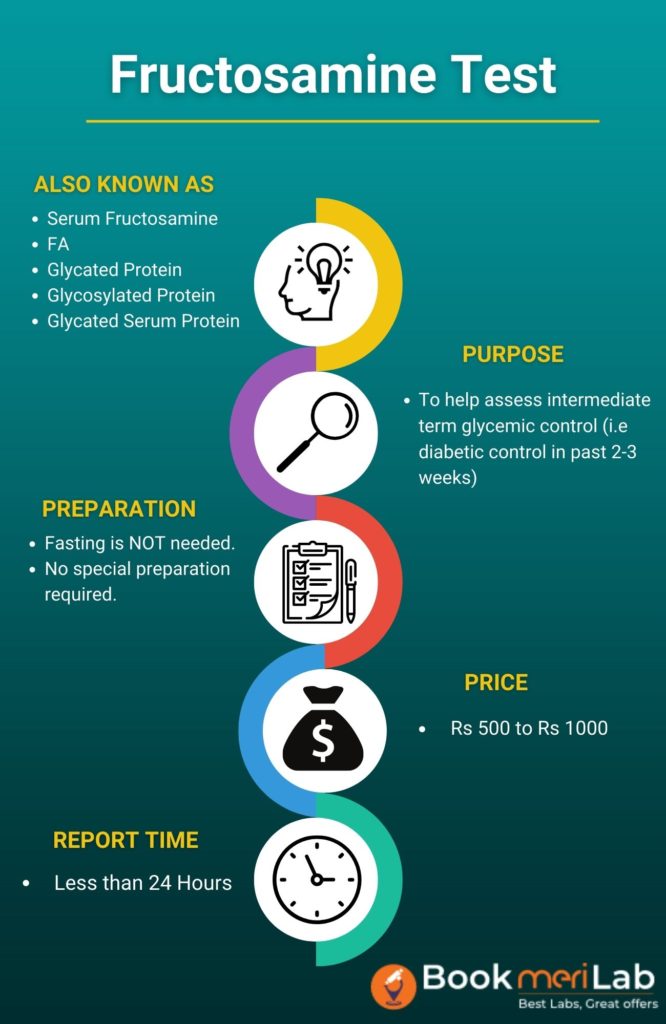
| Also Known As | Glycated Protein, Glycosylated Protein, Glycated Serum Protein, FA |
| Purpose | To assess intermediate-term glycemic control (previous 2 to 3 weeks). |
| Preparation | No special preparation is required. |
| Fasting | No |
| Reporting Time | <24 Hrs. |
| Cost | Rs.500 to Rs.1000 |
The Fructosamine Test Price usually ranges from Rs 500 to Rs 1000. The actual price depends on the diagnostic center and the city. Bookmerilab partners with more than 200 diagnostic centers across India. We provide a 10-50% discount on medical diagnostic tests.
The table below lists the Fructosamine prices at a few popular diagnostic centres.
| Name of Lab | Test Price |
|---|---|
| Redcliffe Labs | Rs 470 |
| Dr Lal Path labs | Rs 470 |
| Metropolis Healthcare | Rs 900 ( City-based ) |
| SRL Diagnostics | Rs 1200 |
| Vijaya Diagnostics | Rs 900 |
The table below lists the prices in different cities. You can click on the name of the city to get the list of diagnostic centres with their price and discount.
Good glycemic control is essential for diabetics to avoid complications and associated progressive damage. People getting treated with insulin can ensure this by self-monitoring their glucose levels and occasional monitoring with the help of a Fructosamine or HbA1c test. If it is not possible to monitor your diabetes using the HbA1c test, a fructosamine test may be essential.
Your doctor may recommend this test to-
Women who develop diabetes during their pregnancy or become pregnant while being diabetic need good glycemic control. Fructosamine measurements can be ordered along with glucose levels to monitor and accommodate shifting glucose, insulin, or other medication requirements.
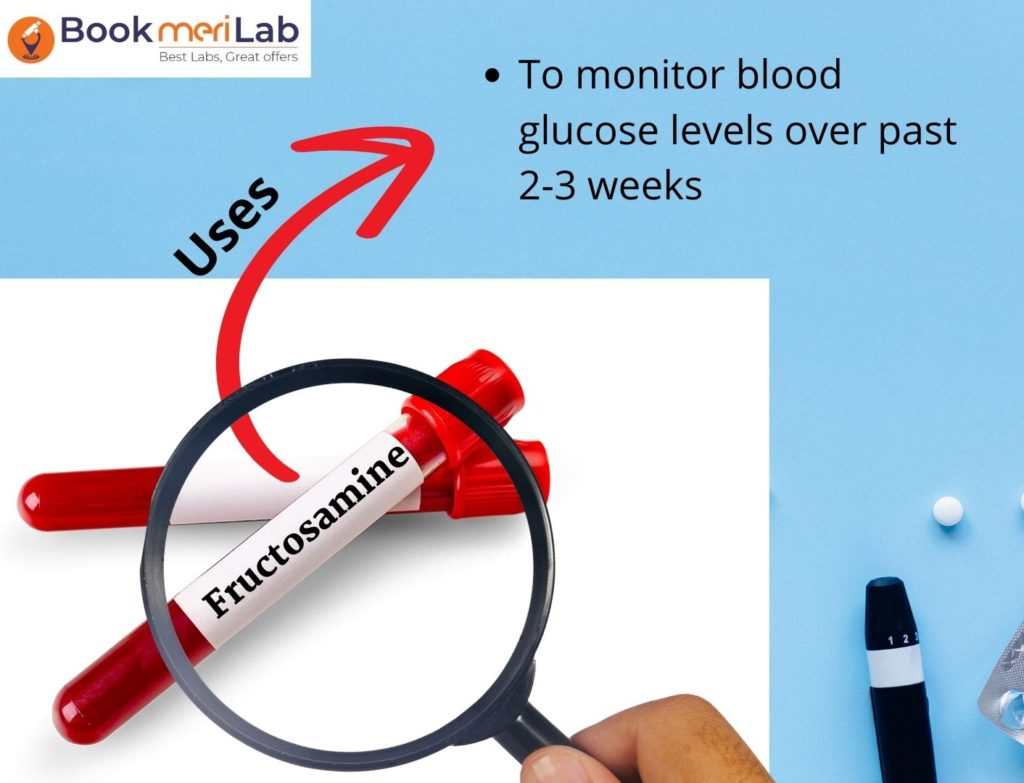
The combination of sugar and a protein (albumin, globulin, or lipoprotein) through a process called Glycation leads to the formation of Fructosamine. The number of glycated proteins formed increases with the glucose levels in the blood. These combined molecules are present for as long as the protein or RBC is present in the blood. They provide a record of the average amount of glucose that is present in the blood over that time period.
As the lifespan of RBCs is about 90 days, HbA1c represents the level of average blood glucose level over the past 2 to 3 months. However, as serum proteins are present in the blood for a shorter time, about 14 to 21 days, the fructosamine test, reflects average glucose levels over 2 to 3 weeks.
Although, the test is not widely when certain health conditions make the HbA1c test unreliable, the Fructosamine test is done.
| Criteria | Fructosamine Test | HbA1c Test |
|---|---|---|
| Purpose | Assess intermediate-term glycemic control | Evaluating long-term control of blood glucose |
| Time Period Covered | 2-3 Weeks | 2-3 Months |
| Fasting | Not required | Not required |
| Sample Type | Blood sample | Blood sample |
| Results | High values indicate poor control | High values indicate poor control |
| Measured In | umol/L | % |
| Glucose (mg/dL) | Fructosamine (umol/L) | HbA1c (%) |
|---|---|---|
| 90 | 212.5 | 5 |
| 120 | 250 | 6 |
| 150 | 287.5 | 7 |
| 180 | 325 | 8 |
| 210 | 362.5 | 9 |
| 240 | 400 | 10 |
| 270 | 437.5 | 11 |
| 300 | 475 | 12 |
| 330 | 512.5 | 13 |
| 360 | 550 | 14 |
| 390 | 587.5 | 15 |
Do inform your doctor if you are taking any medicine, both prescription and non-prescription, ayurvedic, etc. Your doctor may advise you to stop the ones that can affect the test results. DO NOT stop any medication on your own. Fasting is not needed.
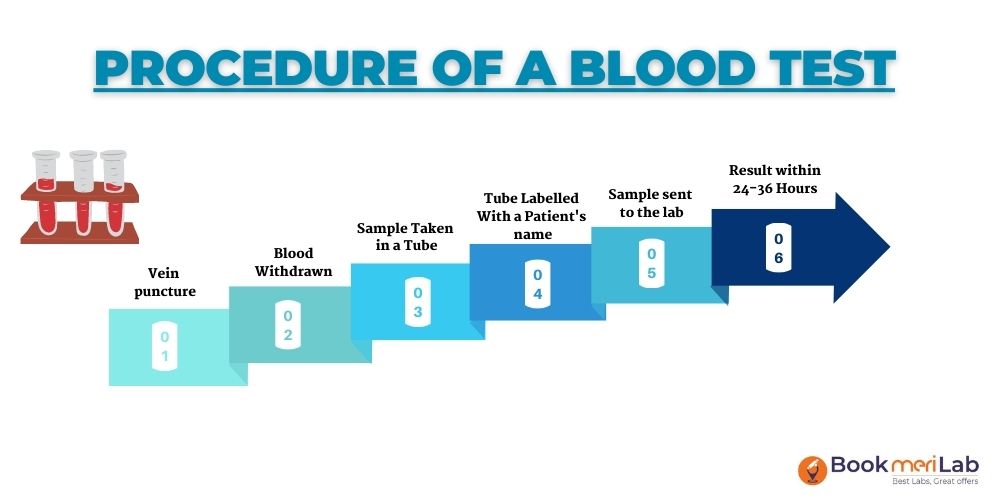
It is a fairly simple diagnostic blood test. A blood sample is taken from the vein in your arm or hand by the following steps-
The entire procedure takes only a few minutes.
It is a very simple and safe test. The risks involved are the same as that of any other blood test. These include-
Minor pain and bruising that might occur will resolve on their own in a very short time.
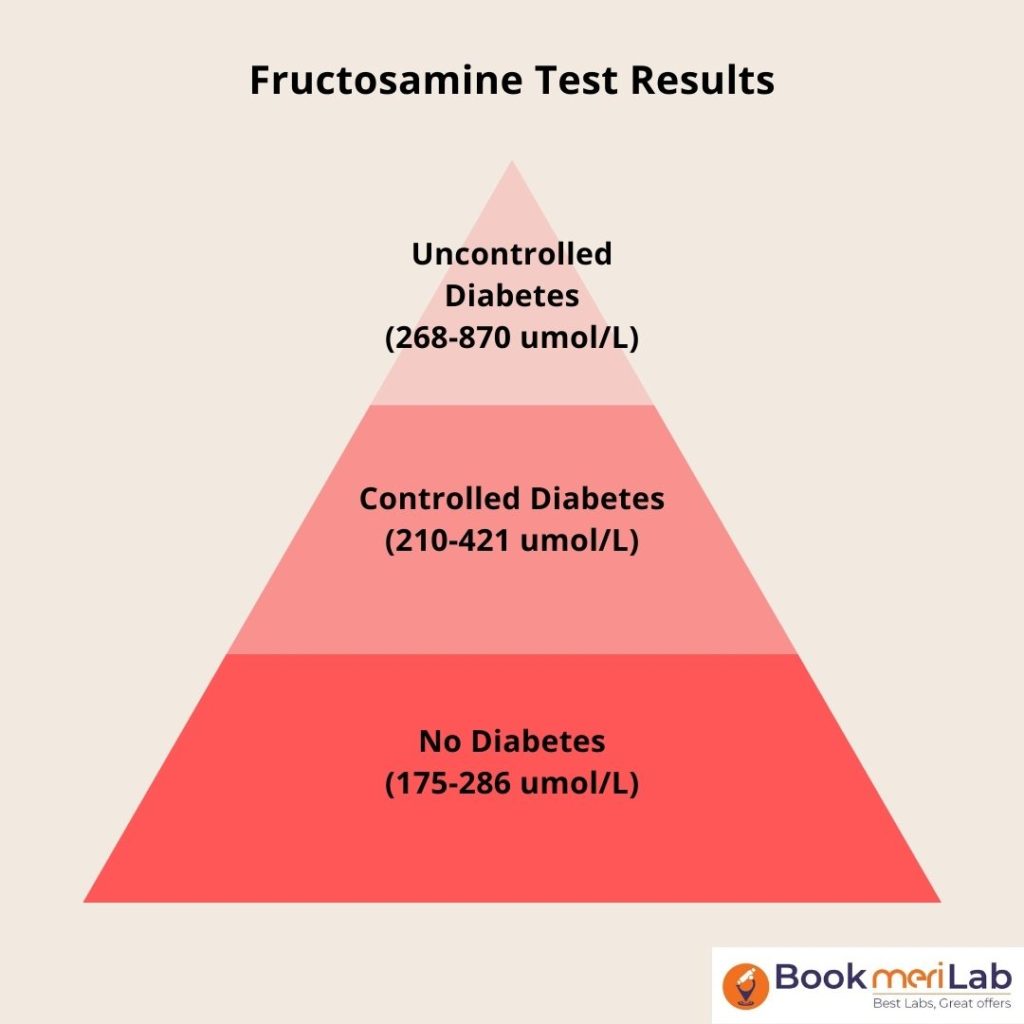
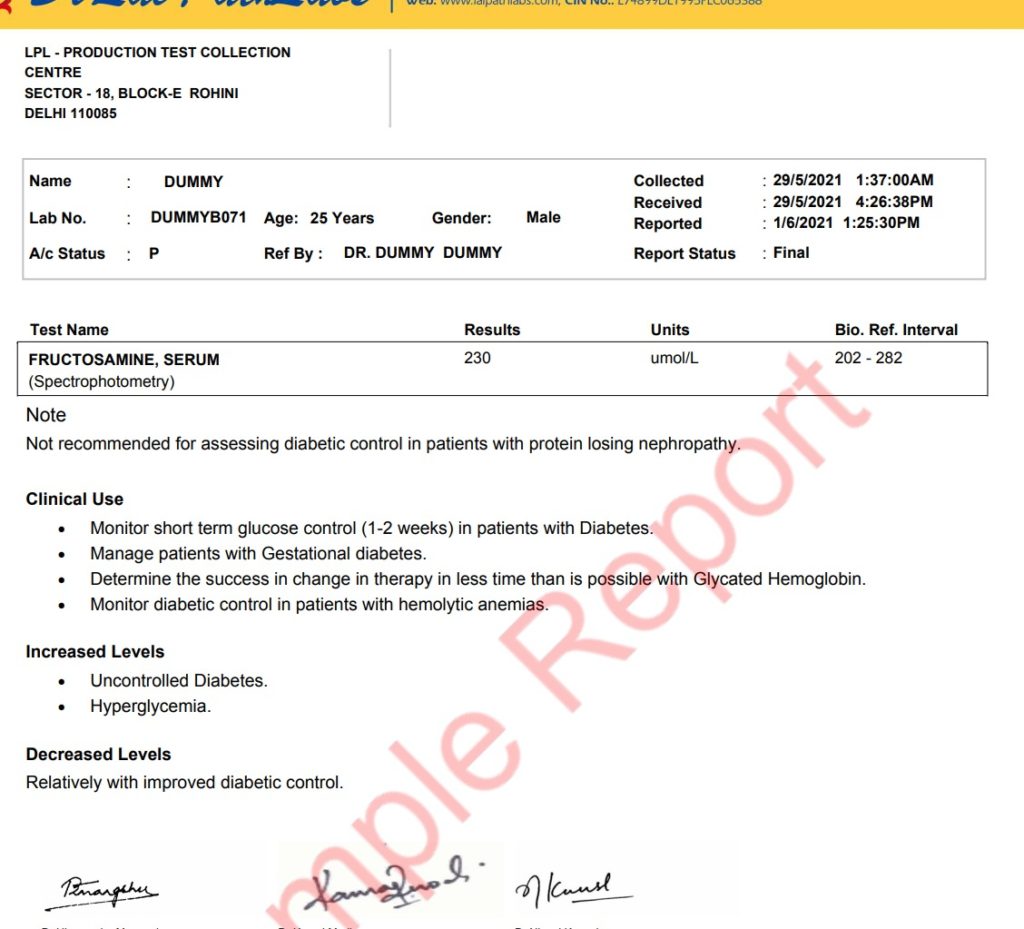
The normal range of serum fructosamine is 202 to 282 micromoles per liter.
| Parameter | Range | Unit |
|---|---|---|
| Serum Fructosamine | 202-282 | umol/L |
A normal fructosamine level may indicate good glucose control and prove that the current treatment plan is effective. Likewise, a trend from high to normal fructosamine levels may indicate that changes to the treatment regimen have been effective.
A high fructosamine level indicates high average blood glucose levels in the past 2-3 weeks. The test is usually repeated to monitor the trend of fructosamine levels or other indicators like glycated albumin or HbA1c.
The Fructosamine test is not standardized and it’s less reliable so it is used less than the HbA1c test. There is considerable overlap between the ranges of healthy people and diabetics. Thus fructosamine test needs to be evaluated in the context of a person’s overall clinical history.
According to certain studies, fructosamine levels are lower in people with obesity, pregnancy, low total blood protein, or low albumin levels (< 3g/dL). Fructosamine levels are high in people exposed to UV rays as that increases the body temperature. They are also high in people with increased antibody production and iron deficiency anaemia.
The fructosamine test plays a very important role in diabetes monitoring in many patients. Whether your results are within normal range or not, you must discuss them with your doctor for proper understanding and future course of action. While abnormal test results may be concerning, you can bring down your sugar levels by lifestyle modifications like switching to a healthy diet, regular exercise, yoga, healthy sleeping habits, etc. Diabetes prevalence has significantly increased in India in recent years. Nearly 77 million people are currently suffering from diabetes and the numbers are expected to reach 100 million by 2030. Uncontrolled diabetes can have adverse effects on various organ systems and hence it is essential to monitor glucose levels at regular intervals. Thus, tests like Serum fructosamine and HbA1c can help monitor intermediate and long-term glycemic control.
We wish all our readers a long, healthy, and happy life.
Fructosamine test is useful for estimating blood glucose control in diabetic patients. This test checks the glucose level for the previous 2 to 3 weeks. A trend from a normal to a high fructosamine level may indicate that glucose control is not adequate.
Normal fructosamine levels range between 202 – 282 umol/L.
The Fructosamine test is not standardized and it’s less reliable so it is used less than the HbA1c test. There is considerable overlap between the ranges of healthy people and diabetics. The fructosamine levels are lower in people with obesity, pregnancy, low total blood protein or low albumin levels, Thyroid disease, intestinal disease (protein-losing enteropathy), Liver disease, etc.
Fructosamine Test is more accurate in certain cases where HbA1c test is unreliable like abnormal forms of Hemoglobin, shortened RBC lifespan, kidney failure (end-stage renal disease), liver disease, HIV infection, and having undergone recent blood transfusions.
Temperature, vitamin C, bilirubin, urea, and total protein levels can all affect fructosamine levels. All conditions that increase or decrease albumin levels will also affect fructosamine.
HbA1c provides a long-term record of glycemic control (ie, over a period of 2-3 months). But, the measurement of fructosamine or GA provides information on glucose control mostly limited to the previous 2 weeks.

Fructosamine – StatPearls – NCBI Bookshelf (nih.gov)
Serum Fructosamine: A Simple and Inexpensive Test for Assessing Preoperative Glycemic Control – PubMed (nih.gov)
Fructosamine Test
A Discount Providing Platform on all Diagnostic Services at your nearest Labs. 100's of Certified Labs, Assured Quality & Great Discounts.
