
A urine culture test is a diagnostic procedure that helps detect bacterial or fungal infections in the urinary tract. This test is particularly useful in diagnosing urinary tract infections (UTIs), which are common, especially in women. By growing bacteria or fungi in a controlled environment, doctors can identify the specific pathogen causing the infection and determine the best treatment. The urine culture test price typically ranges from Rs 400 to Rs 800 in India, depending on the diagnostic center and location.
The urine culture test is primarily used to identify and confirm infections in the urinary tract, including the bladder and kidneys. By placing a urine sample on a nutrient-rich medium, laboratory technicians can grow bacteria or fungi over 48 to 72 hours. This growth is analyzed to determine which pathogen is responsible for the infection, allowing for appropriate treatment.
| Also known as | Urine culture test, Culture Urine, Urine c/s, Urine culture and sensitivity |
| Purpose | For diagnosis of Urinary Tract Infection (UTIs). |
| Preparation | Avoid taking over the counter medicines and vitamin supplements before the test. |
| Fasting | Not required |
| Reporting time | 48 to 72 hours |
| Cost | Rs 400 onwards. |
The urine culture test price can vary depending on the diagnostic center and city. Since the test involves a detailed analysis by a microbiologist, it typically costs more than a routine urine test. On average, the price for a urine culture test in India ranges from Rs 400 to Rs 800. However, prices may differ based on the location and the lab you choose.
The table below lists the prices at some of the popular diagnostic centres in India.
| Diagnostic Centres | Indicative price |
|---|---|
| Metropolis Healthcare | Rs 1050 |
| Redcliffe Lab | Rs 600 |
| Prognosis Laboratories | Rs 423 |
| SRL Diagnostics | Rs 950 |
| Dr Lal Path Labs | Rs 750 |
| Aarthi Scans | Rs 300 |
| Vijaya Diagnostics | Rs 800 |
The table below lists the city-wise prices. You can click on the city name to get a list of diagnostic centres with their test prices and discount. You can also book online or schedule a free home sample collection.
| City | Price Range |
|---|---|
| Urine Culture Test cost in Delhi | Rs 300 to Rs 640 |
| Urine Culture Test cost in Chandigarh | Rs 315 to Rs 420 |
| Urine Culture Test cost in Gurgaon | Rs 270 to Rs 893 |
| Urine Culture Test cost in Mumbai | Rs 420 to Rs 750 |
| Urine Culture Test cost in Chennai | Rs 270 to Rs 750 |
| Urine Culture Test cost in Kolkata | Rs 261 to Rs 500 |
| Urine Culture Test cost in Hyderabad | Rs 405 to Rs 960 |
A urine culture test is typically recommended when a person experiences symptoms of a urinary tract infection (UTI), such as:
A urine culture can also be recommended after completing UTI infection treatment. This helps to ensure the bacteria are gone.
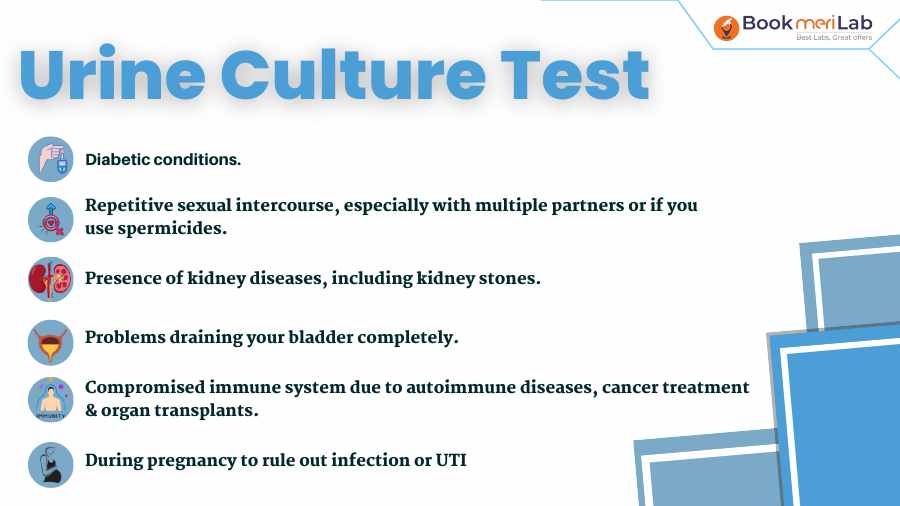
You may require a urine culture if you get frequent or difficult to treat UTIs. Generally, only symptomatic people need a urine culture test. UTIs can affect both males and females. But women tend to acquire UTIs more commonly than men do.
There are the following risk factors that need to be considered for urine culture :
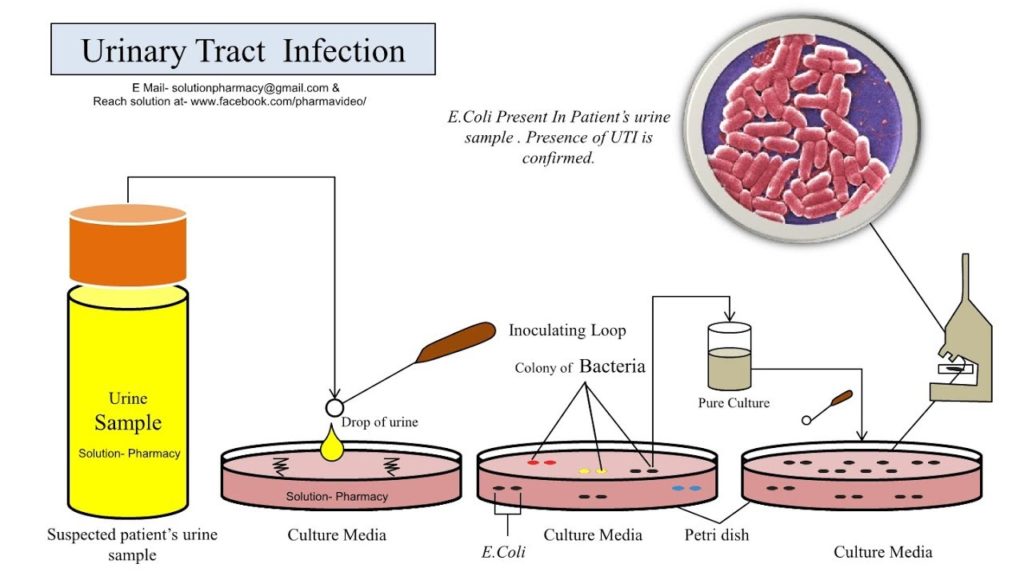
The procedure of the urine culture is very easy, and it involves the following steps.
A technician may also take a urine sample by inserting a catheter (a thin rubber tube) through the urethra into the bladder. The urine drains into a sterile container, and the catheter is removed.
This test does not require any special preparation. However, keep in mind the following precautions.
Carefully urinate in a cup so that urine only contains urinary tract bacteria and not bacteria from another organ, like your skin. Before you begin the test, inform your doctor if you have recently taken any over the counter medicines, vitamins, or supplements. These may interfere with results.
The most common thing that causes UTIs is E-coli bacteria that live in your intestines. Sometimes more than a single type of bacteria may be found in the culture, or only a tiny amount. The interpretation of the result is as follows:
It indicates an abnormal result in which yeast or bacteria are present in the culture. This suggests that you may have a urinary tract infection or bladder infection.
It means no bacterial growth and infection was found. It indicates normal growth or a normal result. However, your doctor may suggest further testing for diagnosis in such cases. Some common tests are KFT (Kidney function test) and Urine routine test.

Can it be wrong?
You may have a false-negative urine result if you have taken antibiotics before the urine culture test.
There are no risks linked with preparing for or performing a urine collection. Collecting a urine sample in the urine culture is not painful unless you are experiencing pain while urinating because of an existing UTI.
If a health expert requests a urine sample obtained with a catheter, the patient may feel pressure and discomfort as the thin tube is inserted through the urethra. These tubes are lubricated to reduce pain and make the procedure comfortable. It rarely happens that a catheter can create a hole in the urethra or bladder. Your doctor will discuss ways to reduce pain while performing the procedure with you.
Older women, being postmenopausal and having estrogen deficiency increase the risk. Older men who have an enlarged prostate are at a higher risk.
Let us have a look at the sample report on the Urine Culture.
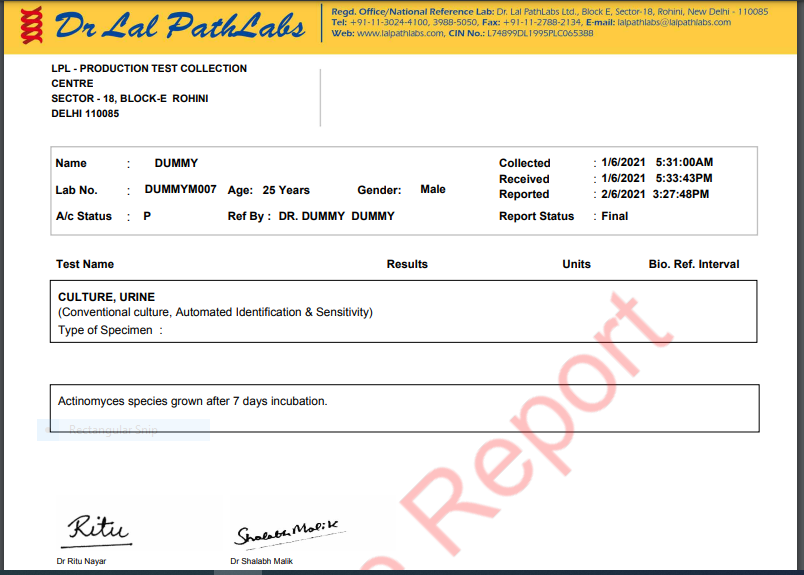
A urine culture test report usually takes about 2 to 3 days. This is because urine is kept in a petri-dish for 48 hours to allow the growth of the bacteria. Then, a technician will examine it for bacterial growth to provide the final results.
Sometimes, a sample may be kept for seven days for bacterial growth. In such cases, results are reported after seven days. However, preliminary results are provided after 48 hours.
A urinalysis detects red and white blood cells as well as bacteria. It can’t identify the specific bacteria. However, urine culture detects the exact bacteria or yeast present in the urine.
Yes. Especially in sexually active women. In young females, sexual intercourse increases the risk for UTIs.
When you experience symptoms of a Urinary Tract infection (UTI), such as frequent and painful urination, and when a urinalysis indicates you may have a UTI.
No. Urine cultures can detect some sexually transmitted diseases. However, a urine culture is not the first choice for sexually transmitted diseases in adults. Some STDs such as chlamydia may be tested using a urine sample, but the testing method used detects chlamydia genetic material in the urine and is not a culture.
The urine culture test cost in India typically ranges between Rs 400 to Rs 800, depending on the city and diagnostic center you choose for the test.
A urine culture test identifies bacteria or fungi in the urine, helping diagnose urinary tract infections (UTIs) and ensuring the right treatment for the infection.
It takes 2–3 days for bacteria or fungi in the urine sample to grow in a lab, allowing accurate identification and analysis of potential infections.
While highly reliable, urine culture tests may occasionally give false negatives, especially if antibiotics were taken before the test, slightly affecting accuracy.
Yes, you can drink water before the urine culture test, as hydration doesn’t interfere with the results and ensures an adequate urine sample.
Yes, a urine culture test can indicate a kidney infection by detecting the presence of bacteria that may have spread from the urinary tract to the kidneys.
References:
Urine Culture Test
Dr Bhumika Rana is a Bachelor of Ayurvedic Medicine & Surgery (B.A.M.S.). Earlier She was an Operation Specialist at AIIMS Delhi & a Medical officer with the National health mission.
A Discount Providing Platform on all Diagnostic Services at your nearest Labs. 100's of Certified Labs, Assured Quality & Great Discounts.
