
MRI Shoulder is helpful for the diagnosis of health issues in the shoulder joint. Some common reasons are injury, labral tear, joint pain, frozen shoulder, dislocation & surgery planning or treatment outcome. Shoulder MRI scan cost Starts at Rs 5000 and may range up to Rs 15000 depending on the underlying pathology and scan type.
With an MRI Shoulder, the shoulder bones, muscles, tendons, ligaments, and cartilage are shown in highly intricate detail; in fact, rather commonly used to determine shoulder problems. Unlike X-ray or CT scans, MRI does not use harmful radiation and, hence, is much better in giving a soft tissue injury picture, whether it be a rotator cuff tear, ligament injury, or inflammation. It is best performed when pain, stiffness, or weakness in the shoulder does not improve with the simple course of treatment or when a doctor is fairly sure of the need for surgical intervention. The examination is non-invasive, and there is no pain involved, yet it provides a clear insight into diagnosis and management in a timely manner. An affordable price package makes it even easier for patients to undergo quality imaging without worrying about money.
BookmeriLab partners with more than 50 MRI Centres in all metro cities of India. We provide MRI Shoulder at the starting price of Rs 3150.
| Also Known As | MRI Shoulder, MRI Left or Right Shoulder, MRI Shoulder Arthrogram, MRI Shoulder Protocol |
| Purpose | Injury, Pain, Diagnosis, Treatment planning or outcome |
| Preparation | No special preparation is required |
| Fasting | No |
| Machine Used | MRI Machine (Minimum 1.5 Tesla Preferable) |
| Reporting Time | 8 to 24 Hrs. |
| Cost | Rs. 3000 to Rs. 15000 |
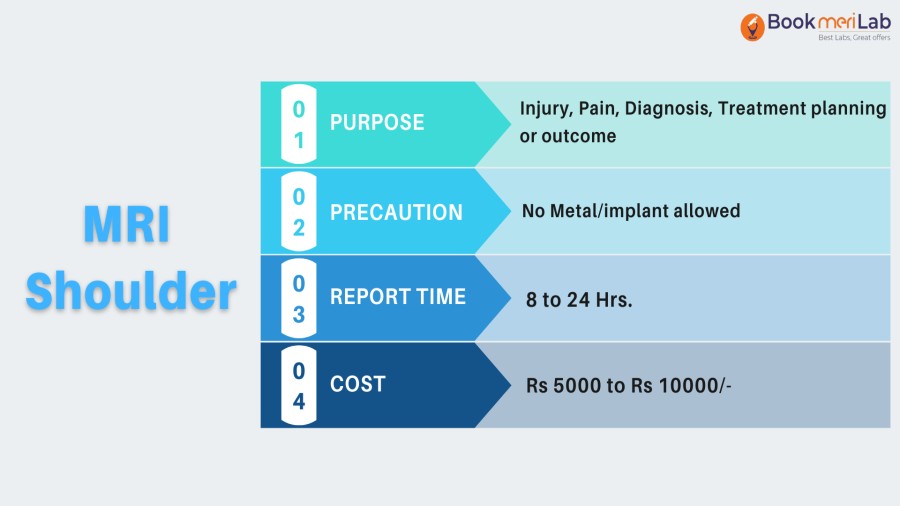
The MRI Shoulder cost ranges from Rs 5000 to Rs 15000 in India. The actual price depends on the scan type (Non-contrast or contrast), machine quality (1.5 or 3 Tesla) and MRI centre. BookmeriLab partners with more than 50 MRI Centres in all metro cities of India. We provide MRI Shoulder at the starting price of Rs 3150. The table lists the MRI shoulder price in major cities.
You can click on the city’s name to access the list of MRI centres with prices and discounts available on online booking.
| City Name | Cost Range |
|---|---|
| Delhi | Rs 3500 to Rs 8000 |
| Gurgaon | Rs 3500 to Rs 8000 |
| Hyderabad | Rs 3500 to Rs 7800 |
| Chennai | Rs 3500 to Rs 4000 |
| Mumbai | Rs 3500 to Rs 6500 |
| Bangalore | Rs 3500 to Rs 8500 |
The MRI Shoulder prices at some of the Popular diagnostic centres in India are listed below
| Name of MRI Centre | Price |
|---|---|
| Mahajan Imaging Delhi-NCR | Rs 8000 |
| City X-ray and Clinic Delhi | Rs 7000 |
| Vijaya Diagnostic Hyderabad | Rs 7500 |
| Aarthi Scan | Rs 3500 |
| Suraksha Diagnostics Kolkata | Rs 7000 |
| Clumax Medall Bangalore | Rs 8000 |
| Bharat Scans Chennai | Rs 8000 |
| NM Medical Mumbai | Rs 8500 |
MRI shoulder scan diagnoses any abnormalities in bones, muscles, tendons, ligaments, blood vessels, and nerves of the shoulder. Doctors use this test to analyse the underlying cause of shoulder pain.
It also assists your doctor in diagnosing unexplained shoulder discomfort or understanding the ailment that is producing your shoulder issues.
MRI test is a radiology test that stands for Magnetic Resonance Imaging. It is advanced compared to a CT Scan and X-ray. MRI scan uses magnets, radio waves, and a screen to display the images of our body organs in a medical test.
Since its invention, doctors and researchers have refined MRI technology to aid in medical procedures and research. The vision of magnetic resonance imaging (MRI) revolutionised medicine forever.
MRI scans can perform all the body parts tests. This radiology test indicates any abnormalities of soft tissues and blood vessels. Nowadays, with the advancement of innovation and the increased number of complicated diseases, physicians frequently use this test.
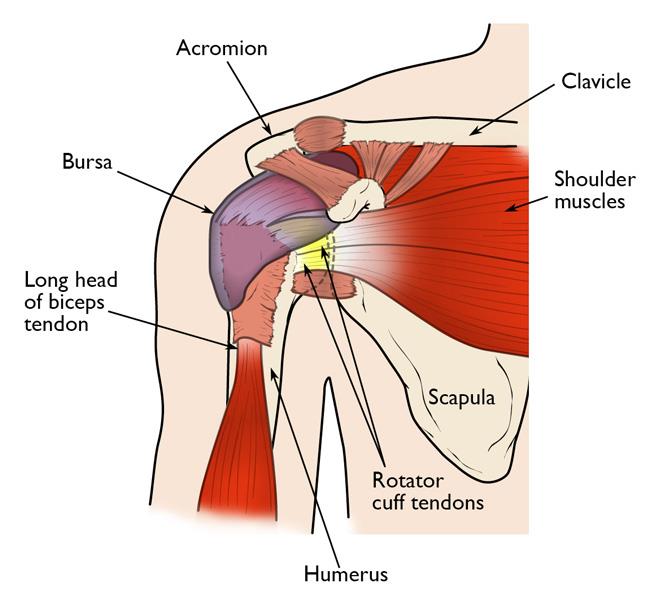
The shoulder joint is complex and extensive. The shoulder has three major bones: the scapula (shoulder blade), clavicle (collarbone) and humerus (upper arm bone). It is the body’s most movable joint. As a result, our shoulders may experience a variety of issues. Such as frozen shoulder which is quite common in people between the ages of 40 and 60. It is more common in women and people with diabetes.
Your doctor can recommend an MRI scan for various reasons, including pain or an injury. An impact could cause damage or result from long-term wear and tear on the joint. The following issues may necessitate the use of a shoulder MRI scan:
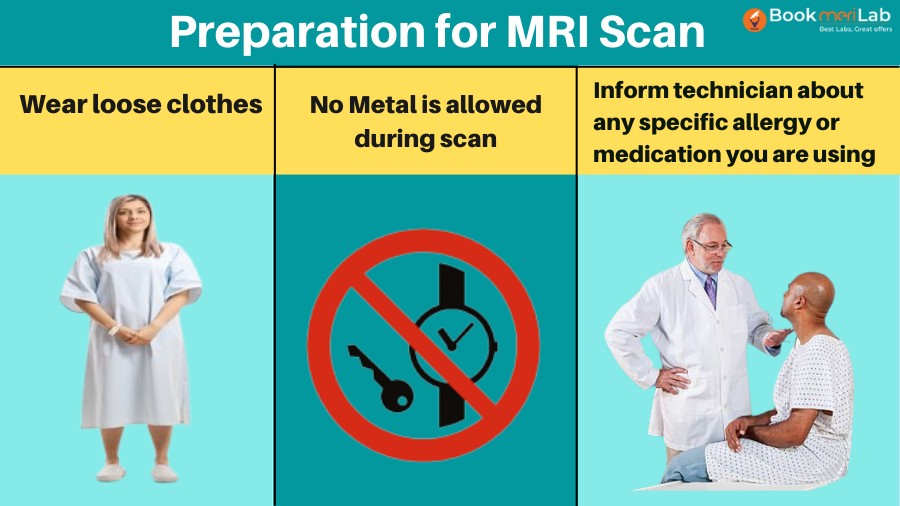
Before visiting the MRI lab, we recommend asking for a questionnaire form from your lab or consulting them on preparing yourself for the MRI scan of the shoulder.
We recommend contacting your referring doctor and requesting a relaxant or pain medication to assist you in getting through the scan if you are claustrophobic (fear of enclosed spaces) or experience significant discomfort while lying down for more than 10 minutes. Radiology doctors will not prescribe these drugs.
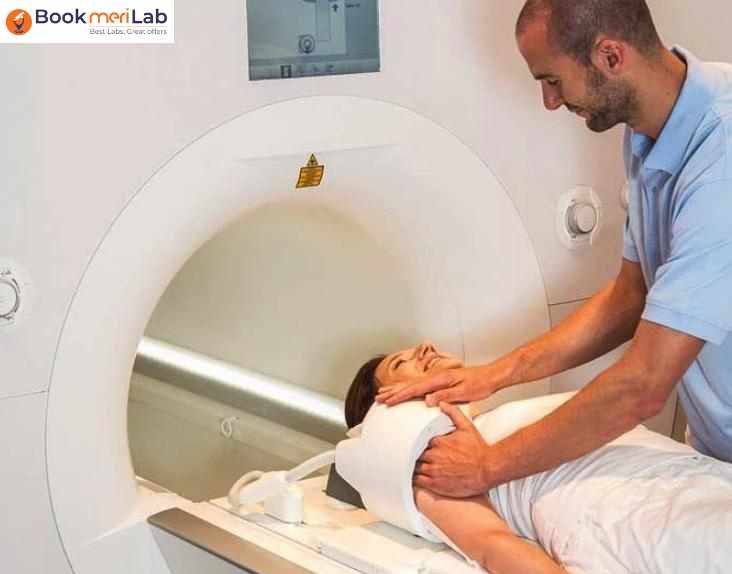
A circular magnet encloses a big cylinder-shaped tube in a typical MRI device. You’ll be made to lie down on a table that slides into a tunnel leading to the magnet’s core.
The magnet in some MRI machines, known as short-bore systems, does not entirely encircle you. Some newer MRI machines feature a wider bore diameter, making them more comfortable for individuals with high weight or claustrophobic. The sides of “open” MRI units are open. They’re beneficial for assessing larger patients or individuals afraid of being confined. For a variety of tests, open MRI equipment can deliver high-quality images. Specific exams may not be suitable for open MRI. Consult your radiologist for further details.
The film may take a few hours to develop if the examiner projected your MRI images onto the film correctly. Your doctor will need some time to analyze the photographs and evaluate the results. Modern equipment projects images onto a computer screen, allowing your doctor to review them fast.
Initial MRI scan findings can take a few days to arrive, but complete results can take a week or more.
Your doctor will call you to evaluate and explain the results as they are available. Below you can find normal vs abnormal shoulder MRI images.
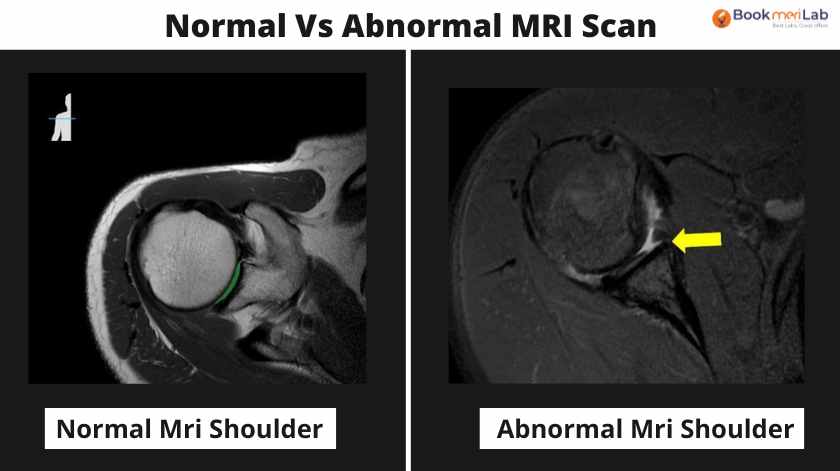
MRI scans to detect the condition of different parts of the body, such as the brain, breast, and spinal cord. Your doctor can suggest various types of MRI scans for you. Below, we have mentioned different types of MRI scans so that you should be aware of them the next time your doctor recommends any of them:
Function fMRI is also known as fMRI. To identify the proper functioning of body organs, doctors use function MRI. For example, an MRCP (Magnetic Resonance Cholecysto Pancreatography) detects the functionality of the gall bladder and pancreas.
The images show whether any problems could lead to predicted or diagnosed stroke. A neurologist also orders an fMRI for brain mapping. Brain surgery and detecting epilepsy and malignancies require brain mapping.
When your physician wants to know about the condition of arteries, he advises magnetic resonance angiography. We use this method frequently for the analysis of brain arteries.
This test is very similar to MRI angiography. It scans the veins of the legs. This type of MRI analyzes the affected veins.
As the name suggests, it examines the soft tissue of the affected parts to see any abnormalities.
Some individuals are scared of MRI machines as they have a phobia of being trapped. Claustrophobic patients hate the enclosed nature of an MRI machine. Other patients may be overweight or have post-traumatic stress disorder, making them uncomfortable in the machine. Open, high-field MRIs are a superior option for these patients.
Often, it is the defect in nerves that hurts the movement of the shoulder. In such instances, an x-ray doesn’t prove helpful for diagnosing disease.
Unlike X-ray and CT scans, MRI does not cause harmful effects on the body. And it is safer in pregnancy and young children.
From simple injuries to complex joint problems, an MRI shouldering scan provides crucial utility in diagnosing a full range of shoulder conditions. It offers highly detailed imaging of bones, tendons, muscles, ligaments, and cartilages, so doctors can detect issues such as frozen shoulder, labral tear, or rotator cuff injury with precision; arthritis or dislocation can also be diagnosed through this procedure. Since it is a non-invasive and radiation-free procedure, doctors prefer it when diagnosing patients with chronic shoulder pains coupled with stiffness or reduced mobility. The test results are quite accurate, allowing surgeons to use them for planning surgery, or observing recovery after treatment.
Based on the type of scan, city, and the diagnostic center chosen, MRI Shoulder Price in India ranges from ₹5,000 to ₹15,000. But patients can book this scan at just ₹3,150 with BookmeriLab’s partner network of over 50 MRI centers across metro cities.
BookmeriLab ensures affordable pricing with trusted centers, thus assuring timely reports and accurate diagnosis, and putting the patient’s mind at ease while looking for a reliable solution in healthcare.
A: The test takes 30 to 60 minutes on average, but it can take up to two hours.
A: Degenerative joint problems such as arthritis and labral tears are commonly diagnosed or evaluated with an MRI of the shoulder. Fractures (in selected patients) and rotator cuff abnormalities, including tears and impingement, in adults over 40, it is the most common cause of shoulder pain.
A: It plays a critical function in detecting the causes of nerve injury (extrinsic mass, rotator cuff tear, etc.)
A: Arthritis, a torn rotator cuff, or an injury such as a labral or biceps tendon rupture is the most common cause of shoulder pain. A conventional x-ray can detect arthritis, but an MRI is required to determine whether you have a rotator cuff, labral, or tendon injury. Further, consult your doctor before getting a shoulder MRI.
A: The majority of rotator cuff injuries (78%) occurred in patients over the age of 40. For the diagnosis of full-thickness rotator cuff injuries, MRI demonstrated a sensitivity of 89.6%, specificity of 100%, a positive predictive value of 100%, and a negative predictive value of 83.3 per cent.
Dr Bhumika Rana is a Bachelor of Ayurvedic Medicine & Surgery (B.A.M.S.). Earlier She was an Operation Specialist at AIIMS Delhi & a Medical officer with the National health mission.
A Discount Providing Platform on all Diagnostic Services at your nearest Labs. 100's of Certified Labs, Assured Quality & Great Discounts.
