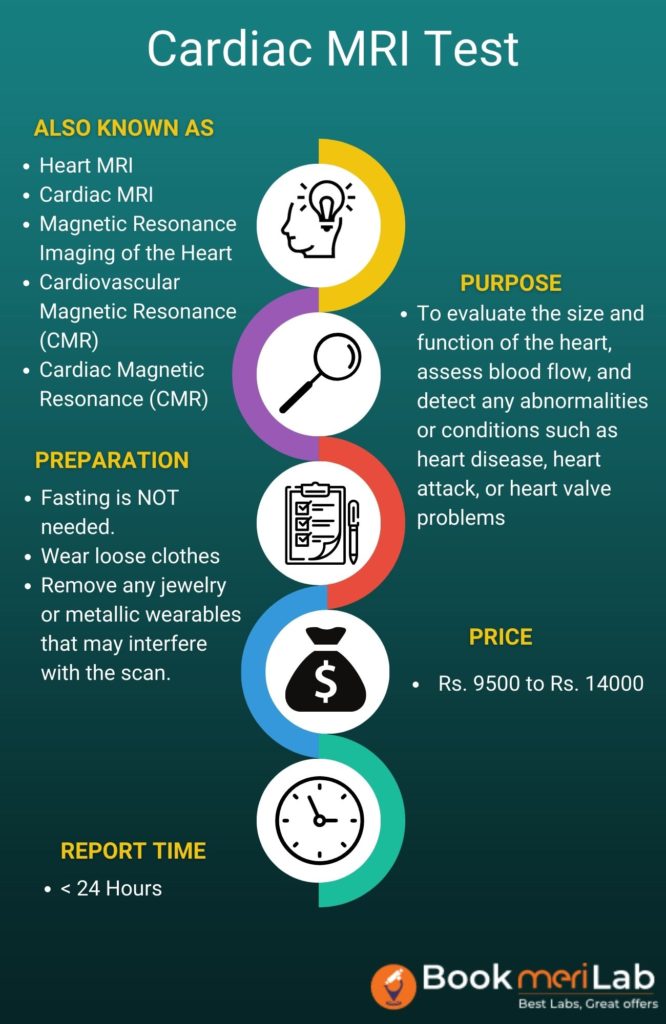
A Cardiac MRI or Heart MRI is a non-invasive diagnostic test that helps evaluate the structure and function of the heart and its blood vessels. It helps detect any abnormalities such as heart disease, heart damage, or tumors. This test uses a magnetic field, radio waves, and a computer to produce detailed images of the heart and surrounding structures. It is also useful in monitoring the progress of treatment for various heart conditions. The cost of an MRI heart ranges from Rs. 9500 to Rs. 14000.
A cardiac MRI is a safe test that does not involve surgery. It provides clear images of the heart, its muscles, valves, and blood vessels. It helps identify heart disease, damage from heart attacks, tumors, or congenital defects in the heart. Unlike some other tests, it does not use radiation, so it can be performed many times safely.
In a cardiac MRI scan, you lie on a table that slides into the machine. Magnets and radio waves create clear pictures of your heart. Sometimes, a special dye is used for better visibility. The test does not hurt and takes 30 to 60 minutes. Reports are ready in a few hours or by the next day. These results help doctors plan treatment and assess how your heart is functioning.
| Also Known As | Heart MRI, Cardiac MRI, Magnetic Resonance Imaging of the Heart, Cardiovascular Magnetic Resonance (CMR), Cardiac Magnetic Resonance (CMR), |
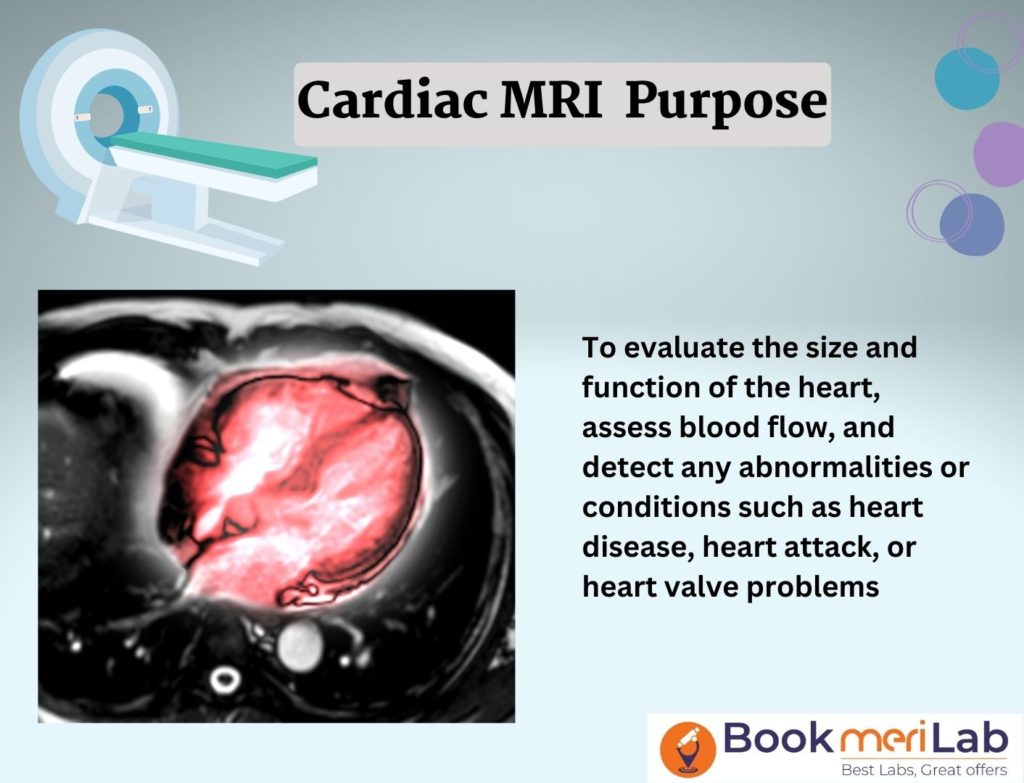
| Purpose | To evaluate the size and function of the heart, assess blood flow, and detect any abnormalities or conditions such as heart disease, heart attack, or heart valve problems. |
| Preparation | No special preparation required |
| Fasting | No |
| Machine Used | 1.5 or 3 Tesla MRI Machine |
| Reporting Time | <24 Hrs. |
| Cost | Rs. 9500 to Rs. 14000 |
Cardiac MRI is a special scan thus its availability is limited. During the scan, very often, contrast is also used which increases the cost. Though the actual price would depend on the MRI centre, city, use of contrast and MRI Machine, it usually ranges from Rs 9500 to Rs 14000.
The Cardiac MRI cost depends upon the one recommended by your healthcare professional. The cost varies depending on the lab and the cities.
| Diagnostic Centres | Price |
|---|---|
| Janta X-Ray Clinic | ₹ 16150 |
| National Imaging | ₹ 11200 |
| Ganesh Diagnostics | ₹ 9600 |
| Mahajan Imaging | ₹ 12600 |
| PULSE IMAGING | ₹ 9000 |
| Aarthi Scan | ₹ 9500 |
| Prima Diagnostics | ₹ 13500 |
| Vijaya Diagnostic Centre | ₹ 12000 |
The table below lists the city-wise price range. You can click on the city name to get the list of MRI centres that provide MRI cardiac along with their price and discount available from Bookmerilab.
| Cities | Price Range |
|---|---|
| Cardiac MRI Test Price in Delhi | Rs 9500 to Rs 14000 |
| Cardiac MRI Test Price in Gurgaon | ₹ 9500 to ₹ 16560 |
| Cardiac MRI Test Price in Noida | Not Available |
| Cardiac MRI Test Price in Mumbai | ₹ 3000 – ₹ 9500 |
| Cardiac MRI Test Price in Hyderabad | ₹ 9500 – ₹ 12000 |
| Cardiac MRI Test Price in Bangalore | ₹ 9500 – ₹ 13500 |
| Cardiac MRI Test Price in Kolkata | ₹ 9500 – ₹ 13500 |
| Cardiac MRI Test Price in Chennai | ₹ 8550 – ₹ 9500 |
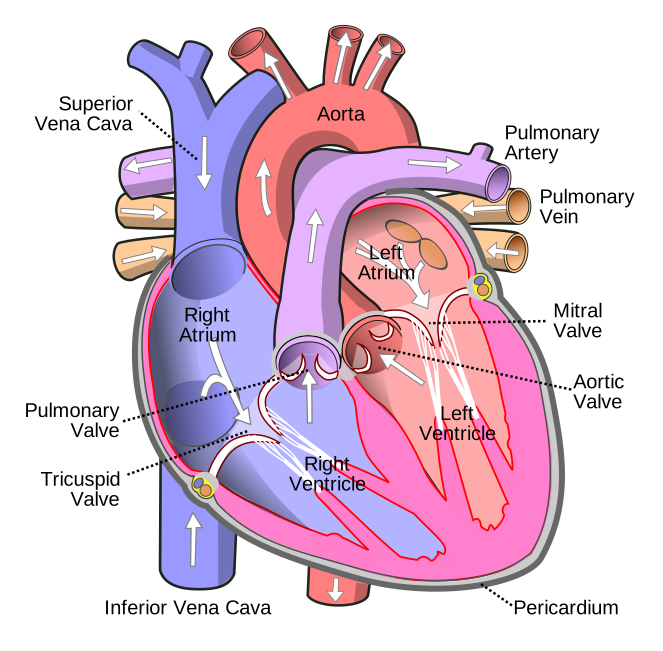
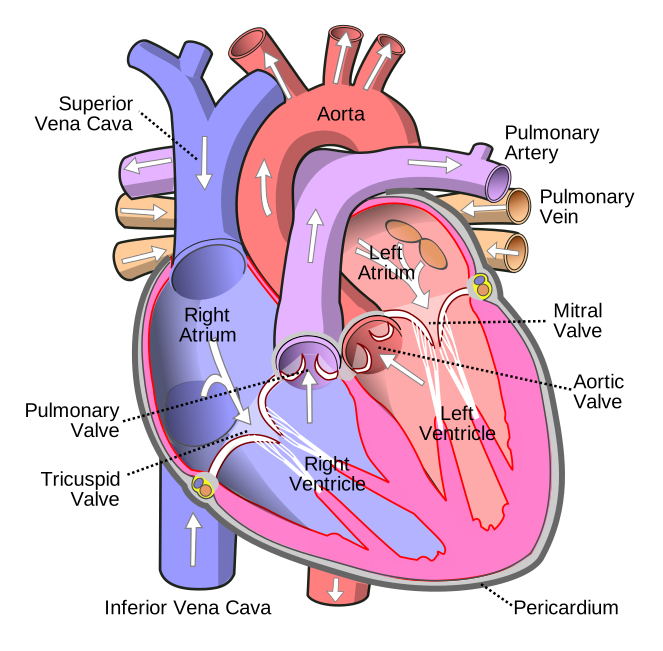
MRI Heart helps evaluate the condition of the heart and associated structures like the pericardium (membrane enclosing the heart), heart muscles, major blood vessels, etc.
Blood is constantly circulating through the body, being pumped by the heart, flowing through blood vessels, and nourishing cells.
The Cardiac MRI has a few limitations. It has limited access for patients with pacemakers, defibrillators, or other implanted devices due to the risk of interference with the magnetic field. This test also has some contraindications like in patients with metal in their bodies, such as aneurysm clips or metallic implants, due to the risk of injury from the magnetic field. It is time-consuming as it takes a longer time than other imaging techniques. The cost and availability may also be a limitation for some people and in some areas.
Sometimes CT Coronary angiography is preferred because of these limitations.
In conclusion, heart MRI is a highly effective and popular diagnostic technique in modern medicine. It has a number of benefits over conventional imaging techniques like X-rays and CT scans. This test helps to track the effectiveness of treatment for a variety of heart problems, from heart disease to malignancies.
It is crucial to remember that there are various restrictions and concerns related to MRI, including the risk of metal injury, kidney damage, and hearing loss. Therefore, it’s crucial to speak with a medical professional to decide whether a heart MRI is right for you or not and to avoid any future problems.
Cardiac MRI is a diagnostic tool not only for locating heart problems but also for preventing them from occurring. It allows physicians to recognize the earliest alterations in the structure and function of the heart changes that other tests may fail to reveal. Several individuals who have high blood pressure, diabetes, or a family history of heart disease would benefit the most from undergoing a cardiac MRI as part of their routine heart check. This test is absolutely safe, non-invasive, and delivers accurate results that enable doctors to select the most appropriate course of treatment. Choosing a good diagnostic center can provide you with clear and accurate images, as well as fast reports. Before the scan, always inform your doctor about any implants in your body, including if you have a pacemaker or kidney problems. Patients can make informed decisions and maintain their heart health through this scan if they understand the benefits and follow the safety tips.
We, at Bookmerilab wish all our readers a hearty, healthy and happy life. May you heal from whatever that is ailing you.
MRI of the heart is a non-invasive diagnostic test that uses a magnetic field, radio waves, and a computer to produce detailed images of the heart.
The purpose of MRI of the heart is to evaluate the structure and function of the heart and its blood vessels, and detect any abnormalities
The advantages of MRI of the heart include being non-invasive, providing detailed images and functional information, not requiring the use of dyes, and the ability to visualize soft tissue.
The risks associated with MRI of the heart include allergic reactions to contrast dye, risk of injury from metal, risk of kidney damage, and risk of hearing loss.
An MRI of the heart typically takes between 30 minutes to an hour.
Yes, pregnant women can undergo MRI of the heart but only if it’s necessary and under the guidance of a doctor. The use of MRI during pregnancy should be carefully considered and the potential benefits must outweigh the potential risks to the fetus. However, it is recommended to avoid it during the first trimester.
In India, a cardiac MRI usually costs between ₹9,500 and ₹14,000. The price depends on the hospital, city, type of scanner, and whether contrast dye is needed.
Cardiac MRI provides clear images of the heart muscles, valves, and any damage. A CT scan is quicker and more effective for examining heart arteries and blockages.
Yes, a cardiac MRI shows the parts of the heart that are damaged or not receiving enough blood. This helps doctors identify the problematic areas.
Doctors may use a cardiac MRI to assess how the heart functions, identify any damage, check for problems, and plan treatment after a heart attack or episodes of chest pain.

Dr Garima Saroj is a dentist from Manipal college of dental sciences. She has previously worked at ESIC dental college and hospital Delhi and Dentecare multispecialty dental clinic Gurugram. She has a passion for writing for patient education and awareness.
A Discount Providing Platform on all Diagnostic Services at your nearest Labs. 100's of Certified Labs, Assured Quality & Great Discounts.