
NCV test refers to Nerve Conduction Velocity test. Assess the function of the peripheral nerves by using this diagnostic tool. It measures how fast the electrical impulse travels through the nerves. Moreover, the test is highly beneficial in detecting any signs of neuromuscular weakness or disability, such as peripheral neuropathy and carpal tunnel syndrome, for instance.
A neurologist usually performs the test, which involves using small electrodes to stimulate the nerve and measuring the response. Doctors prescribe this test to old patients, or those having difficulty in moving their jaw, legs, hands and shoulders.
| Also Known As | Nerve conduction study (NCS), Electroneurography (ENoG), Electrodiagnostic study (EDS), Nerve conduction test, Peripheral nerve test, Electromyography (EMG) and NCV |
| Purpose | To evaluate the function and health of peripheral nerves by measuring the speed at which nerve impulses travel along a nerve. |
| Preparation | No special preparation required. Wear lose and comfortable clothes. |
| Fasting | No |
| Reporting Time | |
| Cost |
Use the NCV test to diagnose damage to the nerves in the upper and lower limbs and detect a variety of autoimmune disorders related to nerves.
The test procedure depends upon the condition of an individual. A neurologist performs the NCV test. Place electrode patches on the skin to perform a nerve conduction velocity test, also called a nerve conduction study.
The procedure includes the following steps:
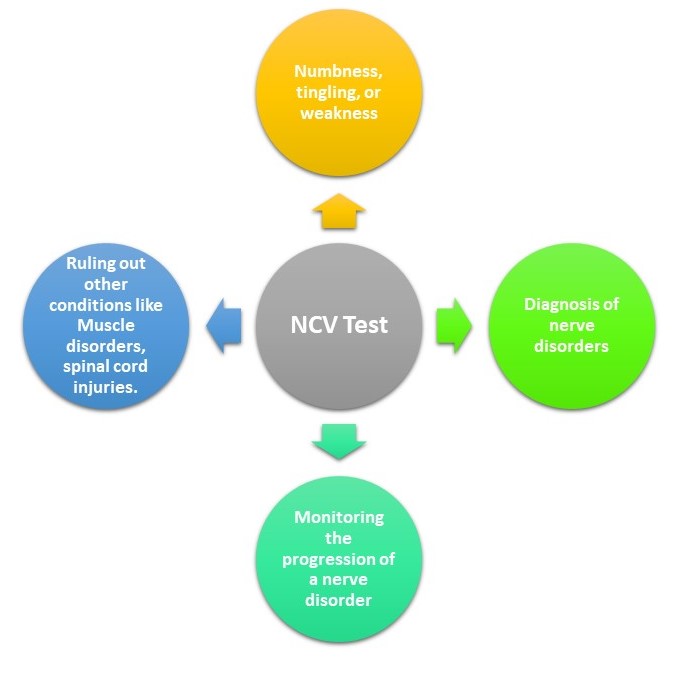
There are the following purposes of the NCV test.
Neurobiology deals with the brain and muscle movement coordination. The NCV and EMG test helps in diagnosing and managing the deadly and cureless neuromuscular disorders like ALS (Amyotrophic lateral sclerosis).
The NCV result may be normal or abnormal.
Normal
Consider a nerve conduction velocity test result of 50 to 60 meters per second to be normal. The Normal condition indicates the absence of any neuromuscular disorders.
Abnormal
Nerve conduction velocity beyond the normal range indicates nerve damage. Various conditions are responsible for abnormal NCV results. Your doctor will diagnose the condition depending upon other symptoms and further tests if required.
The NCV test poses no risk. The low voltage used causes no side effects, as recorded. Some may feel slight discomfort from the electric stimulation, which lasts for a short duration.
Certain risks in the NCV test depend upon an individual’s health condition. Conditions such as high body temperature, damage to the spinal cord, etc., may interfere with the result.
In conclusion, the NCV test is a diagnostic tool for evaluating the peripheral nerves’ functionality. A neurologist performs the test, which involves timing the speed at which electrical impulses pass through a nerve. Carry out the NCV test, which is not painful, in a hospital or doctor’s office. It is safe but in some cases, people with pacemakers or other electrical devices implanted in the body may have some risk.
The test results will show if the nerve is functioning normally or not. Overall it is a simple and effective way to diagnose nerve-related conditions such as peripheral neuropathy and carpal tunnel syndrome.
The patient shall go to the concerned expert for the result of the NCV test.
The abnormal result may indicate neurological issues like ALS syndrome, Myasthenia gravis and other neuromuscular diseases.
Nerve conduction is the electric signal transfer from the brain to the muscles via the nerves.
The disorder involving the issues in the movement of muscles is known as neuromuscular disorders.
The nerve conduction velocity is defined as the speed of travelling of the nerve impulse from the brain to the muscles.
The test usually takes between 30 minutes to an hour depending on the number of nerves being tested.
Some patients may feel a mild discomfort or tingling sensation during the test, but it is generally not considered painful.
The test is generally considered safe, with minimal risk of complications. However, patients with pacemakers or other electrical devices implanted in their body may be at a higher risk of complications and should inform their doctor before the test.
A Discount Providing Platform on all Diagnostic Services at your nearest Labs. 100's of Certified Labs, Assured Quality & Great Discounts.
