Your doctor may recommend an MRI defecography (defecogram) test if you’re experiencing difficulty with bowel movements or other rectal or anal symptoms. This specialized imaging test uses MRI technology to create detailed images of the rectum and anus, allowing doctors to diagnose and evaluate conditions that affect their function. MRI Defecogram price ranges from Rs 5200 to Rs 12000.
This blog post will provide a comprehensive guide to MRI defecography, including what it is, how it’s performed, and what conditions it can diagnose. We’ll also discuss this test’s benefits, potential risks, and what to expect during and after the procedure.
MRI Defecography is an important study for patients with bowel disturbances such as constipation, incontinence, rectal prolapse, or unexplained pain in the pelvic area. The uniqueness of this particular scan lies in it showing the rectum along with the pelvic floor during its act, unlike the conventional MRI, which only provides static images. Thereby, a clear view of muscle weakness, structural changes, or lack of coordination that affects standard bowel movements can be assessed. Being completely painless, the test is safe, free of any harmful radiation. Given the comprehensive imaging, the physician can explain the exact cause of the patient’s symptoms, enabling them to decide the best long-term treatment for relief and a better quality of life.
MRI defecography is a type of medical imaging test that uses MRI (magnetic resonance imaging) technology to create detailed images of the rectum and anus. Defecography is derived from ‘defecation’, which refers to the discharge of faeces from the body. This test is often used to diagnose and evaluate conditions that affect the function of the rectum and anus, such as rectal prolapse, faecal incontinence, and obstructed defecation. It can also be used to assess the effectiveness of certain treatments for these conditions.

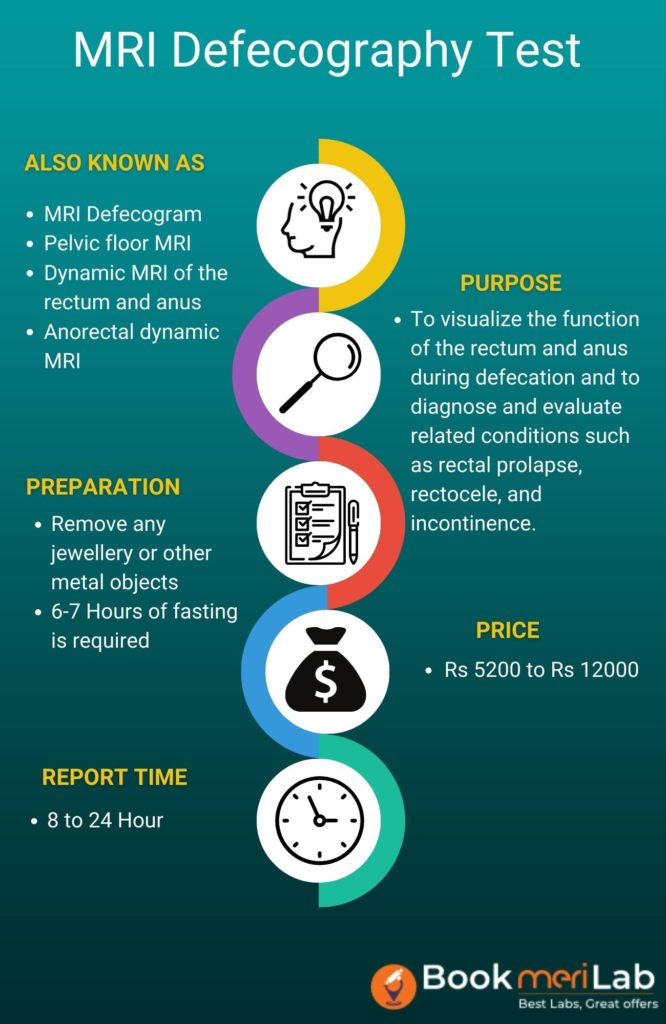
| Also Known As | MRI Defecography, MRI Defecogram, Pelvic floor MRI, Dynamic MRI of the rectum and anus, Anorectal dynamic MRI |
| Purpose | To visualize the function of the rectum and anus during defecation and to diagnose and evaluate related conditions such as rectal prolapse, rectocele, and incontinence. |
| Preparation | Remove any jewellery or other metal objects |
| Fasting | 6-7 hours is preferred |
| Machine Used | MRI Machine |
| Reporting Time | 8 to 24 Hrs. |
| Cost | Rs. 5200 to Rs. 12000 |
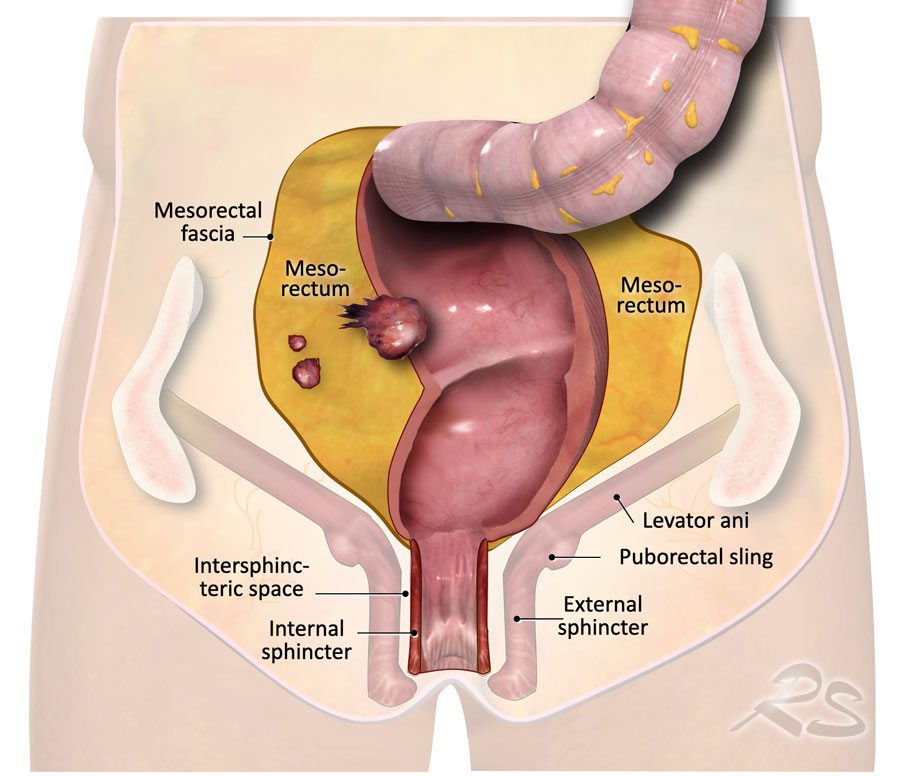
The anorectal region is the area of the body that includes the anus and rectum. Some related anatomical structures are-
MRI Defecogram is a special MRI test; thus, it is available only at a few MRI scan centres. Due to its specialised nature, limited availability and requirement of an experienced doctor, it is a usually expensive test. However, the actual cost would depend on the MRI centre, city, machine and Doctor.
Prices of MRI Defecography tests in various labs of Indian cities:-
| Name of the Lab | Test Price |
|---|---|
| Mahajan Imaging | Rs 10800/- |
| Pulse Imaging | Rs 5250/- |
| Aarthi Scans | Rs 6300/- |
| Vijaya Diagnostic Centre | Rs 10500/- |
| City X-Ray | Rs 9000/- |
| Shree Diagnostic Centre | Rs 4800/- |
| Prima Diagnostic | Rs 8000 |
| Bharat Scans | Rs 7500 |
| NM Medical | Rs 8500 |
The price range of the Defecogram test in various Indian cities:-
| Cities | Test Price |
|---|---|
| MRI Defecogram Price in Delhi | Rs 3000 – Rs 10800 |
| MRI Defecogram Price in Gurgaon | Rs 6300 – Rs 10800 |
| MRI Defecogram Price in Mumbai | Rs 3000 – Rs 6300 |
| MRI Defecogram Price in Kolkata | Rs 6300 |
| MRI Defecogram Price in Bangalore | Rs 6300 |
| MRI Defecogram Price in Hyderabad | Rs 6300 – Rs 10500 |
| MRI Defecogram Price in Chennai | Rs 5850 – Rs 6300 |
Some of the conditions that can be diagnosed using this test include:
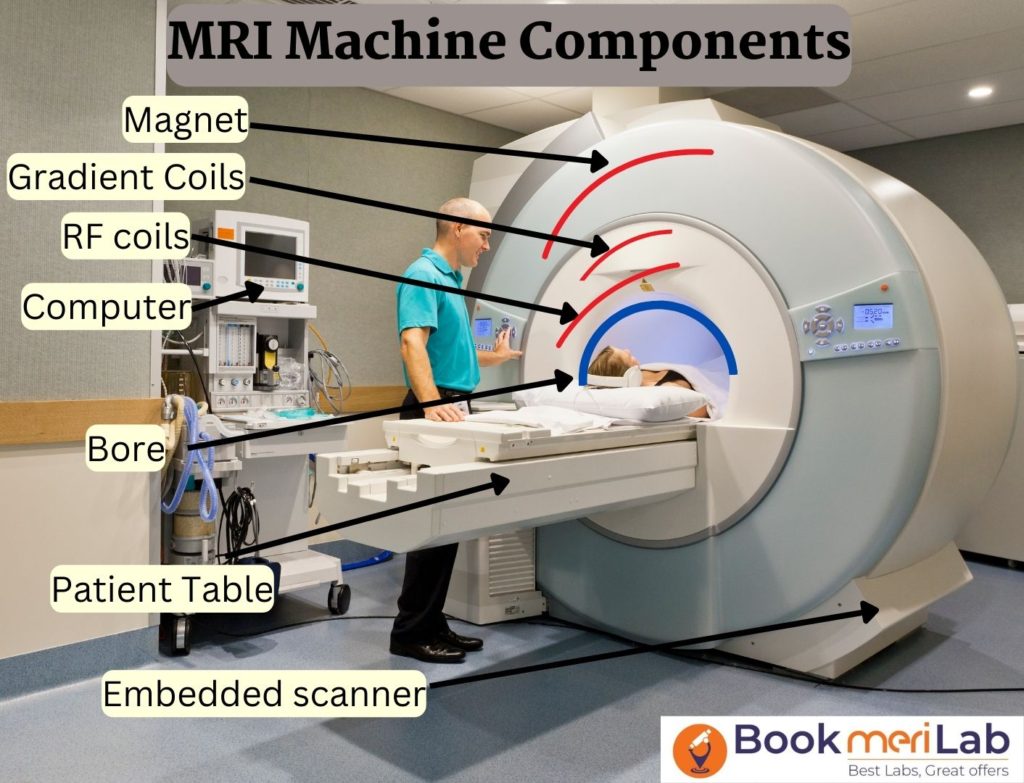
An MRI machine is a large hollow cylinder-shaped tube with a large magnet. It requires a person to lie on a table that slides into the machine’s centre. The person must lie on a table that slides into a tunnel toward the magnet’s centre.
The protocol for an MRI defecography test typically involves the following steps:
The entire procedure typically takes 30-60 minutes, depending on the number of images that are taken. The patient may experience some discomfort or pressure during the test, but it is generally well tolerated.
During an MRI defecography, the patient will be asked to lie on a table that slides into a narrow, cylinder-shaped MRI machine. They will be given earplugs or headphones to protect their hearing from the machine’s loud noises. The patient will be asked to perform several different positions and movements, such as straining to defecate or holding their breath, while the MRI machine takes images. The patient may also be asked to swallow a contrast agent to help visualize the rectum and colon on the MRI images. During the procedure, the patient may feel a sensation of fullness or pressure in their rectum and stomach. They may also feel a slight vibration from the MRI machine.
Overall, the procedure should not be painful, but the patient may feel discomfort due to the required positioning and movements. The procedure typically takes about 30 minutes to an hour.
After the test, the rectal balloon and contrast agent will be removed, and the patient may be asked to empty their bowels. They will be taken to a private restroom where they can clean up. The white, chalky barium that was used during the test may be visible in the stool for the next day or so. They can return to their normal activities and diet right away.
There are some benefits of MRI Defecography:
Use of MR Defecography has its own limitations when it comes to the diagnosis of pelvic floor disorders:
Notwithstanding the drawbacks, MR Defecography is still one of the best dependable and most detailed tests for evaluating the pelvic floor.
To analyze the results of an MRI defecography test, the doctor will review the images produced by the test and assess the function of the rectum and anus. The doctor will look for any structural abnormalities or abnormalities in the function of these organs, such as rectal prolapse or obstructed defecation.
The doctor may also use a grading system to evaluate the images and determine the severity of the condition. This grading system typically includes a series of categories or grades describing the function of the rectum and anus, such as normal, mild, moderate, and severe. The doctor can accurately diagnose the condition by assigning a grade to the images and recommending the appropriate treatment.
In addition to evaluating the images, the doctor may review the patient’s medical history, physical exam findings, and other relevant information to help diagnose the condition. By combining the results of the MRI defecography test with this information, the doctor can develop an accurate diagnosis and treatment plan for the patient.
Patients may be asked to stay in the radiology department for a short time after the test to ensure that they can defecate without any problems.
Here is the sample report of an MRI Defecography test results:
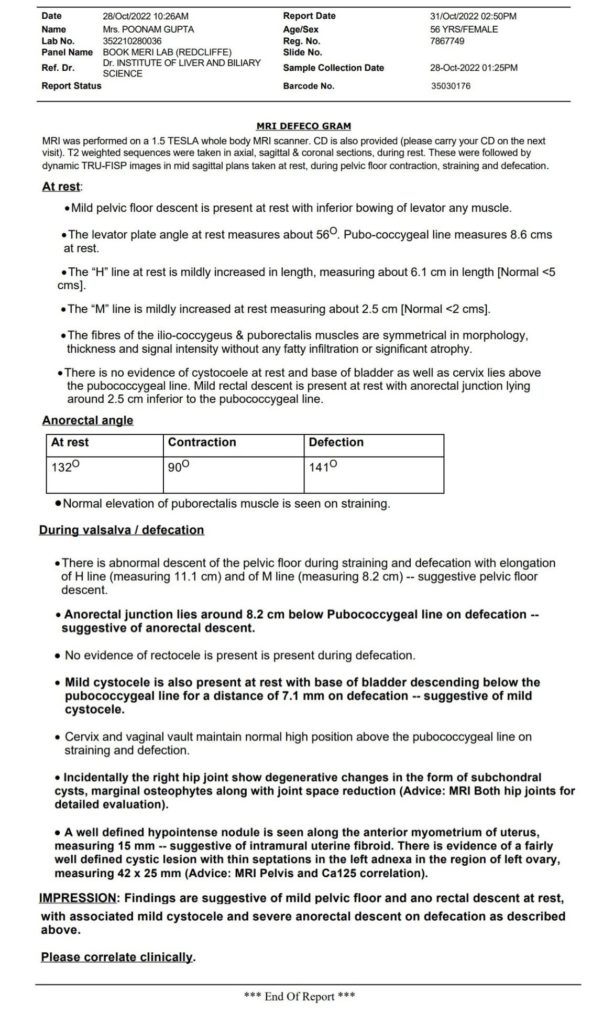
MRI Defecogram Sample Report.pdf is shown above.
There are some potential risks associated with MRI defecography. These risks include:
Overall, the risks of MRI defecography are very low, and the test is generally considered safe.
Overall, the MRI defecography test is a valuable diagnostic tool that can provide important information about the functioning of the rectum and anus. It is a non-invasive procedure that is generally well-tolerated by patients and can provide detailed images of the rectum and anus without the need for radiation or other potentially harmful substances. While the test may be somewhat uncomfortable for some patients, it is generally considered safe and effective for helping to identify and diagnose various conditions affecting the rectum and anus. In conclusion, the MRI defecography test is a useful and important diagnostic tool for patients experiencing issues with their rectum and anus, and it can provide valuable information to help guide the treatment and management of these conditions.
A. You may feel a little awkward, but the process involves no pain.
A. It usually takes 30 min to 60 mins.
It is typically recommended to undergo bowel preparation before a defecography test. This involves following a specific diet and taking laxatives to clear the colon and rectum of any faeces or gas, allowing for better visualization during the test. It is important to follow the instructions provided by your doctor or healthcare provider for proper bowel preparation.
X-ray defecography is a medical imaging test that uses X-rays to produce detailed images of the rectum and anus during defecation. During the test, the patient is asked to evacuate their bowels into a special container while X-ray images are taken to show how the rectum and anus function during defecation.
In India, an MRI defecography scan usually costs between ₹5,200 and ₹12,000. The price depends on the center, city, and if contrast dye is used.
MRI defecography is safe and does not need surgery. Most people do not have problems, but some may feel a little discomfort, especially while holding certain positions or using contrast dye.
Results are usually ready in a few hours to one day, depending on the center. A radiologist looks at the images and sends a detailed report to your doctor.
No, MR defecography is a special MRI that looks at the pelvic floor, rectum, and anus while passing stool. A normal MRI just scans body parts that are still.

Dr Garima Saroj is a dentist from Manipal college of dental sciences. She has previously worked at ESIC dental college and hospital Delhi and Dentecare multispecialty dental clinic Gurugram. She has a passion for writing for patient education and awareness.
A Discount Providing Platform on all Diagnostic Services at your nearest Labs. 100's of Certified Labs, Assured Quality & Great Discounts.