
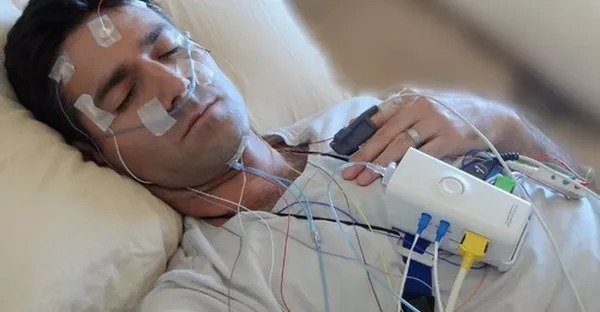
The sleep study test is a comprehensive sleep disorder diagnostic test. It is also known as polysomnography or sleep apnea test. The test evaluates body functions like breathing rate, brain waves, eye movements, blood oxygen while you are asleep.
An experienced sleep specialist oversees the entire polysomnography procedure and analyses the results. A sleep study expert can do polysomnography testing at home, and asleep centre or a designated area in the hospital. The patient has to come for the sleep study test in the late evening to record the various sleep patterns while the patient is sleeping.
You may be able to complete the sleep study at home in some cases. Home sleep apnea testing relies on a small number of sensors to diagnose obstructive sleep apnea (OSA).
| Also Known As | Sleep Apnea, Polysomnography, Sleep Disorder Test |
| Purpose | To detect Insomnia, Narcolepsy, Unusual Sleep Behaviour, any other Sleep Disorder |
| Preparation | Avoid caffeinated drinks and alcohol, avoid taking an afternoon nap, quiet room, comfortable clothes |
| Fasting | No |
| Machine Used | Polysomnogram |
| Reporting Time | About one week |
| Cost | Rs 6500 to Rs 25000 |
In India, sleep study test costs range from Rs 8000 to Rs 20000. The price depends upon the type of sleep study and the facilities provided.
We offer sleep study at an affordable price of Rs 4500. The table below shows the cost of a sleep study in major cities.
Most sleep studies monitor at home due to the need for peaceful environments and the requirement of night sleep. Diagnostic centres train their specialists to conduct the test with all the arrangements of sleep study equipment at home.
| City Name | Cost Range |
| Delhi | Rs 12000 to Rs 20000 |
| Gurgaon | Rs 12000 to Rs 20000 |
| Hyderabad | Rs 5000 to Rs 15000 |
| Chennai | Rs 5000 to Rs 12000 |
| Mumbai | Rs 5000 to Rs 10500 |
| Bangalore | Rs 5000 to Rs 15000 |
Check out the sleep study prices at some of the popular diagnostic centres in India are listed below:
| City Name | Cost Range |
| Wellcare Sleep Solutions | Rs 12000 |
| Sleep Cure Solutions | Rs 8000 to Rs 12000 |
| Aarthi Scan | Rs 5000 |
| Janta Xray | Rs 14000 |
| Sleep Apnoea India | Rs 13000 |
Healthcare professionals use the test to diagnose sleep disorders. Some of the common purposes of the sleep study are-
The doctor or sleep specialist will thoroughly explain the polysomnography test to the patient. Some of the things to keep in mind are as follows:
The sleep study procedure is performed in a hospital, clinic, or home. The entire procedure of sleep is monitored between the 2 phases. The two phases are rapid eye movement (REM) and non-rapid eye movement (NREM).
NREM is the phase when a person falls asleep. REM is the phase 1-2 hours after the person falls asleep.
Sleep study test is a safe, non-invasive, painless procedure with no risks and side effects. Some may experience skin irritation or mild rashes from the sensors.
The test marks the sleep stages and identifies any breathing or movement abnormalities or other sleep disorders. Following the test, the doctor or physician diagnoses and detects any sleep disorders based on the graphs obtained on the patient’s sleep cycles. Your doctor will discuss the result and explain it in detail.
Doctors use Apnea-Hypopnea Index (AHI) to detect sleep apnea.
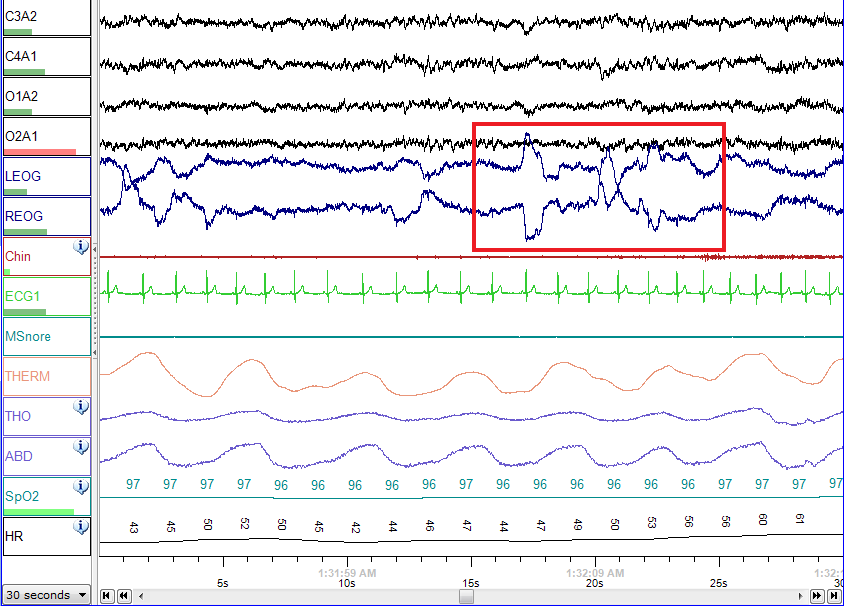
There are five types of sleep study. The type your doctor recommends will depend on one’s symptoms.
A test that is used to track sleep and various body activities while sleeping, such as:
Measure your degree of sleepiness during the day. A sleep technologist will perform this test the morning after you’ve had a diagnostic overnight PSG. It tracks how quickly you fall asleep during the day in peaceful surroundings, as well as how often you enter Rapid eye movement (REM) sleep.
If you have sleep apnea, the sleep doctor will ask you to return the next night to determine what air pressure is appropriate for your continuous positive airway pressure (CPAP) treatment. CPAP delivers air into your airways via a special nasal mask.
CPAP is needed because of Sleep Apnea and Hypopnea. Both are very similar but differ in significant ways. When you have sleep hypopnea, you take shallow breaths for 10 seconds or longer while sleeping, and your airflow is at least 30% lower than usual. However, because your airway is only partially blocked, you continue to breathe.
When you have sleep apnea, your airways become entirely obstructed, causing you to stop breathing for 10 seconds or more during the night. In either case, you may wake up several times during the night to catch your breath without realising it.
A test is performed when you have or suspect you have moderate to severe sleep apnea. The sleep professional uses the second half of the night to determine the necessary CPAP pressure to compensate for your apnea.
Instead of going to a sleep centre, your doctor may allow you to use an at-home sleep study test to diagnose obstructive sleep apnea (OSA). You can either ask a technician to visit your home or collect the device for a self home setup. The home sleep study is recommended when:
A: An average expectation is for seven hours of monitored sleep.
A: Yes, you may bring your phone, book, magazine to fall asleep at the sleep study centre.
A: It’s preferable to sleep on your back and side for the most accurate sleep apnea study at home.
A: The professionals remove the sensors attached to your skin in the morning, and you can resume your normal activities.
A: Sleep apnea puts you at risk for various other health issues. Sleep deprivation lowers your quality of life and raises concerns about your health. Thus, sleep study helps in the diagnosis and treatment of sleep disorders.
A: Test results are available 3 to 5 days after study.
Dr Bhumika Rana is a Bachelor of Ayurvedic Medicine & Surgery (B.A.M.S.). Earlier She was an Operation Specialist at AIIMS Delhi & a Medical officer with the National health mission.
A Discount Providing Platform on all Diagnostic Services at your nearest Labs. 100's of Certified Labs, Assured Quality & Great Discounts.
