
Rheumatoid Factor (RF) Test: Price, Purpose, & Range

Bookmerilab/Blood Tests/

Rheumatoid factor (RF) is an autoantibody produced by the body’s immune system that targets one’s own tissues instead of foreign substances. The RF blood test measures the level of rheumatoid factor in the blood. The presence of this antibody can indicate the presence of an autoimmune disorder, such as rheumatoid arthritis (RA), but it can also be found in people with other conditions or even in healthy individuals.

Therefore, the RF test is not conclusive for a diagnosis of RA, but it can be one of several factors considered by a doctor when evaluating a patient’s symptoms. The price range of RF blood test is usually between Rs 240 to Rs 495.

Your doctor may recommend a RF test because of the following reasons-

It’s important to remember that the presence of these symptoms alone does not necessarily mean that a person has RA or another autoimmune disorder. The doctor will consider many factors when making a diagnosis, including the results of blood tests, imaging studies, and the patient’s medical history.
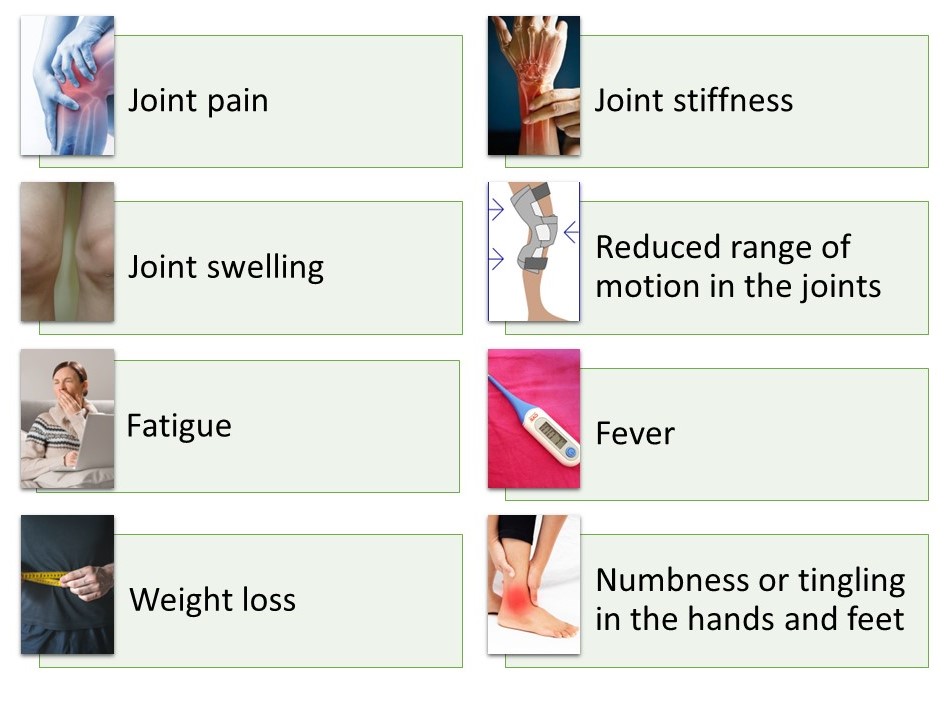
  1. Joint pain
  2. Joint stiffness
  3. Joint swelling
  4. Reduced range of motion in the joints
  5. Fatigue
  6. Fever
  7. Weight loss
  8. Numbness or tingling in the hands and feet
symptoms to consider

RF Test Details in Brief

Also Known AsRF Blood Test
PurposeTo detect the presence of Rheumatoid Factor antibodies in the blood, which are often associated with Rheumatoid Arthritis.
PreparationNo special preparation required.
FastingNo
Reporting Time8 to 24 Hrs.
CostRs 240 to Rs 495

Price

RF Test Price usually ranges from Rs 240 to Rs 495. The actual price depends on the diagnostic center and the city. Bookmerilab partners with more than 200 diagnostic centers across India. We provide a 10-50% discount on medical diagnostic tests.

Prices at Popular diagnostic centres

The table below lists the prices at some of the popular diagnostic centres.

Name of LabTest Price
Redcliffe LabsRs 399
Janta X Ray ClinicRs 360
City X-RayRs 375
Prognosis LaboratoriesRs 325
National ImagingRs 350
Bharat X Ray ClinicRs 325
Mahajan ImagingRs 336
Dr Lal path labsRs 420
Aarthi ScanRs 360

Cost in different cities

The test cost depends upon the one recommended by your healthcare professional. The cost varies depending on the lab and the city.

CityTest Price
RF Test Price in DelhiRs 240 to Rs 495
RF Test Price in MumbaiRs 338 to Rs 420
RF Test Price in BangaloreRs 360 to Rs 512
RF Test Price in HyderabadRs 270 to Rs 495
RF Test Price in GurgaonRs 260 to Rs 495
RF Test Price in ChennaiRs 315 to Rs 420
RF Test Price in KolkataRs 234 to Rs 399

Purpose

  1. Diagnosis of rheumatoid arthritis (RA): The test is used as one of several tools to help diagnose RA, an autoimmune disorder that primarily affects the joints.
  2. Monitoring of RA: For individuals who have already been diagnosed with RA, an RF test may be ordered periodically to monitor the progression of the disease and evaluate the effectiveness of treatment.
  3. Diagnosis of other autoimmune disorders: An RF test may also be used in conjunction with other tests to help diagnose other autoimmune disorders. For example:
  4. Evaluation of joint pain and swelling: An RF test may be ordered if a person presents with joint pain and swelling, which can be indicative of many different conditions, including RA.

Preparation

  1. No special preparation is usually required for the test. However, it’s a good idea to inform the healthcare provider of any medications, supplements, or herbal remedies that you’re taking, as some of these can affect the results of the test.
  2. If blood will be drawn from a vein, wear a short-sleeved shirt or a top that can easily be rolled up to expose the arm.
  3. It’s a good idea to drink plenty of water before the test to help hydrate the body and make it easier to draw blood.
  4. If you have a bleeding disorder or are taking blood-thinning medications, you may need to take extra precautions to avoid excessive bleeding after the test.

Procedure

It is a fairly simple diagnostic blood test. Below are the steps to draw a blood sample from the vein in your arm or hand-

  1. A technician (phlebotomist) may tie a tourniquet (elastic band) to your arm.
  2. The phlebotomist will locate your blood vessel.
  3. Then the site is cleaned with spirit.
  4. A Needle is inserted into your vein to draw the blood.
  5. The blood sample is then withdrawn into a syringe or a vial.
  6. Cotton is placed on the puncture site with mild pressure till the bleeding stops.
  7. A small band-aid is then placed, which may be removed after an hour.

The entire procedure takes only a few minutes.
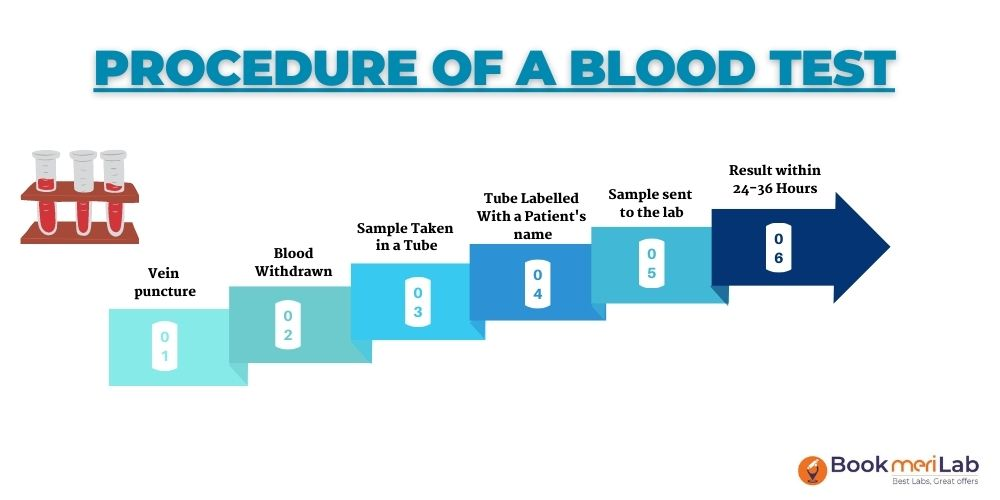
blood test procedure

Risk

It is a very simple and safe test. The risks involved are the same as that of any other blood test. These include-

  • Infection at the puncture site if proper sterilization protocol is not followed and the needle is contaminated. This is, however, very rare. You may ensure that your phlebotomist takes out the needle in front of you from a sterile pack.
  • Multiple pricks if the blood vessel is not easily found
  • Excessive bleeding at the puncture site- Please inform your healthcare provider if you are taking any blood thinners or have any bleeding disorders.
  • Light-headedness due to stress or heavy bleeding.

Minor pain and bruising that might occur will resolve on their own in a very short time.

Result

  1. Non-detectable or negative: The test does not detect any Rheumatoid Factor antibodies in the blood. This is typically considered a normal result.
  2. Positive: The increased rheumatoid factor level discovered in your blood indicates a positive (abnormal) outcome. This does not imply that your symptoms are always being brought on by rheumatic causes. However the chance that you have an illness connected to rheumatoid factors increases as your RF test findings rise. Your doctor may perform additional tests to determine whether you have:
    • Rheumatoid arthritis or another autoimmune disease.
    • Any chronic infection
    • Certain cancers

Limitations

  1. False positives: A positive result does not necessarily mean that a person has RA or another autoimmune disorder. RF can be present in other conditions or even in healthy individuals. Therefore, the test results must be interpreted in conjunction with other clinical information.
  2. False negatives: A negative result does not necessarily rule out the possibility of RA or other autoimmune disorders. Some people with RA do not have elevated RF levels, and other tests may be necessary for a definitive diagnosis.
  3. Lack of specificity: The RF test is not specific to RA and can be positive in other autoimmune disorders or infections, as well as in healthy individuals.
  4. Variability in test results: This test test can also produce different results in different laboratories, and even within the same laboratory, due to differences in testing methods and equipment.

Conclusion

In conclusion, the RF test is a blood test that measures the presence and level of rheumatoid factor antibodies in the blood. The RF test is just one of several tests used in the diagnosis of rheumatoid arthritis and is typically used in conjunction with other clinical evaluations, including medical history, physical examination, and imaging studies.

While a positive RF test can indicate rheumatoid arthritis, it is not always conclusive, and other factors may need to be considered to arrive at a definitive diagnosis. Your healthcare provider will interpret the results of your RF test in conjunction with other factors to determine an appropriate diagnosis and treatment plan.

FAQs

1. What is the purpose of the RF test?

The purpose of the RF test is to detect the presence of Rheumatoid Factor antibodies in the blood.

2. How is the RF test performed?

The RF test is a blood test that is typically performed in a laboratory setting.

3. Is there any preparation required before taking the RF test?

Generally, no special preparation is required before taking the RF test.

4. Is the RF test painful?

No, the RF test is a simple blood test and is typically not painful.

5. What does a positive result on the RF test mean?

A positive result on the RF test may suggest the presence of Rheumatoid Arthritis or another autoimmune disease.

6. Can a positive result on the RF test be a false positive?

Yes, a positive result on the RF test can sometimes be a false positive and may require additional testing for confirmation.

7. Can a negative result on the RF test rule out Rheumatoid Arthritis?

No, a negative result on the RF test does not completely rule out the possibility of Rheumatoid Arthritis or other autoimmune diseases.

8. Is the RF test the only test used for diagnosing Rheumatoid Arthritis?

No, the RF test is one of several tests that may be used to help diagnose Rheumatoid Arthritis, and a diagnosis usually requires a combination of clinical evaluation and multiple laboratory tests.

Leave a Reply

Your email address will not be published. Required fields are marked *

WhatsApp

Copyright © 2026 All Rights Reserved.

RF Test (Rheumatoid Factor): Price, Purpose & Normal Range