Prolactin Test- Price, Purpose, Procedure, Results [2026]

Bookmerilab/Blood Tests/

A prolactin blood test is used as a diagnostic tool to determine the levels of prolactin hormone. The pituitary gland, which can be found at the base of the brain, is responsible for producing the hormone prolactin. Since it promotes and maintains milk production in the mammary glands, the hormone is essential to the female reproductive system. 

Additionally, it plays a crucial role in regulating the immune system, the body’s metabolism, and the reaction to stress in both men and women. The test is frequently used to identify diseases that have an impact on prolactin levels, like hyperprolactinemia, which is defined by elevated prolactin levels in the blood. The price range of this test is usually between Rs 250 to Rs 550.
Prolactin test introduction

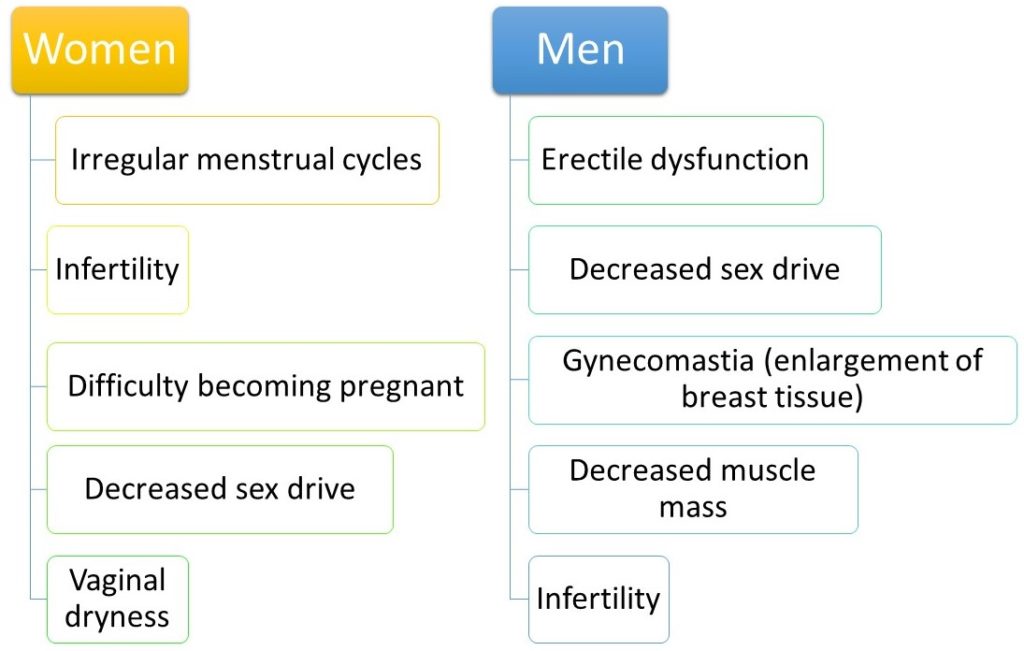
Your doctor may recommend a prolactin test if you show any of the following signs and symptoms:

  1. Irregular menstrual cycles
  2. Lactation (spontaneous milk production), not associated with breastfeeding, 
  3. Infertility
  4. Difficulty becoming pregnant
  5. Decreased sex drive
  6. Vaginal dryness
  7. Erectile dysfunction
  8. Gynecomastia (enlargement of breast tissue)
  9. Decreased muscle mass
  10. Body hair growth in women
symptoms that need Prolactin test
Symptoms that require a prolactin test in men and women

Prolactin Test Details in Brief

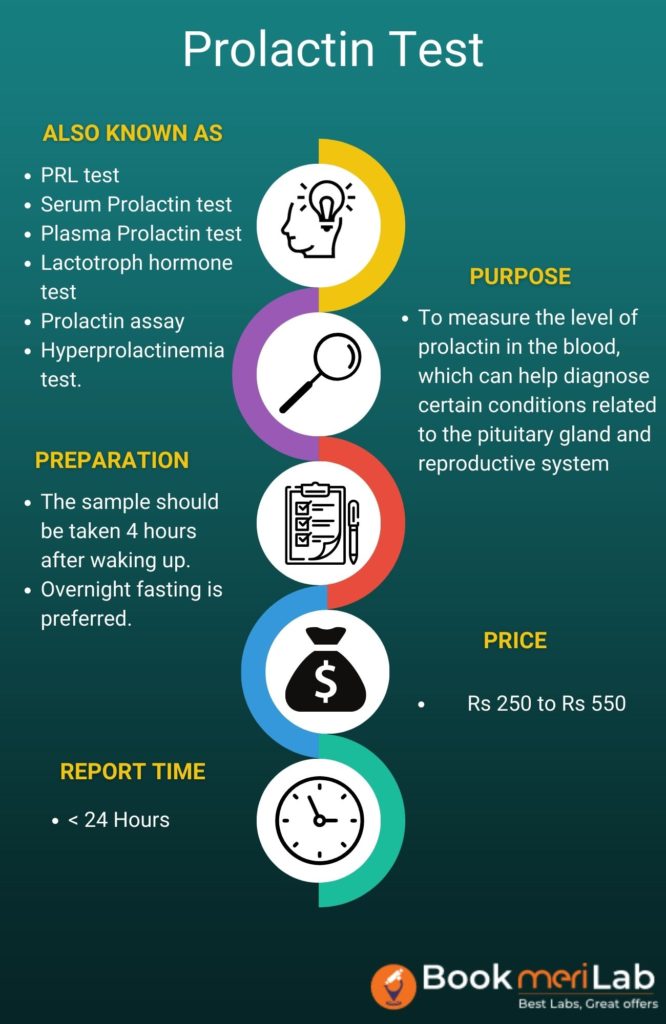
Also Known AsPRL test, Serum Prolactin test, Plasma Prolactin test, Lactotroph hormone test, Prolactin assay, Hyperprolactinemia test.
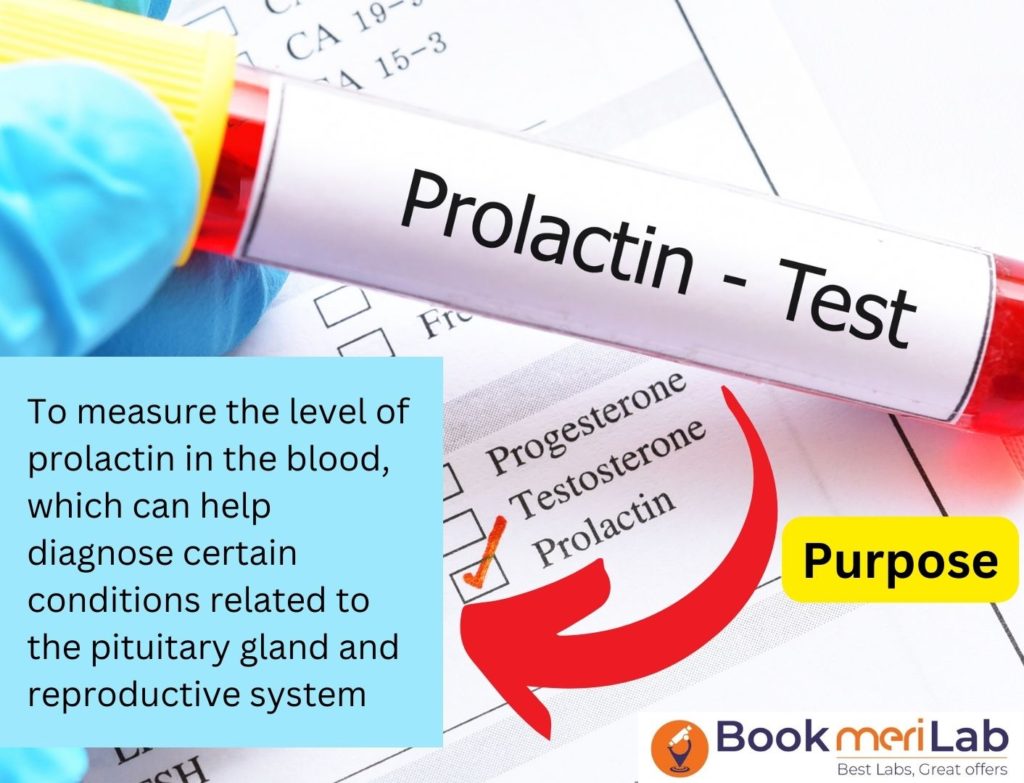
PurposeTo measure the level of prolactin in the blood, which can help diagnose certain conditions related to the pituitary gland and reproductive system.
PreparationThe sample should be taken 4 hours after waking up.
FastingOvernight fasting is preferred
Reporting Time8 – 24 hours
CostRs 250 to Rs 550

Price

The price of this test usually ranges from Rs 250 to Rs 550. The actual price depends on the diagnostic center and the city. Bookmerilab partners with more than 200 diagnostic centers across India. We provide a 10-50% discount on medical diagnostic tests.

Prices at Popular diagnostic centres

The table below lists the prices at some of the popular diagnostic centers.

Name of LabTest Price
Redcliffe LabsRs 385
City X-RayRs 337.995
Bharat X-RayRs 325
Janta X-Ray ClinicRs 270
Prognosis LaboratoriesRs 247.5
Dr Lal path labsRs 550

Cost in different cities

The test cost depends upon the one recommended by your healthcare professional. The cost varies depending on the lab and the city.

prolactin test summary

Purpose

This test helps-

  1. Explore the reasons behind women’s infertility and irregular menstruation.
  2. Investigate what causes galactorrhea (spontaneous milk production from the breast) in both men and women.
  3. Determines the root cause of male erectile dysfunction and diminished sex desire.
  4. Evaluates how well disorders such as pituitary tumors or hyperprolactinemia which impact prolactin levels, are responding to the treatment.
  5. Identifies additional medical disorders, such as hypothyroidism or kidney illness, that may impact prolactin levels.
Prolactin test purpose

Preparation

  1. Overnight fasting, usually 8-12 hours, before the test is preferred. This means no food or drink, except water.
  2. Consult with your healthcare provider regarding any medications you are taking, as some can affect the test results.
  3. Avoid nipple stimulation, sexual activity, or strenuous exercise for at least 24 hours prior to the test.
  4. Inform the healthcare provider if you are pregnant or breastfeeding, as pregnancy and lactation can affect prolactin levels.
  5. Wear clothing with loose sleeves that can be rolled up to allow easy access to your arm for the blood draw.

Procedure

It is a fairly simple diagnostic blood test. Below are the steps to draw a blood sample from the vein in your arm or hand-

  1. A technician (phlebotomist) may tie a tourniquet (elastic band) to your arm.
  2. The phlebotomist will locate your blood vessel.
  3. Then the site is cleaned with spirit.
  4. A Needle is inserted into your vein to draw the blood.
  5. The blood sample is then withdrawn into a syringe or a vial.
  6. Cotton is placed on the puncture site with mild pressure until bleeding stops.
  7. A small band-aid is then placed, which may be removed after an hour.

The entire procedure takes only a few minutes.
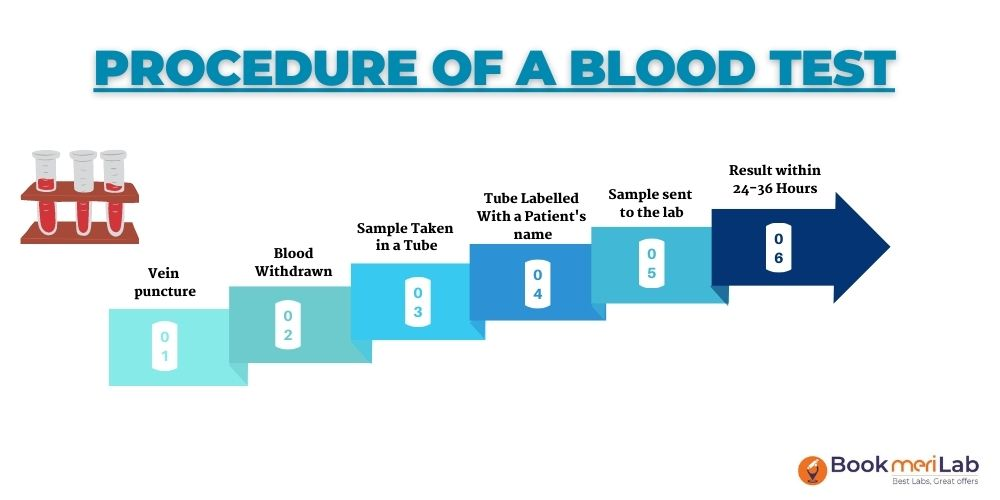
blood test procedure

Risk

It is a very simple and safe test. The risks involved are the same as that of any other blood test. These include-

  • Infection at the puncture site if proper sterilization protocol is not followed and the needle is contaminated. This is, however, very rare. You may ensure that your phlebotomist takes out the needle in front of you from a sterile pack.
  • Multiple pricks if the blood vessel is not easily found
  • Excessive bleeding at the puncture site- Please inform your healthcare provider if you are taking any blood thinners or have any bleeding disorders.
  • Light-headedness due to stress or heavy bleeding.

Minor pain and bruising that might occur will resolve on their own in a very short time.

Result

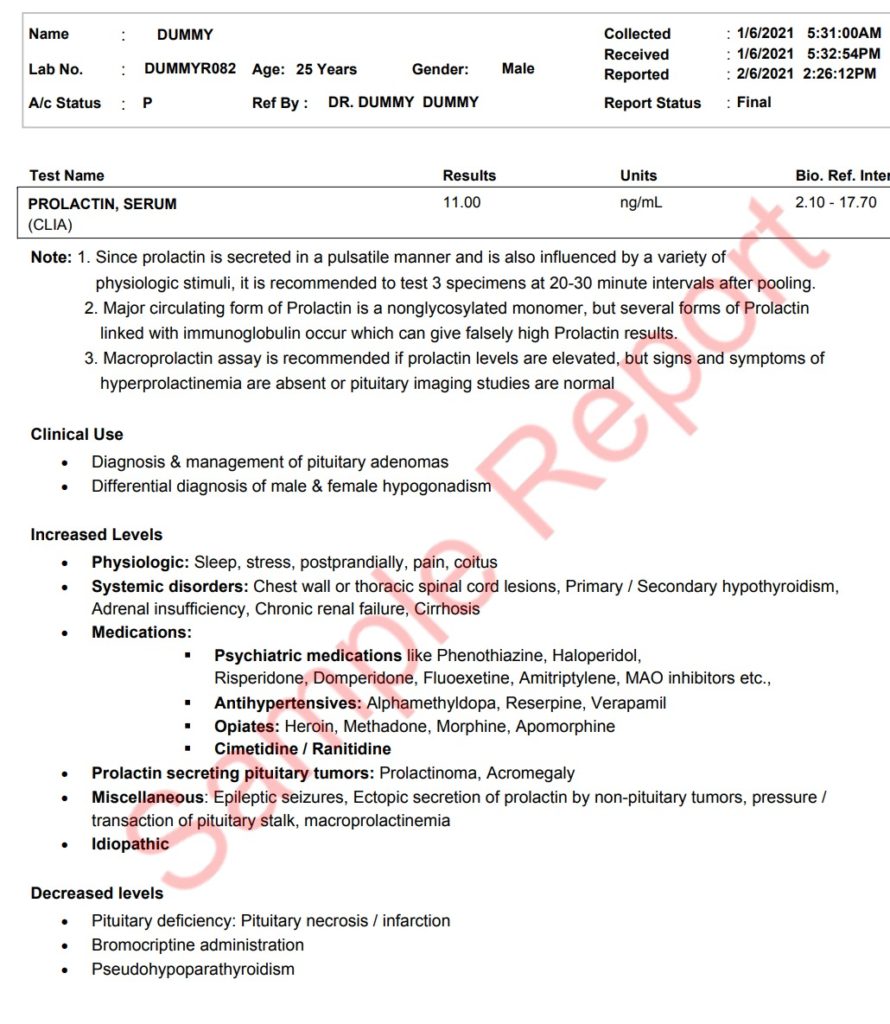
The results of a prolactin test show the level of prolactin hormone in the blood. Normal prolactin levels in women who are not pregnant or breastfeeding are generally between 2-29 ng/mL, while normal levels in men are usually between 2-18 ng/mL. The normal level of prolactin in pregnant women is between 10-209 ng/ml.

GenderNormal Prolactin RangeUnit
Women2-29ng/mL
Men 2-18ng/mL
Pregnant Women10-209ng/mL

Elevated prolactin levels can be due to the following reasons-

  • Hyperprolactinemia– It has a range of symptoms such as irregular periods, infertility, and breast milk production in non-pregnant or non-lactating individuals.
  • Physiologic: Sleep, stress, postprandially, pain, coitus
  • Systemic disorders: Chest wall or thoracic spinal cord lesions, Primary / Secondary hypothyroidism,
  • Adrenal insufficiency, Chronic renal failure, Cirrhosis
  • Medications:
    • Psychiatric medications like Phenothiazine, Haloperidol,
    • Risperidone, Domperidone, Fluoexetine, Amitriptyline, MAO inhibitors, etc.,
    • Antihypertensives: Alphamethyldopa, Reserpine, Verapamil
    • Opiates: Heroin, Methadone, Morphine, Apomorphine
    • Cimetidine / Ranitidine
  • · Prolactin secreting pituitary tumors: Prolactinoma, Acromegaly
  • · Miscellaneous: Epileptic seizures, Ectopic secretion of prolactin by non-pituitary tumors, pressure

Decreased prolactin levels can be due to the following reasons-

  • Pituitary deficiency: Pituitary necrosis/infarction
  • Bromocriptine administration
  • Pseudohypoparathyroidism

Sample Report

Limitations

  1. False positives: Certain medications, stress, and other factors can cause elevated levels of prolactin, leading to false positive results.
  2. Lack of specificity: Elevated prolactin levels can be caused by various conditions, including tumors, pregnancy, and certain medications. Therefore, an elevated prolactin level does not necessarily indicate a specific diagnosis.
  3. Timing: Prolactin levels can vary throughout the day, and the highest levels are typically found during sleep. Therefore, it is important to consider the timing of the test when interpreting results.
  4. Interpretation: Interpreting prolactin levels can be complex and requires expertise. Factors such as age, gender, and medications must be taken into account when interpreting results.

Conclusion

To sum up, a prolactin test is a quick and simple blood test that determines the amount of the prolactin hormone in the blood. A number of medical diseases, including hyperprolactinemia, which can present with a wide range of symptoms, can be indicated by elevated prolactin levels. 

Healthcare professionals can identify and treat underlying disorders that have an impact on the pituitary gland and the reproductive system by evaluating prolactin levels. A prolactin test can provide important details about your hormonal health and assist you in maintaining general well-being with the right planning and follow-up with your healthcare professional.

FAQs

Q: What is a prolactin test?

A: A blood test used to measure the level of prolactin hormone in the blood.

Q: How is a prolactin test performed?

A: By collecting a sample of blood from a vein, usually in the arm.

Q: What should I do to prepare for a prolactin test?

A: Avoid nipple stimulation, sexual activity, or strenuous exercise for 24 hours prior to the test, and fast for 8-12 hours.

Q: What can cause elevated prolactin levels?

A: Conditions such as hyperprolactinemia, stress, certain medications, and hypothyroidism.

Q: What symptoms are associated with hyperprolactinemia?

A: Irregular periods, infertility, breast milk production in non-pregnant or non-lactating individuals, and decreased sex drive.

Q: What are the normal prolactin levels in the blood?

A: Normal levels in women who are not pregnant or breastfeeding are generally between 2-29 ng/mL, while normal levels in men are usually between 2-18 ng/mL.

Q: What should I do if I have elevated prolactin levels?

A: Follow up with your healthcare provider for further testing and treatment.

How to Book a Prolactin Test?

How to Book Prolactin Test?

Leave a Reply

Your email address will not be published. Required fields are marked *

WhatsApp

Copyright © 2026 All Rights Reserved.

Prolactin Test: Price, Preparation, Procedure & Normal Range