
The Serum ketone test measures the level of ketones in your blood. It is generally done to check for a complication of diabetes called diabetic ketoacidosis (DKA). The serum ketone test price ranges from Rs 500 to Rs 1000 and in-home sample collection may also be availed.
Ketones are produced as by-products when the body uses fat as an energy source instead of glucose. In diabetics, there can be a build-up of these ketone bodies, first causing ketosis and then progressing to ketoacidosis, a form of metabolic acidosis which can be life-threatening.
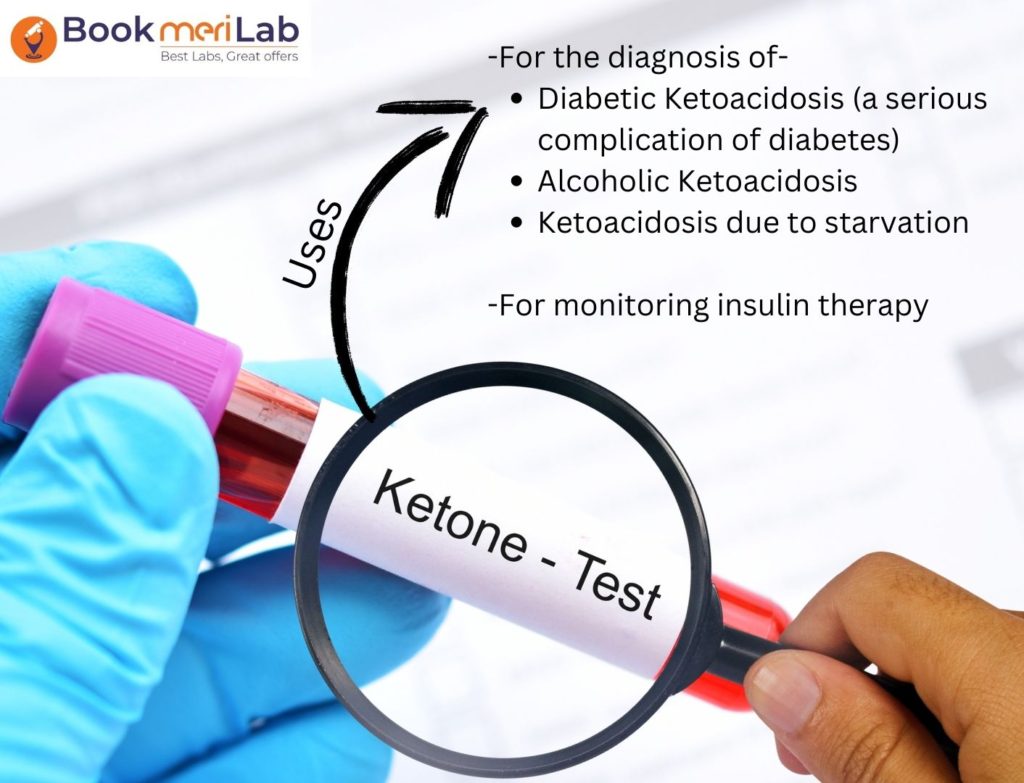
DKA is a serious complication of diabetes. It is more common with type 1 diabetes (Insulin dependent). People with DKA may have sudden hypertension (increase in blood pressure), a severe insulin deficiency, and disruption of the body’s acid-base balance. DKA can cause emergencies like a coma or even death.
| Also Known As | Blood Ketone Test, Plasma Ketone Test, Beta-Hydroxybutyric acid, Acetoacetic acid, Blood ketone (D3HB) or Acetoacetate |
| Purpose | To help diagnose diabetic ketoacidosis and monitor insulin therapy |
| Preparation | No special preparation is required. |
| Fasting | Not needed |
| Reporting Time | 24 Hrs |
| Cost | Rs. 500 to Rs. 1000 |
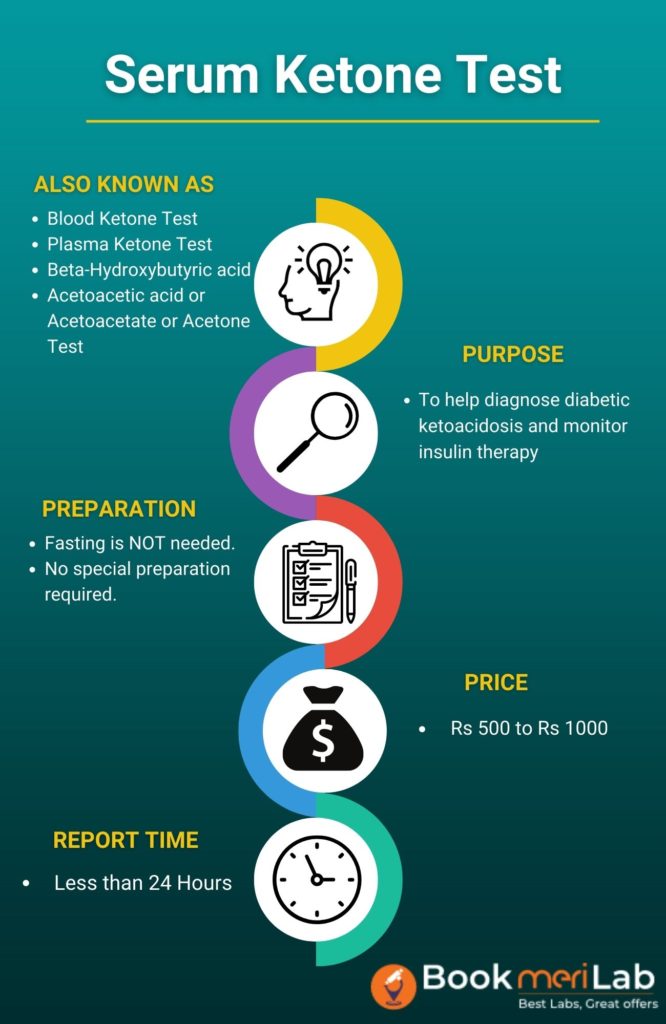
Serum Ketone Test Price usually ranges from Rs 500 to Rs 1000. The actual price depends on the diagnostic center and the city. Bookmerilab partners with more than 200 diagnostic centers across India. We provide a 10-50% discount on medical diagnostic tests.
The table below lists the Blood ketone prices at some popular diagnostic centres.
| Name of Lab | Test Price |
|---|---|
| Redcliffe Labs | Rs 1500 |
| Dr Lal Path labs | Rs 1500 |
| Metropolis Healthcare | Not Available |
| SRL Diagnostics | Rs 600 |
| Vijaya Diagnostics | Rs 900 |
The Serum Ketone test cost varies from one city to another. Moreover, a Diagnostic chain can also have different prices in different cities.
The table below lists the city-wise prices. You can click the link to get the diagnostic centres’ list, prices, and discounts.
Glucose (blood sugar) is the body’s primary energy source. When it is unavailable, or the body cannot use it because of insufficient or no insulin, the liver starts breaking down fat for energy. When fat is metabolized, byproducts called ketones are produced.
Although the breakdown of fat for energy and the creation of ketones is normal for everyone, people with diabetes are at a higher risk for ketone buildup in their blood. In a person without diabetes, hormones – insulin, glucagon, and others- prevent serum ketone levels in the blood from getting too high.
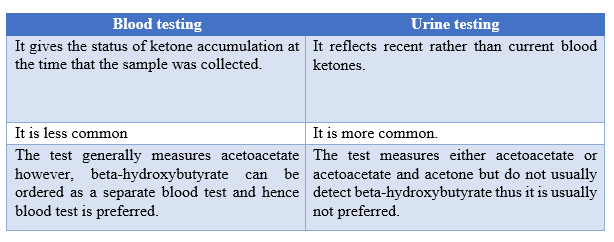
Different ketone tests measure one or more ketone bodies, and their results are not interchangeable. There are three ketone bodies – acetoacetate, beta-hydroxybutyrate, and acetone.
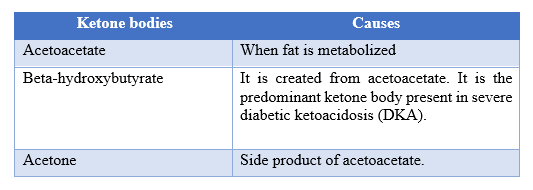
The serum Ketone Test is used
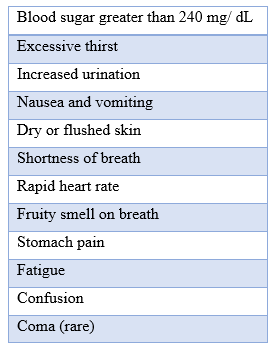
A blood ketone test may be essential if you have the symptoms of Diabetic Ketoacidosis like the following-
Serum Ketone or Blood Ketone Test is the body’s most accurate measure of ketones. However, the ketones may also be tested in the breath and the urine.
This test measures ketone in breath using a breath ketone meter or a ketone breathalyzer. It is a handy way to monitor ketones for diabetics. It is also used by people on keto diets to monitor ketosis.
The urine ketone test measures the ketone levels in urine (a condition called Ketonuria). The body excretes ketones through urine. They are detectable in urine after 3-4 hours of being produced. This test can also be done with the help of home use kits which consist of indicator strips that change colour when dipped in urine for some time (as mentioned in the instructions). It is then matched to a shade card. The darker the colour, the more ketones are in the urine. Pregnant diabetic females commonly use it.
Do inform your doctor if you are taking any medicine, both prescription and non-prescription, ayurvedic, etc. Your doctor may advise you to stop the ones that can affect the test results. DO NOT stop any medication on your own. Fasting is not needed.
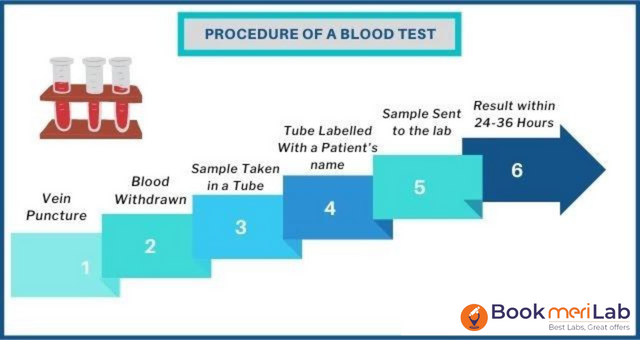
It is a fairly simple diagnostic blood test. A blood sample is taken from the vein in your arm or hand by the following steps-
The entire procedure takes only a few minutes.
It is a very simple and safe test. The risks involved are the same as that of any other blood test. These include-
Minor pain and bruising that might occur will resolve on their own in a very short time.
The normal levels for ketone bodies are less than 0.6 millimoles per liter (mmol/L)
| Parameter | Normal Values | Unit |
|---|---|---|
| Ketones | Less than 0.6 | mmol/L |
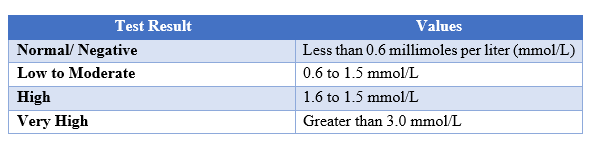
A normal test result is negative, meaning no ketones were found in the blood.
If the blood test is positive, then it means that high serum ketone levels are found. The ketone levels may be high because of the following:
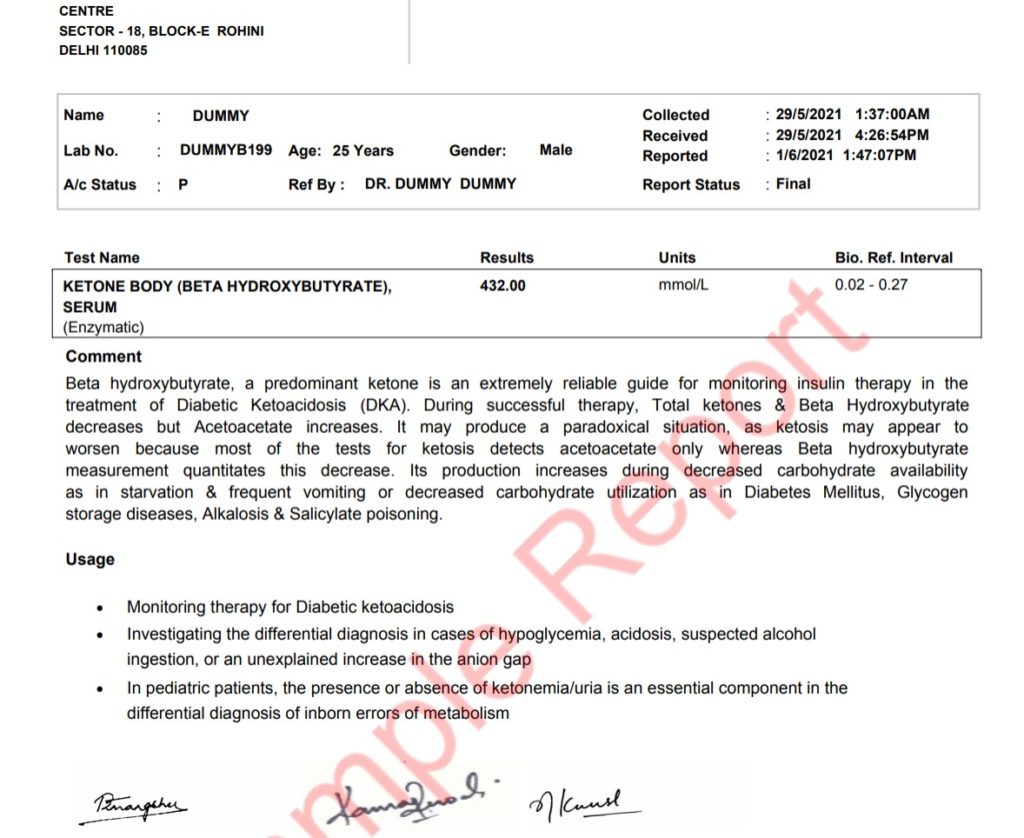
Some conditions can cause a positive test result for blood ketones. These include:
The blood Ketone or serum ketone test is very important for diabetics. A build-up of ketone bodies in the blood can trigger acidosis. Diabetics that are dependent on insulin have a higher risk of diabetic ketoacidosis. Ketosis (small amount of ketone buildup) and ketoacidosis may also be seen with prolonged starvation, alcoholism, and high-fat and low-carbohydrate diets (keto diets). It may be induced on purpose in some children with epilepsy who have frequent seizures and do not respond to available medications or other treatments.
High ketone levels in the blood can decrease the pH of the blood, i.e. the blood becomes too acidic. This most commonly occurs in diabetics and is called Diabetic Ketoacidosis. This is a severe life-threatening condition. It is a medical emergency and must be treated immediately.
Levels lower than 0.6 millimoles per litre are considered normal levels.
Ketones can upset the chemical balance of the body, which can lead to multiple organ failures, and if left untreated it may be fatal.
There are three types of ketone bodies – acetoacetate, beta-hydroxybutyrate, and acetone.
It can be treated by insulin therapy which must be well monitored. The fluid and electrolyte imbalance may be treated with intravenous fluids and electrolytes. Drinking a lot of water can help kidneys flush the ketones out of the body.
Ketones can be measured using blood and urine samples. It can also be measured in breath using a breath ketone meter.

Dr Garima Saroj is a dentist from Manipal college of dental sciences. She has previously worked at ESIC dental college and hospital Delhi and Dentecare multispecialty dental clinic Gurugram. She has a passion for writing for patient education and awareness.
A Discount Providing Platform on all Diagnostic Services at your nearest Labs. 100's of Certified Labs, Assured Quality & Great Discounts.
