APTT Test (Activated Partial thromboplastin time) is a blood test that measures the time taken by your blood to form a clot after an injury that causes bleeding. Whenever you get hurt and it starts to bleed, certain proteins in your blood called the clotting factors come together in a certain arrangement and form a blood clot that stops the bleeding. The APTT Test price ranges from Rs 300 to Rs 600, and an in-home sample collection is also available.
The APTT test helps to evaluate the functioning of some of these clotting factors.
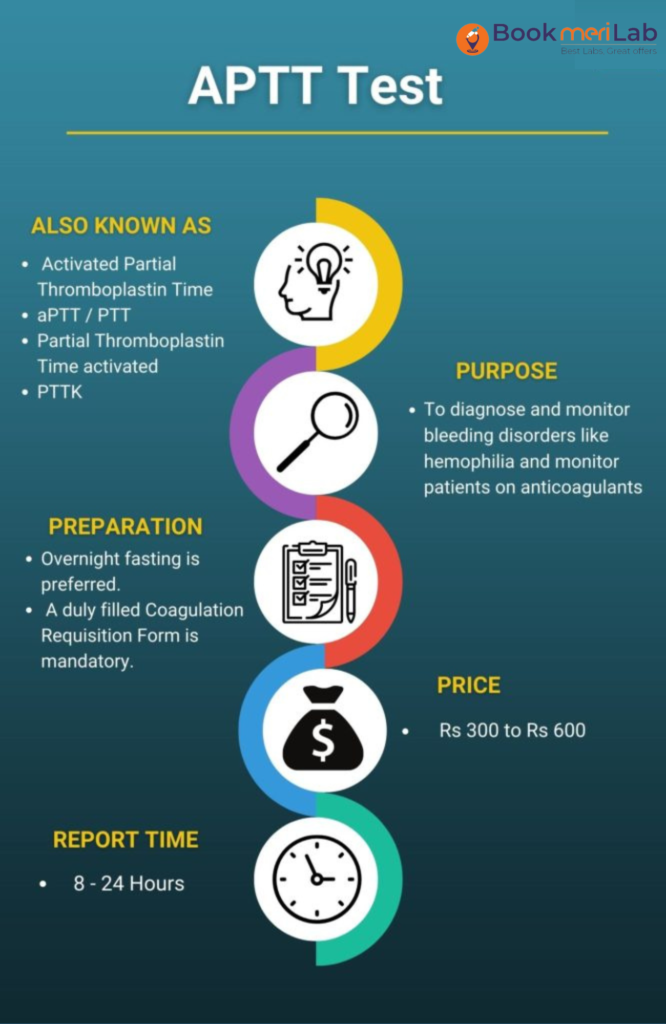
| Also known as | PTT, PTTK, Partial Thromboplastin Time activated, Activated Partial thromboplastin time |
| Purpose | To diagnose and monitor bleeding disorders like haemophilia and monitor patients on anticoagulants. |
| Preparation | Overnight fasting is preferred. A duly filled Coagulation Requisition Form. |
| Cost | Rs 300 to Rs 600 |
| Reporting time | <24 hours |
APTT Test Price usually ranges from Rs 300 to Rs 600. The actual price depends on the diagnostic center and the city. Bookmerilab partners with more than 200 diagnostic centers across India. We provide a 10-50% discount on medical diagnostic tests.
The table below lists the prices at some of the popular diagnostic centres.
| Name of Lab | Test Price |
|---|---|
| Redcliffe Labs | Rs 500 |
| Metropolis Healthcare | Rs 500 ( City-based ) |
| SRL Diagnostics | Rs 370 |
| Dr Lal path labs | Rs 550 |
| Vijaya Diagnostics | Rs 550 |
The APTT test cost depends on and varies from one city to another. Moreover, a Diagnostic chain can have different prices in different cities.
The table below lists the city-wise prices. You can click on the link to get the list of diagnostic centres, their prices and discount.
Partial thromboplastin time (PTT) and activated partial thromboplastin time (aPTT) are used to test for the same functions. However, in aPTT, an activator is added that speeds up the clotting time. The aPTT is considered a more sensitive version of the PTT.
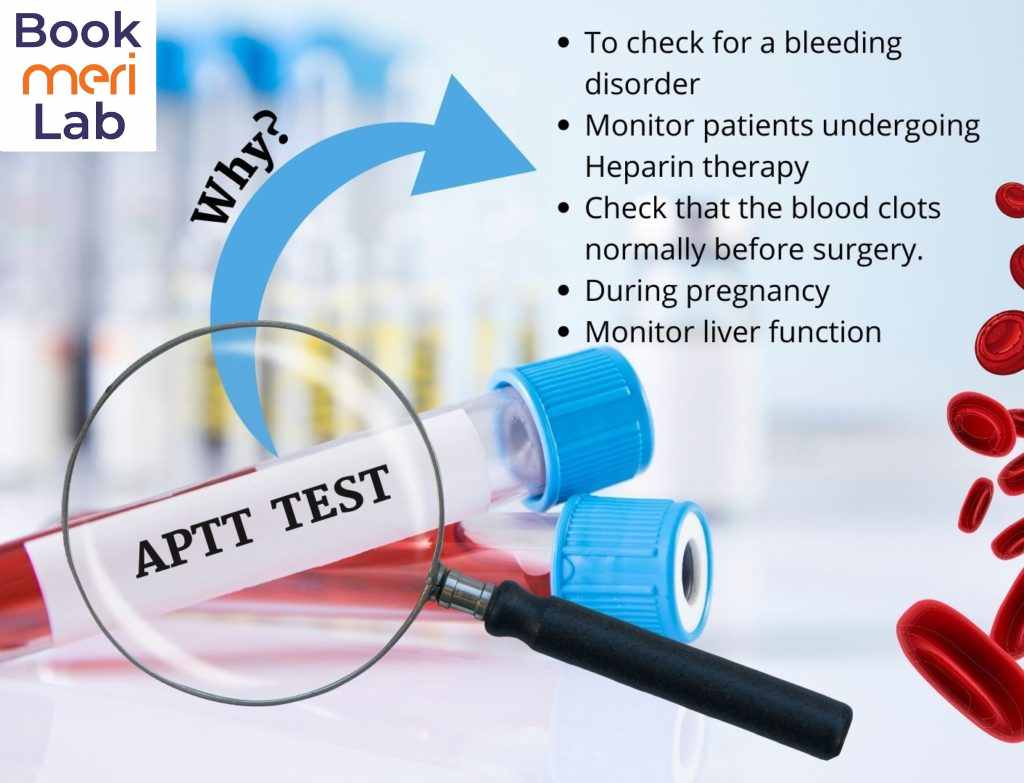
Your doctor may order APTT test to diagnose:
Overnight fasting is preferred. A duly filled Coagulation Requisition Form is mandatory. Do inform your doctor if you are taking any medicine both prescription and non-prescription, ayurvedic, etc. Your doctor may advise you to stop the ones that can affect the test results. DO NOT stop any medication on your own.
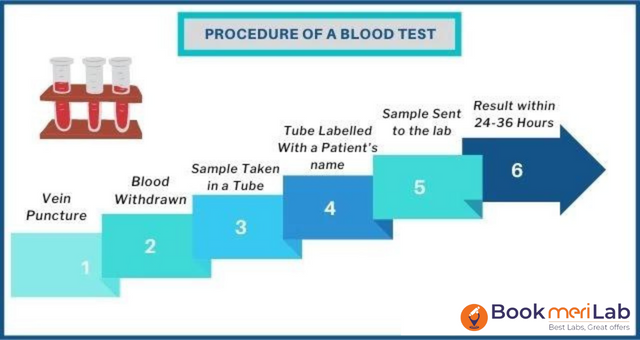
It is a fairly simple diagnostic blood test. A blood sample is taken from the vein in your arm or hand by the following steps-
The entire procedure takes only a few minutes.
It is a very simple and safe test. The risks involved are the same as that of any other blood test. These include-
Minor pain and bruising that might occur will resolve on their own in a very short time.
aPTT test measures the clotting time in seconds.
The normal range of Partial thromboplastin time (PTT) is 60-70 seconds, and of activated Partial thromboplastin time (APTT) is 30-40 seconds.
| Parameter | Range | Unit |
|---|---|---|
| APTT | 30-40 | sec |
| PTT | 60-70 | sec |
Deviation from the normal range on either side (higher or lower) is considered abnormal.
A prolonged aPTT result may indicate the following-
A shortened aPTT result may indicate the following :
The image below is a sample report. You can check normal values, reporting notes and special instructions for the APTT test.
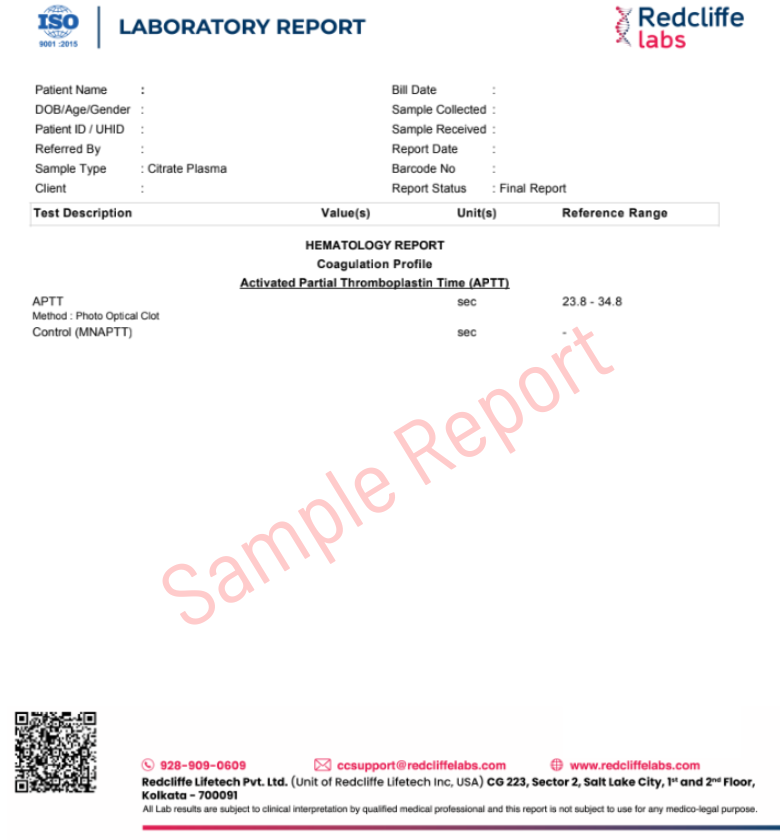
Even with a normal PTT result, mild to moderate deficiencies of a single coagulation factor may be present. The PTT may not be prolonged until the factor levels have decreased to 30% to 40% of normal. On the other hand, lupus anticoagulant may be present but may not prolong the PTT result. Hence it may need to be supported with other tests for definite diagnosis and interpretation.
APTT is an important test to detect disorders of bleeding and coagulation. It is especially important before surgery and pregnancy.
Any deviation from the normal range must be investigated well enough. Regardless of the results, you need to discuss them with your healthcare provider for a better understanding and course of action.
Exercise, meditate, and sleep well! We wish you a happy, healthy, and relaxed life!
APTT Test
This means that your blood is not clotting properly. This could be due to deficiency of any clotting factor causing diseases like von Willebrands, Hemophilia etc., or chronic diseases like liver cirrhosis, vitamin K deficiency, or autoimmune disorders like APS (Antiphospholipid antibody syndrome), etc.
The other tests that may be needed are-
-Prothrombin time
-INR ratio
-Platelet count
-DRVVT Or dilute Russell viper venom test
-Fibrinogen testing
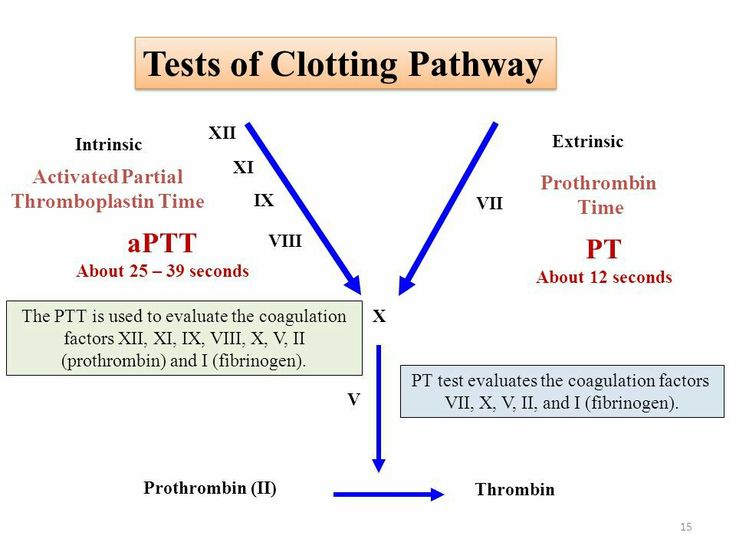
When body tissue is injured and begins to bleed, it initiates a sequence of clotting factor activities -the coagulation cascade- leading to the formation of a blood clot. This cascade comprises three pathways: extrinsic, intrinsic, and common.
Two laboratory tests are used commonly to evaluate coagulation disorders: Prothrombin Time (PT) which measures the integrity of the extrinsic system as well as factors common to both systems and Partial Thromboplastin Time (PTT), which measures the integrity of the intrinsic system, and the common components.
(Refer to the diagrammatic flowchart above)
It may differ between different labs. It is usually between 30-40 seconds.
APTT test may show a prolonged APTT in cases of severe dehydration.
Dr Garima Saroj is a dentist from Manipal college of dental sciences. She has previously worked at ESIC dental college and hospital Delhi and Dentecare multispecialty dental clinic Gurugram. She has a passion for writing for patient education and awareness.
A Discount Providing Platform on all Diagnostic Services at your nearest Labs. 100's of Certified Labs, Assured Quality & Great Discounts.