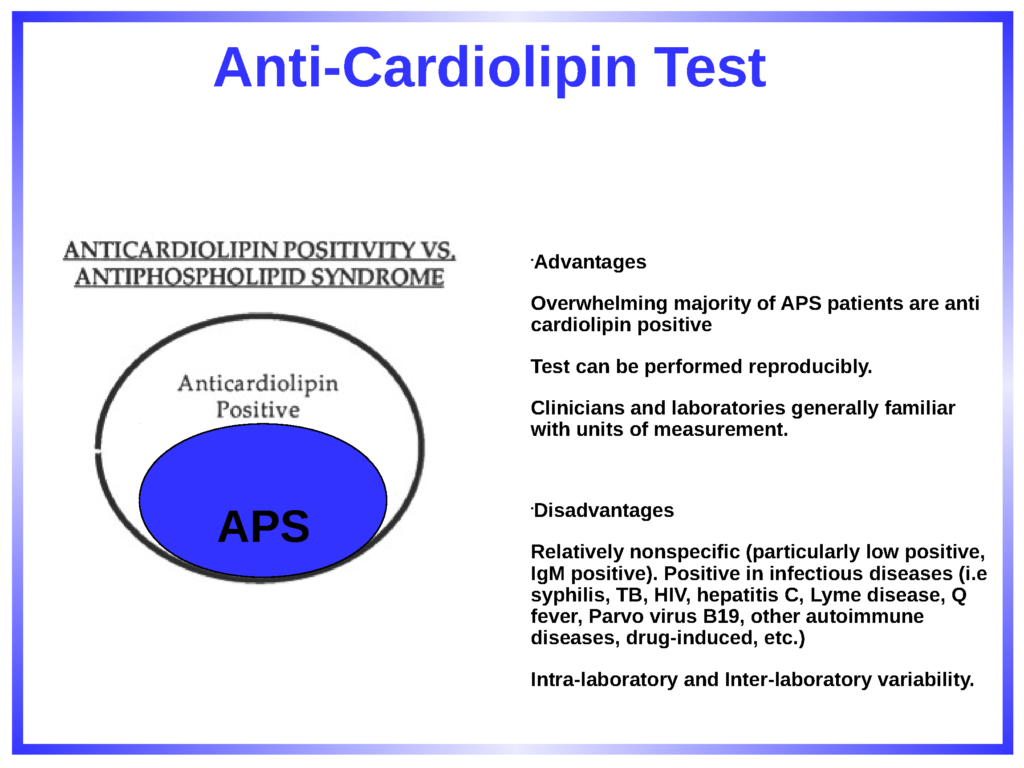
The anticardiolipin antibody or ACLA test is a blood test that detects increased levels of autoantibodies IgG, IgM, and IgA. It is helpful in diagnosing diseases that interfere with blood clotting, like antiphospholipid syndrome (APS). The ACLA IgA, IgG and IgM Test Prices usually range from Rs 500 to Rs 1000 separately and the cost for the combined test is between Rs 1500 to Rs 2500.
The immune system usually creates antibodies to fight infections. However, at times, the body’s immune system faultily makes antibodies against itself, known as autoantibodies. Anticardiolipin antibodies are a type of autoantibody. Whereas Cardiolipins are a type of phospholipids (fats) found in the blood that is important for blood clotting.
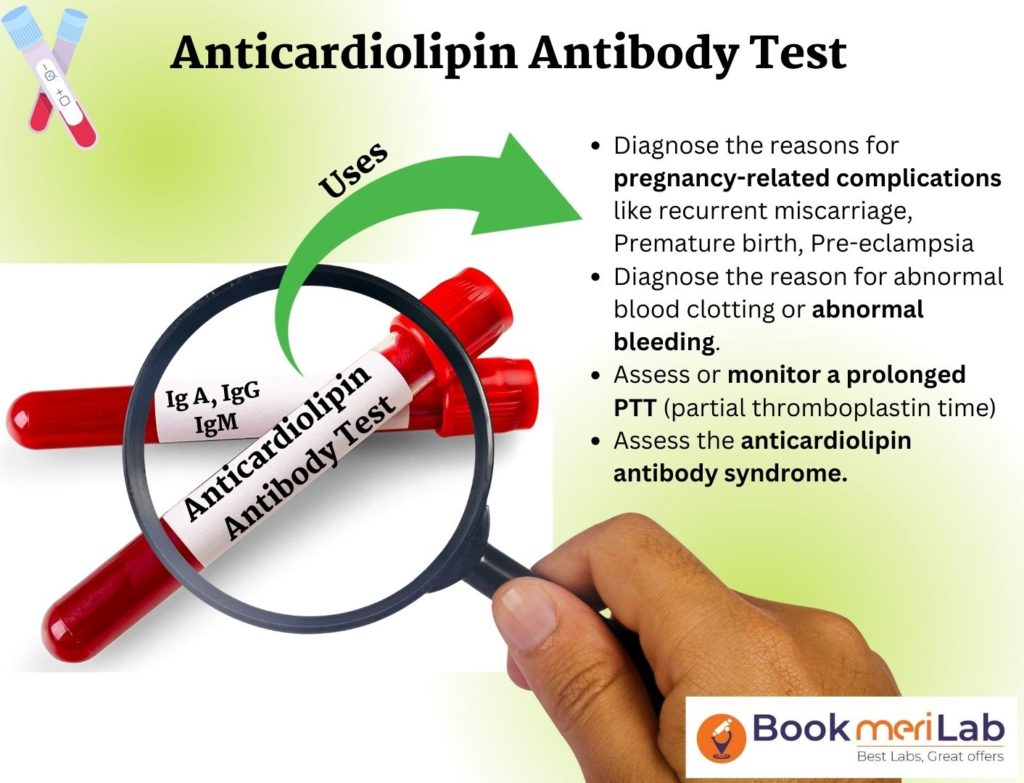
| Also known as | Cardiolipin antibodies (IgG, IgM, IgA), anticardiolipin, ACL antibody, ACA Test, ACLA Test |
| Purpose | Diagnosis and monitoring of anticardiolipin Antibody syndrome |
| Preparation | No special preparation is needed. |
| Cost | Rs 1500 to Rs 2500 |
| Reporting time | <24 hours |
The ACLA IgA, IgG and IgM Test Prices usually range from Rs 500 to Rs 1000 separately, and the cost for the combined test is between Rs 1500 to Rs 2500. The APLA IgG and IgM test costs will be nearly half of the combined prices. The actual price depends on the diagnostic centre and the city. Bookmerilab partners with more than 657 diagnostic centers across India. We provide a 10-50% discount on medical diagnostic tests.
The table below lists the prices in different centres. You can click on the ‘price’ in the respective column to get the list of diagnostic centres in your city with their price and discount.
| Name of Lab | ACLA IgA Test Price | ACLA IgM Test Price | ACLA IgG Test Price | ACLA Panel Price |
|---|---|---|---|---|
| Redcliffe Labs | Rs 900 | Rs 800 | Rs 800 | Rs 2500 |
| Metropolis Healthcare | Rs 900 | Rs 800 | Rs 800 | Rs 2500 |
| SRL Diagnostics | Rs 900 | Rs 700 | Rs 700 | Rs 2300 |
| Dr Lal Path labs | Rs 820 | Rs 820 | Rs 820 | Rs 2460 |
| Vijaya Diagnostics | Rs 1000 | Rs 1000 | Rs 1000 | Rs 3000 |
The table below lists the prices in different cities. You can click on the ‘price’ in the respective column to get the list of diagnostic centers in your city with their price and discount.
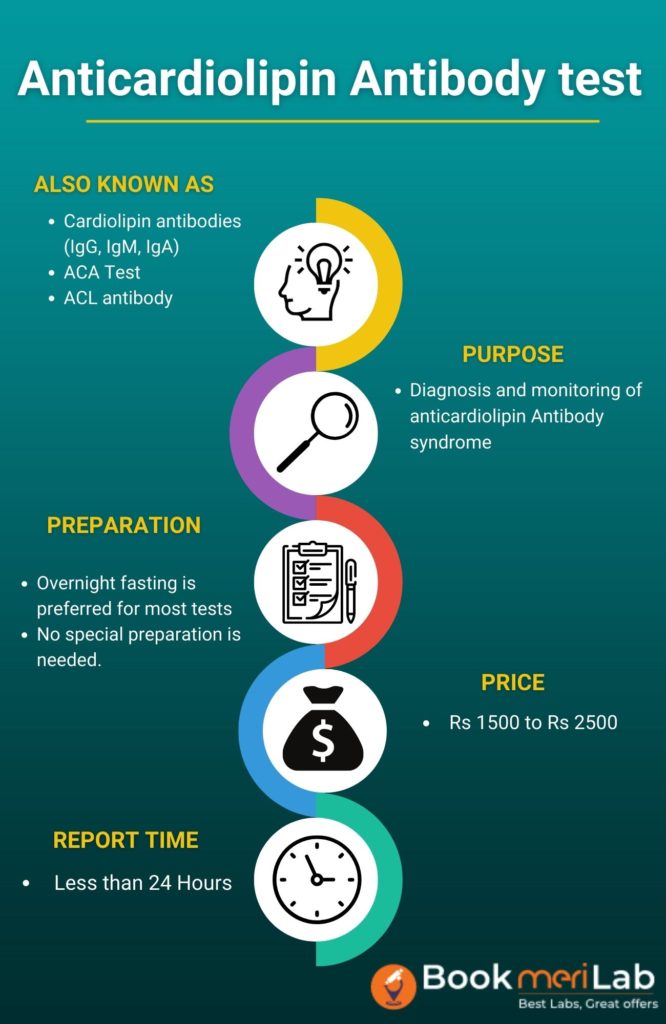
ACLA IgG, IgM, and IgA tests may be ordered by your doctor to-
Do inform your doctor if you are taking any medicine, both prescription and non-prescription, ayurvedic, etc. Your doctor may advise you to stop the ones that can affect the test results, like antihypertensives ( drugs used for high BP). Do NOT stop any medication on your own.
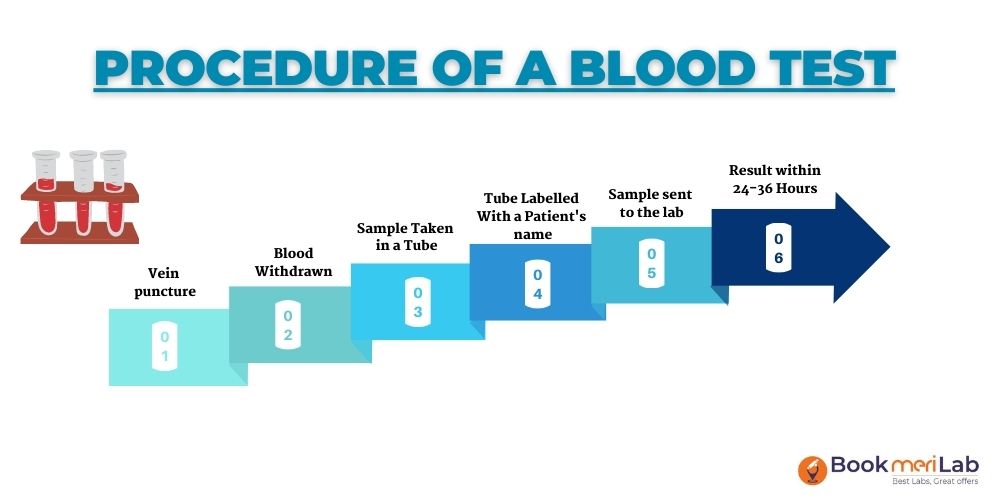
It is a fairly simple diagnostic blood test. A blood sample is taken from the vein in your arm or hand by the following steps-
The entire procedure takes only a few minutes.
It is a very simple and safe test. The risks involved are the same as that in any other blood test. These include-
Minor pain and bruising that might occur will resolve on their own in a very short time.
| Parameter | Range | Unit |
|---|---|---|
| ACLA IgG | <15.00 | GPL |
| ACLA IgM | <12.50 | MPL |
| ACLA IgA | <12.00 | APL |
| ACLA IgG (Unit GPL) | ACLA IgM (Unit MPL) | ACLA IgA (Unit in APL) | Remarks |
|---|---|---|---|
| <15.00 | <12.50 | <12.0 | Negative |
| 15.00-20.00 | 12.5-20.0 | 12.0-20.0 | Equivocal |
| 20-80 | 20-80 | 20-80 | Low Positive |
| >80 | >80 | >80 | High Positive |
It means that you do not have these antibodies.
This may mean that the antibodies are present due to a recent health problem like a viral infection or medicine you may have taken.

Although cardiolipin antibodies are commonly related to Systemic Lupus Erythematosus (SLE), a positive test for them doesn’t mean you have it. Other tests will be needed to confirm the diagnosis.
A diagnosis of Antiphospholipid Syndrome OR anticardiolipin syndrome can only be made after 2 abnormal blood test results, with at least a 12-week gap between them. This is because harmless anticardiolipin antibodies can sometimes develop temporarily in the body due to an infection or side effects of medicines like Penicillin, phenytoin, etc.
Detecting a specific type and class of anti-phospholipid antibodies helps determine the cause of the condition and manage it appropriately. Anticardiolipin antibodies test is one such test, the other being the lupus anticoagulant and antiphospholipid (APLA) test. These test results must be interpreted after correlating with the clinical signs and symptoms. It is, therefore, essential for you to discuss them with your healthcare provider for a better understanding and course of action.
Exercise, meditate, breathe, and sleep well! We wish you a happy, healthy, and relaxed life!
ACS is an autoimmune condition. This means the immune system, which usually protects the body from infection and illness, attacks healthy tissue by mistake. In ACS, the immune system produces abnormal antibodies called anticardiolipin antibodies. These target proteins are attached to fat molecules (phospholipids), which makes the blood more likely to clot. It’s not known what causes the immune system to produce abnormal antibodies. As with other autoimmune conditions, genetic, hormonal, and environmental factors are thought to play a part in it.
Anticardiolipin syndrome is mostly treated with the help of anticoagulants like warfarin, blood thinners like low-dose aspirin, and steroids.
Disclaimer- This is solely for information and not a substitute for medical advice. Please do not take any medicine without your doctor’s consultation.
Anticardiolipin antibody tests are primarily used along with lupus antibodies to help diagnose:
-Antiphospholipid syndrome (APS)
-The cause of an unexplained blood clot (thrombotic episode)
-The cause of recurrent miscarriages in women
https://www.urmc.rochester.edu/encyclopedia/content.aspx?contenttypeid=167&contentid=cardiolipin_antibody
ACLA (IgG and IgM)
Dr Garima Saroj is a dentist from Manipal college of dental sciences. She has previously worked at ESIC dental college and hospital Delhi and Dentecare multispecialty dental clinic Gurugram. She has a passion for writing for patient education and awareness.
A Discount Providing Platform on all Diagnostic Services at your nearest Labs. 100's of Certified Labs, Assured Quality & Great Discounts.