
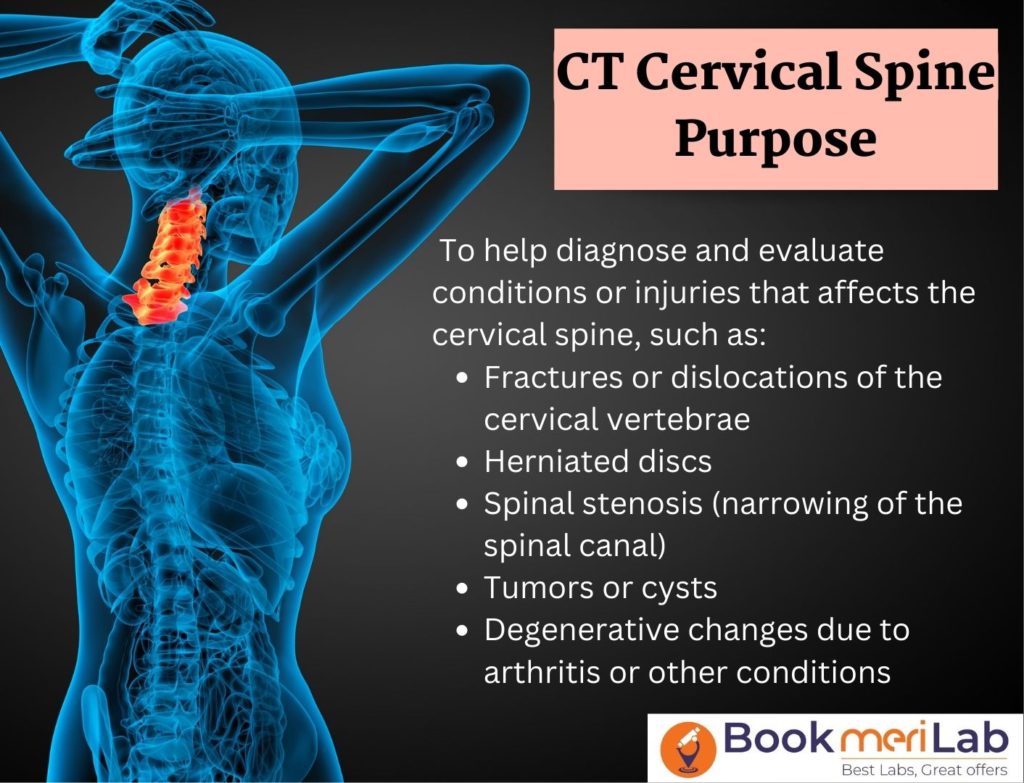
A CT scan of the cervical spine is a medical imaging procedure that uses x-rays and a computer to create detailed images of the cervical spine. It is the upper portion of the spine that runs through the neck. CT stands for computed tomography, and it is a non-invasive and painless procedure. It uses rotating X-ray beams to produce cross-sectional images of the cervical spine in a short time. It helps diagnose problems related to the upper spine like neck injuries, spinal fractures, herniated discs, tumors, etc. The price of CT Cervical spine varies from Rs 2500 to Rs 5500.
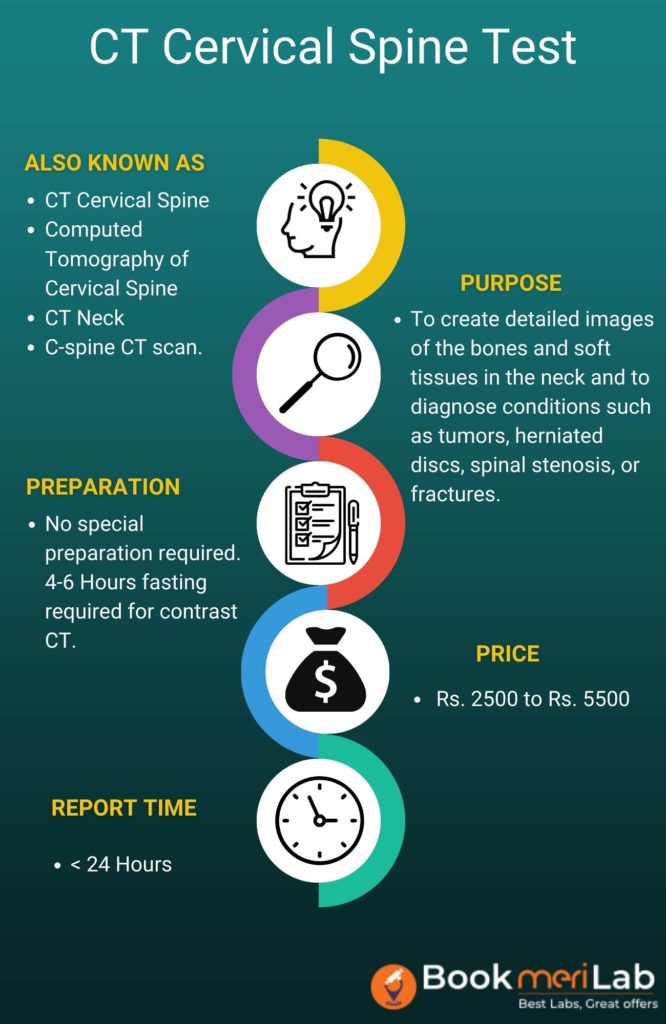
| Also Known As | CT Cervical Spine, Computed Tomography of Cervical Spine, C-spine CT scan, NCCT Cervical spine |
| Purpose | To create detailed images of the bones and soft tissues in the neck and to diagnose conditions such as tumours, herniated discs, spinal stenosis, or fractures. |
| Preparation | No special preparation is required. |
| Fasting | 4-6 Hours of fasting are required for CECT Cervical Spine |
| Machine Used | CT Scanner (Preferably minimum 8 slices) |
| Reporting Time | 8 to 24 Hrs. |
| Cost | Rs. 2500 to Rs. 5500 |
A range for CT scan prices is given above. However, the actual price would depend on the levels of the spine to be scanned, CT scan machine quality (Number of slices), diagnostic centre and city.
Given below are the lists of costs of the CT Cervical Spine in various diagnostic labs or different cities in India. You can get discounted prices for CT Cervical Spine.
| Diagnostic Centres | Price |
|---|---|
| Janta X-Ray Clinic | Rs. 3500 |
| Ganesh Diagnostic | Rs. 4050 |
| Mahajan Imaging | Rs. 5400 |
| Aarthi Scans | Rs. 2925 – Rs. 3150 |
| Sarvodya Imaging Centre | Rs. 1725 |
| Health Quest Imaging and Diagnostics | Rs. 3150 |
| Healthmap Gurugram | Rs. 2282 |
| Indigo Diagnostic Centre | Rs. 4000 |
| Pulse Imaging | Rs. 3150 |
| Magnum Diagnostic Centre | Rs. 3150 |
| NM Medical | Rs. 5525 |
| Aloka Medicare Pvt Ltd | Rs. 3210 |
The cost of CT Cervical spine depends upon the one recommended by your healthcare professional. The cost varies depending on the lab and the city.
| Cities | Price |
|---|---|
| CT Cervical Spine Price in Delhi | ₹ 2080 – ₹ 5400 |
| CT Cervical Spine Price in Gurugram | ₹ 2282 – ₹ 4000 |
| CT Cervical Spine Price in Noida | ₹ 3200 – ₹ 4000 |
| CT Cervical Spine Price in Mumbai | ₹ 1811 – ₹ 5525 |
| CT Cervical Spine Price in Bangalore | ₹ 2080 – ₹ 5400 |
| CT Cervical Spine Price in Kolkata | ₹ 2925 – ₹ 3610 |
| CT Cervical Spine Price in Chennai | ₹ 2925 – ₹ 3150 |
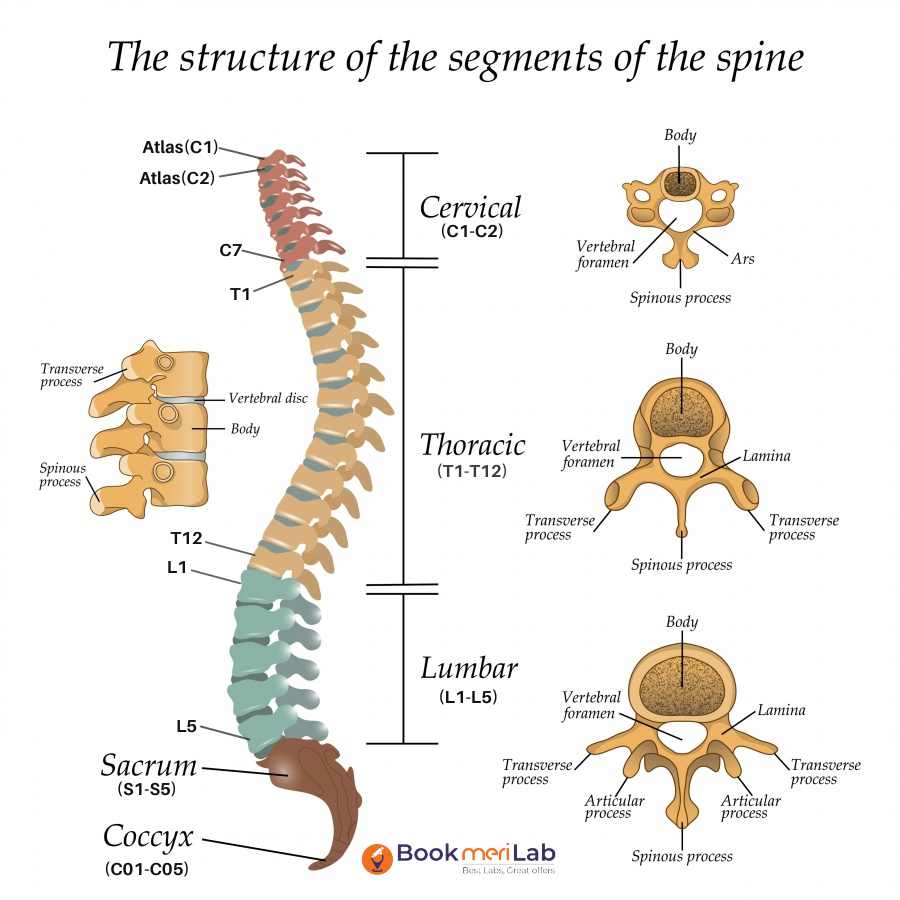
The cervical spine has several important structures, such as the spinal cord, the cervical nerves, and the vertebral arteries. The spinal cord is the main structure that carries nerve impulses to and from the brain, and the cervical nerves are the nerves that branch off from the spinal cord and innervate the neck and upper limbs.
The cervical spine vertebrae are labelled C1 to C7, starting from the top of the spine. These vertebrae are situated on top of one another, separated by intervertebral discs, which act as shock absorbers and allow for movement.
The cervical spine connects the skull to the thoracic spine and supports the weight of the head.
Some of the specific steps involved in preparing for a CT scan of the cervical spine may include the following:
During a CT scan of the cervical spine, the patient can expect to lie on a table and be moved into the CT machine. Once the patient is lying on the table, the CT technologist will place a strap or cushion around the patient’s head to keep it still during the CT scan. The technologist may also place a small pillow or cushion under the patient’s shoulders to help support the neck and upper spine. Next, the CT technologist will move the table into the CT machine. The CT scan typically takes only a few minutes to complete, and the patient will not feel any discomfort or pain during the CT scan.
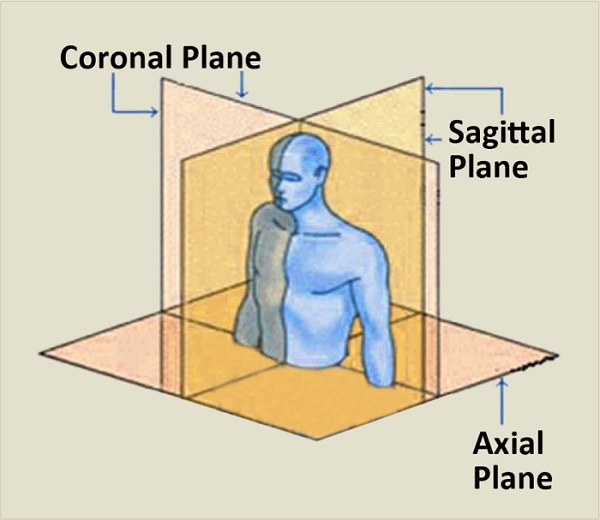
Some of the different views that can be obtained from a CT scan of the cervical spine include the following:
The interpretation of a CT scan of the cervical spine will depend on the reason for the scan and the specific findings on the images. In general, a radiologist will look for abnormalities in the neck and upper spine bones and any signs of conditions such as spinal stenosis (narrowing of the spinal canal), herniated discs, or osteoarthritis. The radiologist will also look for any signs of trauma, such as fractures or other injuries, and will report any findings to the referring doctor.
The results of a CT scan of the cervical spine will be provided to the patient’s doctor, who will discuss the findings with the patient and determine any necessary follow-up care. It’s important to follow your doctor’s recommendations and to ask any questions you may have about the results of your CT scan.
A CT scan of the cervical spine helps doctors see the neck bones, discs, and nearby tissues clearly. Knowing the difference between normal and abnormal results helps patients understand their condition and next steps.
|
CT Cervical Spine Findings |
Normal Results |
Abnormal Results |
|
Vertebrae Alignment |
Properly aligned, smooth curve |
Misaligned, slipped, or rotated vertebrae |
|
Bone Health |
No fractures or damage |
Fractures, bone spurs, or degeneration |
|
Disc Spaces |
Normal spacing and height |
Narrowed, herniated, or worn discs |
|
Spinal Canal |
Open and clear |
Narrowed or compressed canal (stenosis) |
|
Nerve Openings |
Clear and wide |
Narrowed or blocked, pressing on nerves |
|
Soft Tissue (if visible) |
Healthy surrounding tissue |
Swelling, inflammation, or growths |
|
Overall Assessment |
Healthy cervical spine |
Signs of injury or disease |
If any abnormalities are detected, your doctor can suggest treatment quickly. Early diagnosis helps prevent further problems and supports faster recovery.
Here is the sample report for CT Spine 3 Levels:
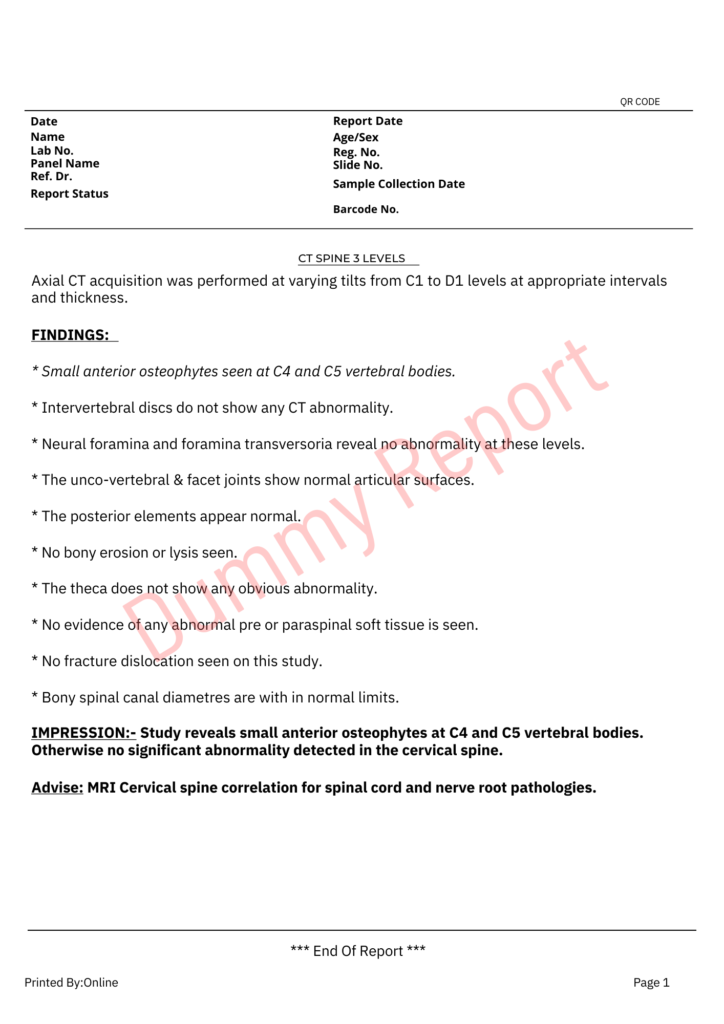
CT scans of the cervical spine have several advantages, including the ability to produce high-resolution images in a short time, the ability to diagnose a variety of medical conditions, and the ability to guide medical procedures.
Here are some key points to consider when comparing CT scans and MRIs of the cervical spine:
Overall, both CT scans and MRIs can be useful for imaging the cervical spine. It’s important to talk to your doctor about each test’s benefits and limitations and discuss which test is best for your needs.
The two terms CT Neck and CT Cervical spine are used interchangeably at times. CT neck is a type of CT scan that is specifically designed to image the neck and its structures, such as the thyroid gland, the lymph nodes, and the blood vessels. It is often used to diagnose medical conditions that affect the neck, such as tumors, infections, and inflammatory conditions.
CT cervical spine, on the other hand, is a type of CT scan that is used to image the cervical spine and its structures, such as the vertebrae, the intervertebral discs, and the spinal cord. It is often used to diagnose medical conditions that affect the cervical spine, such as spinal fractures, herniated discs, and tumors.
In conclusion, a CT scan of the cervical spine can be a valuable tool for identifying and diagnosing conditions that affect the neck. It can provide detailed images of the bones, soft tissues, and nerves in the cervical spine, which can help doctors to identify issues such as fractures, herniated discs, and degenerative changes. Additionally, a CT scan can also be used to guide certain medical procedures, such as spinal injections or surgeries. It is a non-invasive and relatively fast procedure. However, it does expose the patient to ionizing radiation, therefore it should be used judiciously and only when other diagnostic methods cannot provide the necessary information. As always, it’s important to consult with a qualified healthcare professional to determine the best course of treatment for any condition affecting the cervical spine.
A CT cervical spine is a diagnostic imaging test that uses x-rays and computer technology to create detailed images of the bones and soft tissues in the cervical (neck) region of the spine
A CT cervical spine may be performed to diagnose or evaluate conditions such as spinal tumors, herniated discs, degenerative disc disease, spinal stenosis, or fractures of the cervical spine. It may also be used to guide spinal procedures such as spinal injections or surgery.
Preparation for a CT cervical spine typically includes removing any metal objects or clothing that may interfere with the scan and informing the healthcare provider of any allergies or medications you are currently taking. You may also be asked to drink a contrast material before the scan to enhance the images.
During the CT cervical spine, you will lie on a table and the table will move through the center of the CT scanner. You will need to lie still and hold your breath for a few seconds at a time while the images are being taken. The entire scan typically takes about 15 minutes
CT scans use radiation, which can increase the risk of cancer. However, the amount of radiation used in CT scans is relatively low and the risk is considered minimal. Some people may experience mild side effects from the contrast material, such as a warm sensation or nausea. In rare cases, an allergic reaction may occur
After a CT scan of the cervical spine, the patient can usually return to normal activities immediately. However, the radiologist may recommend follow-up or additional testing if any abnormalities are found on the scan.
A CT scan of the cervical spine typically takes 15-20 minutes.
CT scans are considered safe when performed by trained professionals and when the benefits outweigh the potential risks. However, they do expose the patient to a small amount of ionizing radiation.
For the cervical spine, an MRI is the best choice as it allows proper evaluation of the soft tissues, the nerves, and the spinal cord. Also, for the detailed imaging of the bones of the cervical spine, a CT scan is preferred.
Neck pain and stiffness are typical, along with numbness and tingling in the arms or hands, weakness, headaches, or reduced range of motion. There may also be pain radiating to the shoulders and upper back.
The time required for a cervical spine CT scan is typically quite short. It usually takes 10 to 20 minutes, which also includes the preparation time. The actual CAT scanning is just for a few minutes.
A CT scan of the cervical spine shows images of the vertebrae, bone alignment, fractures, degenerative changes, disc problems, and any other structural anomalies.

Dr Garima Saroj is a dentist from Manipal college of dental sciences. She has previously worked at ESIC dental college and hospital Delhi and Dentecare multispecialty dental clinic Gurugram. She has a passion for writing for patient education and awareness.
A Discount Providing Platform on all Diagnostic Services at your nearest Labs. 100's of Certified Labs, Assured Quality & Great Discounts.
