
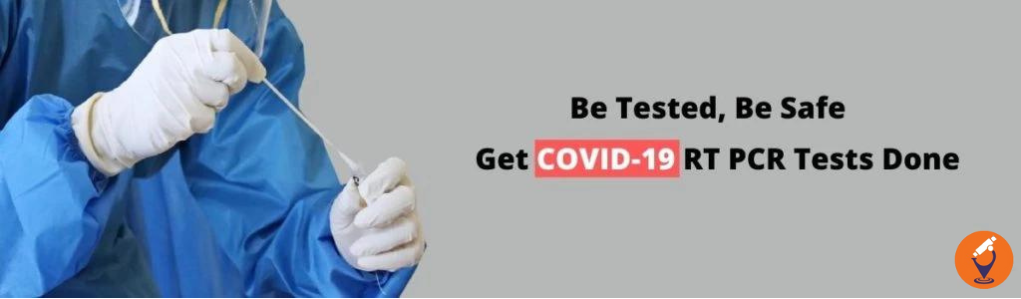
The Coronavirus (COVID-19) test detects the presence of SARS-CoV-2, the viral component that causes COVID-19.
Reverse Transcription Polymerase Chain Reaction (RT-PCR) is considered the most effective test for identifying the virus that causes COVID-19. Individuals’ nasal and throat swabs are obtained under the supervision of a healthcare professional.
The RT-PCR test is performed with an FDA-approved three-gene kit that detects SARS-CoV-2 viral variants, including Omicron. However, the kit cannot differentiate between the COVID variants.
Here are the topmost laboratories in India at which you can get your RT-PCR Test done, with a home collection of samples available at various diagnostic centres:
There are four different types/ methods of COVID tests, RT-PCR, Rapid antigen, CBNATT and Rapid RT-PCR. Each state has its own prices for each of the different methods. Thus, it is quite difficult to list all the prices.
However, the RT PCR method is the most popular method thus we have listed the prices for lab visits and home collection below.
| COVID-19 Tests | Lab Visit Price | Home Collection Price |
|---|---|---|
| Delhi | Rs 500 | Rs 700 |
| Maharashtra/ Mumbai | Rs 500 | Rs 700 |
| Haryana/ Gurgaon | Rs 499 | Rs 499 |
| West Bengal/ Kolkata | Rs 500 | Rs 700 |
| Bihar/ Patna | Rs 700 | Rs 900 |
| Telangana/ Hyderabad | Rs 1000 | Rs 1200 |
| Karnataka/ Bangalore | Rs 1000 | Rs 1200 |
| Tamil Nadu/ Chennai | Rs 1000 | Rs 1200 |
COVID antigen tests will cost Rs 300 in most parts of the country, whereas prices for Rapid RT PCR test ranges from Rs 2900 to Rs 4500 at different International airports in India.
As Covid has a high rate of infection, it is better to avail home sample collection. A technician will visit your home to collect the swab sample either from the nose or throat. Then, it will be taken to the lab for processing. Usually, the report is available within 24 hours.
Most of the diagnostic centres provide home collection facilities. The prices are given in the table above. We also provide COVID test home collection through our ICMR approved partner labs. Some of our partner labs are Max Lab, Prima diagnostics, Dr Lal path labs, SRL Lab, Metropolis healthcare, Prognosis lab and Dr Remedies lab.
Note: COVID-19 does not cause symptoms in everyone. And not everyone who is ill exhibits all of the symptoms listed above. Even if you’ve been vaccinated, if you’re not feeling well during the COVID-19 pandemic, don’t hesitate to get in touch with your healthcare provider.
The test requires an Aadhar card or a passport for identification.
The results are positive if the sample identifies the SARS-COV-2 virus’s particular genes. This result could be due to asymptomatic infection, but if you do have symptoms, you have COVID-19. Most people have minor illnesses and may recover at home without medical assistance. If your symptoms worsen or you have any questions or concerns, contact your healthcare professional.
A negative test result indicates that you were not infected with SARS-CoV-2 when your samples were taken. However, it is possible to have COVID-19 without the virus being detected by the test. This could happen if you’ve recently become infected but haven’t yet shown symptoms or if you’ve had COVID-19 for more than a week before getting tested. A negative test does not rule out the possibility of being exposed to COVID-19 after your test, being sick, and spreading the SARS-Cov-2 virus to others.
Your test results should arrive within 24 hours of sample collection, but it may take a few days, depending on how long the sample takes to reach the laboratory.
The RT PCR test may detect tiny amounts of virus material since it is sensitive. This suggests that even after you’ve recovered from COVID-19 and are no longer contagious, the test can detect bits of the SARS-CoV-2 virus. Though you’ve had COVID-19 in the past, you may continue to test positive even if you can’t spread the SARS-CoV-2 virus to others.
Long-term infection in immunocompromised people might result in transmitting infectious viruses for months. In addition, healthy people can reinfect themselves. You should consult a healthcare physician if you test positive for SARS-CoV-2 but believe you have already recovered from COVID-19.
As the number of COVID cases in India decreases, various Indian states are loosening travel restrictions. While some states are no longer requiring RT-PCR tests, others are allowing travellers to enter if they can demonstrate confirmation of vaccination.
RT-PCR test is mandatory for domestic passengers travelling from other states and you should carry negative RT-PCR test reports for samples tested 48 hours before departure. However, those who are completely vaccinated, will not be required to carry an RT-PCR test certificate.
Travelers arriving from ‘at risk’ countries must submit a negative RT-PCR report and submit a self-declaration form on the Air Suvidha portal, as well as take an obligatory Covid-19 test upon arrival.
If positive, the patient will be taken to a medical facility and treated according to established protocol.
If they test negative, they must isolate themselves at home for seven days before returning for a re-test on the eighth day.
Countries in Europe including The United Kingdom, South Africa, Brazil, Botswana, China, Ghana, Mauritius, New Zealand, Zimbabwe, Tanzania, Hong Kong and Israel. Kindly note that it is a dynamic list and you should contact your airline to know about the current status.
Standard RT PCR test cost at India’s airport depends on state government policies. In Delhi, an RT PCR test cost Rs 500 and the results are available in 6-8 hours. Whereas a Rapid RT-PCR test cost Rs 2900 and results are available within 90 min.
90mins for Rapid PCR and 6-8hrs for RT-PCR. Passengers must wait for the results of the tests before departing the airport or boarding a connecting flight.
Omicron (B.1.1.529) is a SARS-CoV-2 variant that was first discovered in patients with COVID-19 in Botswana and South Africa.
The widely used RT PCR method can detect the omicron variant of the COVID virus. However, genome sequencing is being done to ascertain the variant.
As per the latest available data, Omicron has been less severe symptoms compared to the Delta variant.
Dr Bhumika Rana is a Bachelor of Ayurvedic Medicine & Surgery (B.A.M.S.). Earlier She was an Operation Specialist at AIIMS Delhi & a Medical officer with the National health mission.
A Discount Providing Platform on all Diagnostic Services at your nearest Labs. 100's of Certified Labs, Assured Quality & Great Discounts.
