
The human immunodeficiency virus (HIV) test detects if the patient becomes infected with HIV. HIV is an infectious disease. Thus, its early detection is imperative. There are different types of HIV tests for other purposes. We will try to provide a simple explanation. HIV test is free in a government facility, whereas its prices range from Rs 500 to Rs 800 in a private facility.
HIV virus enters and weakens the immune system. This viral infection leads to AIDS (acquired immunodeficiency syndrome). It is prevalent in the younger generation. Nearly One million people still die every year from the virus because they don’t know they have HIV and are not on treatment or start treatment late.
AIDS is the ultimate stage of all the manifestations caused by HIV. HIV AIDS is one of the most dangerous sexually transmitted diseases (STDs). HIV testing is essential to living a doubtless and healthy lifestyle.
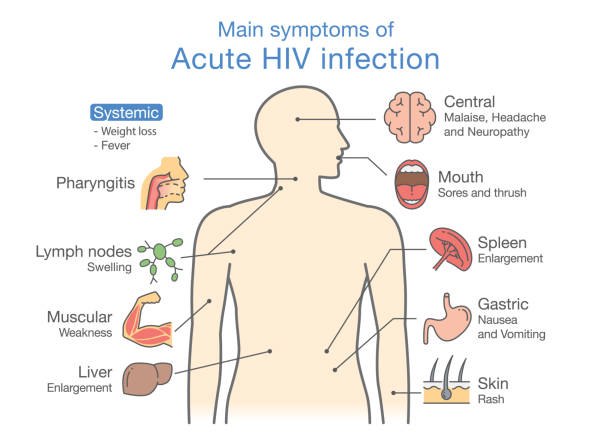
| Also known as | HIV tridot, HIV comprehensive panel, HIV saliva test, oral HIV test, HIV PCR test, HIV 1 & 2, HIV Duo, HIV p24 test. |
| Purpose | Diagnosis of HIV infection. |
| Preparation | No special preparation is required. |
| Fasting | Usually not required except HIV-1 RNA Real Quantitative PCR. |
| Reporting time | 24 hours to 30 days |
| Cost | Rs 500 to Rs 800 |
HIV Test price depends on the type of the test, diagnostic centre and city. The tables below list the HIV 1 and 2 antibody test prices for different cities and diagnostic centres in India.
| Diagnostic Centre | Test Price |
|---|---|
| Dr Lal Path lab | Rs 480 |
| Metropolis Healthcare | Rs 600 |
| SRL Diagnostic | Rs 1000 |
You can click on the following link to get the diagnostic centre list and HIV test costs in your city.
| City Name | Price Range |
|---|---|
| HIV tests in Delhi | Rs 208 to 480 |
| HIV tests in Mumbai | Rs 315 to 480 |
| HIV tests in Bangalore | Rs 315 to 480 |
| HIV tests in Hyderabad | Rs 360 to 497 |
| HIV tests in Gurgaon | Rs 250 to 560 |
| HIV tests in Chennai | Rs 315 to 480 |
| HIV tests in Kolkata | Rs 500 |
There are many different types of HIV test that differ in their purpose and depends on the stage of infection. Thus, the common price range for these tests are
| Test Type | Price (Tentative Range) |
|---|---|
| HIV 1 and 2 Antibody | Rs 500 |
| HIV P24 Antigen | Rs 600 |
| HIV 1 Quantitative RNA PCR | Rs 3500 |
| HIV Western Blot | Rs 2500 |
| HIV 1 Qualitative PCR | Rs 2000 |
| HIV Viral load | Rs 2000 |
Bookmerilab partners with multiple diagnostic centres all over India to provide medical diagnostic at an affordable cost with assured quality. You can contact us at 08882-36-8882 for details and booking.
There are two main types of HIV strains. These are HIV-1 and HIV-2. Each strain has different subtypes.
Timing is important to get accurate HIV test results. If a person gets tested too early, the report will give a false positive or negative reading. The person should wait for a minimum of 2 to 4 weeks from the time of sexual intercourse or any other risk exposure before taking your test. If found positive, then the patients shall retest at the end of 1 month, 3 months and 6 months. The risky exposure means the intravenous injection of drugs. If you are sexually active, regular testing is advised. HIV testing may take some time to become detectable, and the patient must wait to ensure an accurate result.
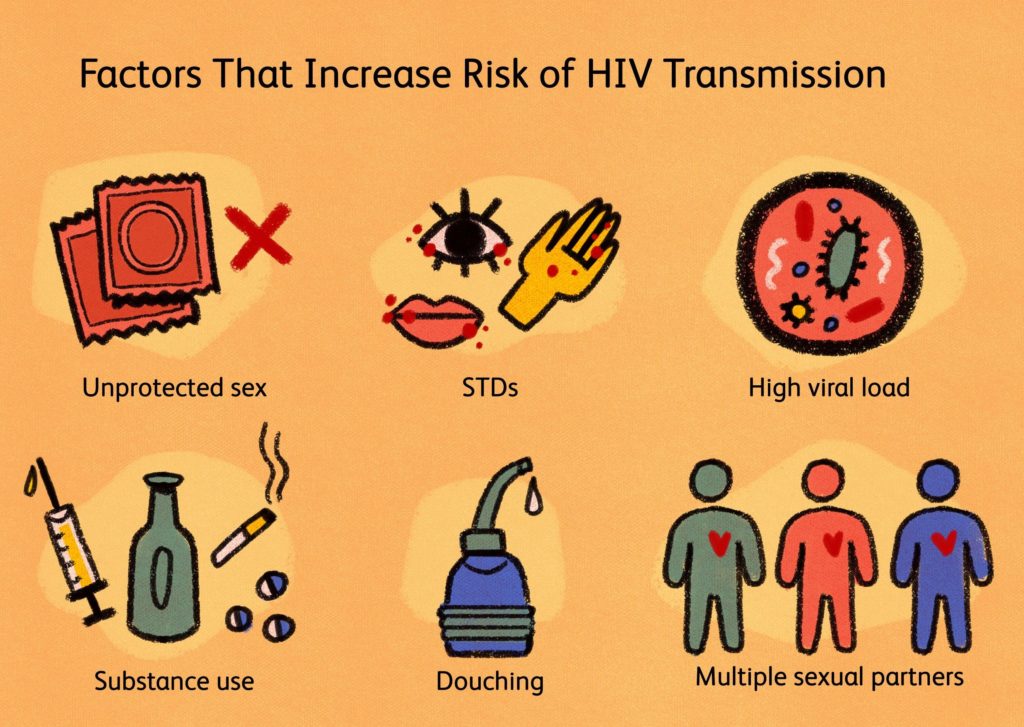
Getting tested is the only method to know your HIV status and taking symptoms for granted is not right. If a person had a potential exposure, he should get tested since there may only be a flu-like syndrome or no symptoms at all if there is HIV infection. Getting tested is the only method to know your HIV status and taking symptoms for granted is not right. Some patients misinterpret any common cold or flu-like symptoms with HIV without getting diagnosed, which causes unnecessary worries. In a majority of such cases, no HIV is detected.
Your doctor will advise you when to get tested for HIV. If detected early, HIV is easy to manage and therefore, the patient’s life expectancy can be improved to near normal. If you had no potential exposure, even then CDC recommends that persons between the age of 13 and 64 should get tested for HIV once in their lifetimes.
There are different types of tests available in the diagnostic labs. They vary as per the time taken to show results. The procedures of different HIV tests are as follows.
Rapid HIV blood test
Rapid HIV oral test
Antibody test
HIV ELISA saliva test
There is no preparation required for the HIV test. The only thing required is your willingness to get tested, as many people avoid HIV tests out of fear of disclosure.
The window period is the time after infection and the appearance of symptoms. Before the window period, the infection markers (such as p24 antigen and antibodies) are still absent or too low to detect. HIV tests cannot always detect HIV infection during the window period.
It is the appearance of antibodies in the patient’s serum after the instant of viral infection. The blood test gives results only after a person develops seroconversion. The blood test doesn’t provide results until a person develops seroconversion.
Diagnostic labs provide the following types of HIV tests
Doctors can use several tests to monitor HIV testing. The two standard measures for HIV transmission are viral load and CD4 counts.
A Doctor may also order tests to learn if an HIV strain is resistant to any medications used in treatment. Drug resistance can help them decide which anti-HIV drug regimen is most appropriate.
There are no side effects of HIV tests. However, some might experience swelling, soreness, and bruises at the site of injection.
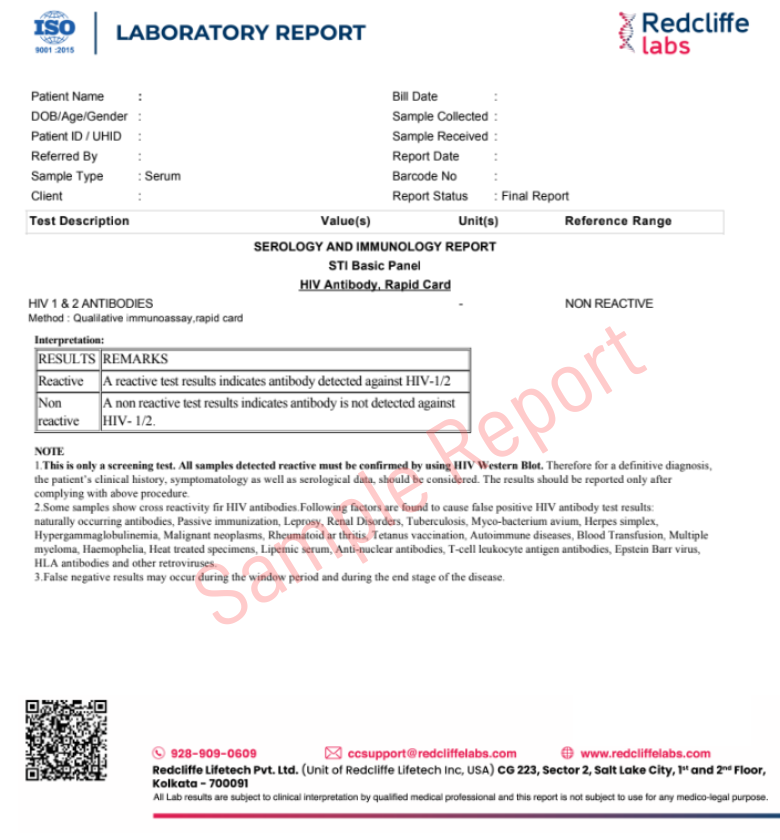
The HIV 1 and 2 Antibody test result range is as follows.
| Index Value | Remarks (Result) |
|---|---|
| Less than 1 | Negative or Normal. |
| Equal to or more than 1 | Positive. |
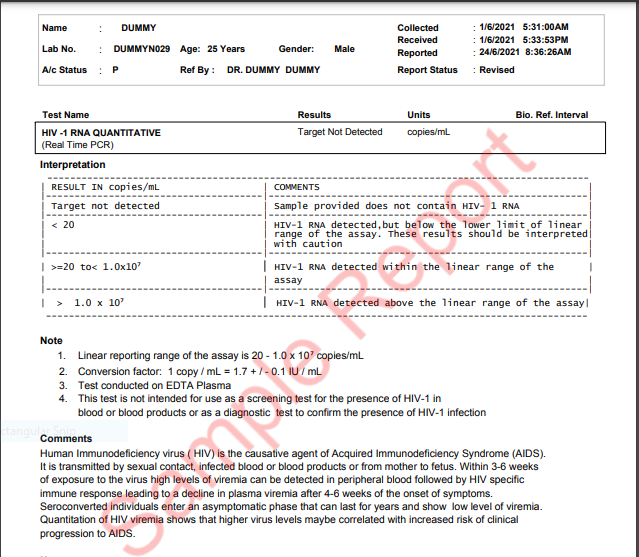
The HIV 1 RNA Quantitative Real-Time PCR test result range is as follows.
| Result in copies/mL | Result / Interpretation |
|---|---|
| Target not detected | HIV 1 RNA absent |
| Less than 20 | HIV 1 RNA is present in the lower limit of the linear range. |
| Greater than or equal to 20 to less than 1×10⁷ | HIV 1 RNA is present within the lower limit of the linear range. |
| Greater than 1×10⁷ | HIV 1 RNA is present above the lower limit of the linear range. |
The samples of the HIV Test reports are as follows.
HIV is more prevalent in people with no awareness of diseases. Proper awareness is important to prevent the spread of HIV in society.
Pregnant women need to get tested for HIV. If the mother has an HIV infection in early pregnancy, then HIV transmission from the mother to the baby can be prevented with timely HIV testing.
It is vital to get HIV tested so that the patient can start treatment as early as possible and live a tension-free and healthy life.
HIV damages the CD4 cells, thus harming the immune system.
HIV spreads through intermixing with body fluids of HIV infected individuals. These body fluids include blood, semen, mucus and breast milk. It spreads via sexual intercourse with infected persons, from mother to baby. Oral sex rarely infects HIV, as saliva is not conducive for HIV particles.
HIV tests are highly sensitive and might indicate a false positive. A follow-up test can ensure whether a person truly has HIV or not.
HIV 1 & 2 Antibody Test
Dr Bhumika Rana is a Bachelor of Ayurvedic Medicine & Surgery (B.A.M.S.). Earlier She was an Operation Specialist at AIIMS Delhi & a Medical officer with the National health mission.
A Discount Providing Platform on all Diagnostic Services at your nearest Labs. 100's of Certified Labs, Assured Quality & Great Discounts.
