
A CRP test (also known as a C-reactive protein test) measures the level of CRP in your blood. CRP is a protein produced by the liver in response to inflammation. This test helps identify inflammation of internal body organs. Doctors often recommend this test to diagnose infections and autoimmune conditions or monitor chronic diseases like arthritis and heart conditions. The CRP test Price typically ranges from Rs 250 to Rs 475, depending on the lab and city.
The CRP levels are also used to assess the risk of cardiovascular diseases and monitor treatment response. The normal CRP level is generally below 5 mg/dL, but values higher than this indicate inflammation.
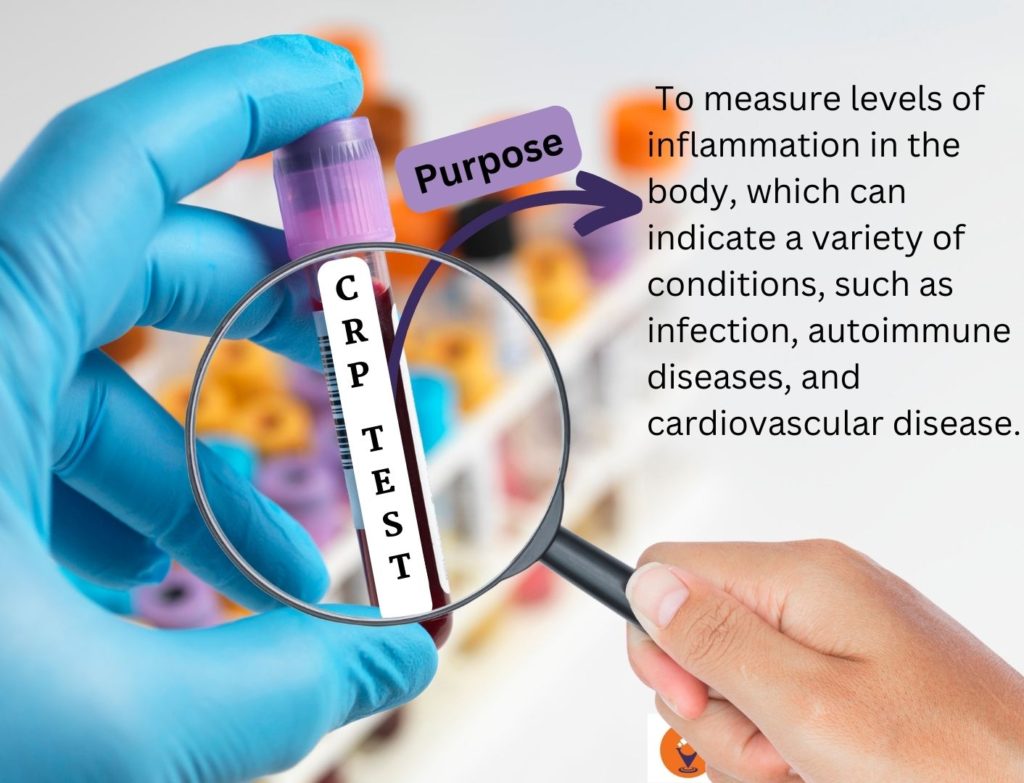
| Also Known As | C-Reactive Protein Test, Serum CRP Test, Plasma CRP Test. |
| Purpose | To measure levels of inflammation in the body, which can indicate a variety of conditions, such as infection, autoimmune diseases, and cancers. |
| Preparation | No Special preparation. |
| Test Procedure | A simple blood sample is taken from a vein, typically in your arm or hand. |
| Fasting | Overnight fasting is preferred. |
| Reporting Time | <24 Hour |
| Cost | Rs 250 to Rs 475 |
The CRP Test Price usually ranges from Rs 250 to Rs 475. The actual price depends on the diagnostic centre and the city. Bookmerilab partners with more than 506 diagnostic centres across India. We provide a 10-50% discount on medical diagnostic tests.
The table below lists the prices at some of the popular diagnostic centres.
| Name of Lab | Test Price |
|---|---|
| Redcliffe Labs | Rs 280 |
| Dr Lal’s Path Labs | Rs 350 – Rs 475 (depending on city) |
| Aarthi Scans | Rs 252 – Rs 315 (depending on city) |
| Pulse Imaging | Rs 350 |
| Vijaya Diagnostics | Rs 450 |
The test cost depends upon the one recommended by your healthcare professional. The cost varies depending on the lab and the city.
| City | Test Price |
|---|---|
| CRP Test Price in Delhi | Rs 280 to Rs 450 |
| CRP Test Price in Mumbai | Rs 280 to Rs 475 |
| CRP Test Price in Bangalore | Rs 280- Rs 900 |
| CRP Test Price in Hyderabad | Rs 152 to Rs 396 |
| CRP Test Price in Gurgaon | Rs 280 to Rs 400 |
| CRP Test Price in Chennai | Rs 280 to Rs 315 |
| CRP Test Price in Kolkata | Rs 252 to Rs 375 |
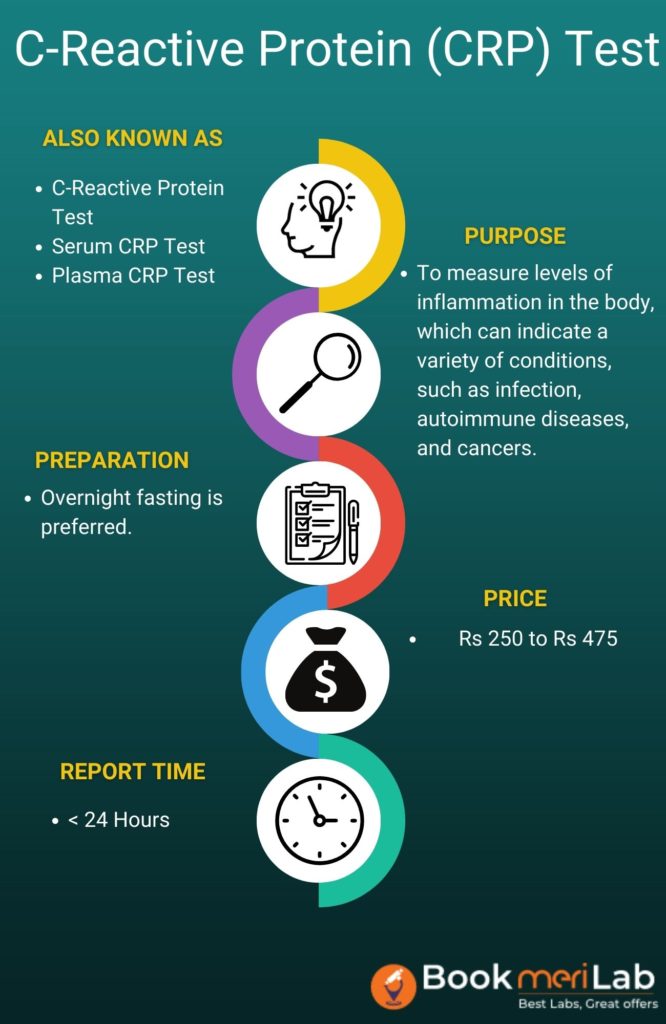
Your doctor may recommend the CRP test for the following reasons:
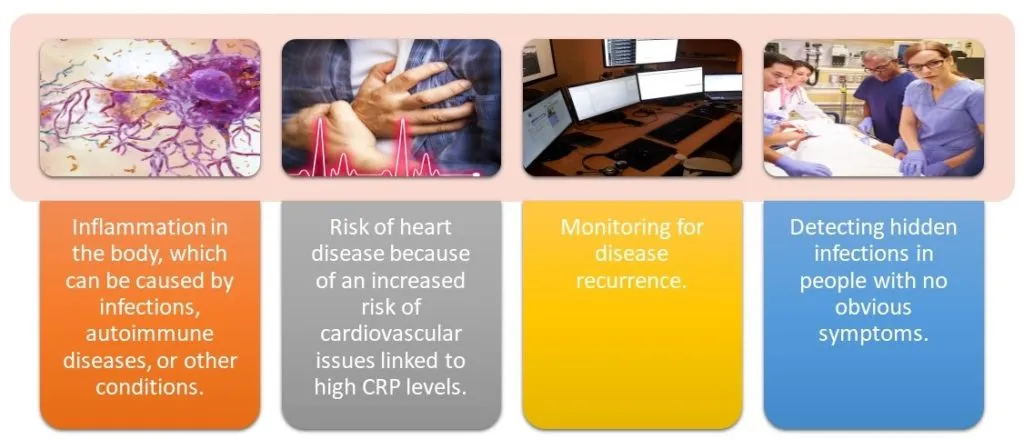
A few medical conditions are for which the CRP test is recommended.
Before this test, Overnight fasting is preferred. Do inform your doctor if you are taking any medicine, both prescription and non-prescription, ayurvedic, etc. Your doctor may advise you to stop the ones that can affect the test results, like supplements or medicines that you take, including ibuprofen, aspirin, and other non-steroidal anti-inflammatory drugs (NSAIDs). DO NOT stop any medication on your own.
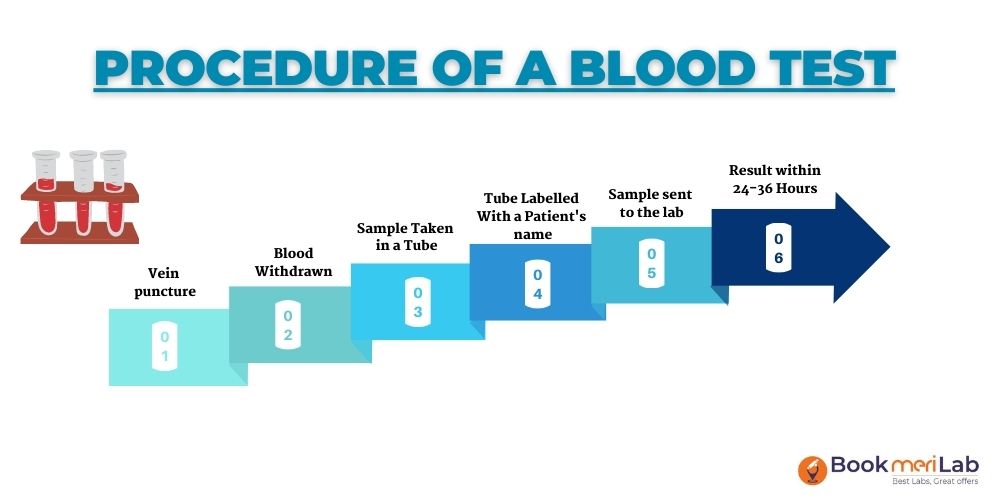
It is a fairly simple diagnostic blood test. A blood sample is taken from the vein in your arm or hand by the following steps-
The entire procedure takes only a few minutes.
It is a very simple and safe test. The risks involved are the same as that of any other blood test. These include-
Minor pain and bruising that might occur will resolve on their own in a very short time.
High CRP levels: The higher CRP levels indicate the presence of an infection or inflammation in our body.
Low CRP levels: The Low CRP levels in the blood either signify the absence of an inflammatory condition or that the treatment is running successfully and the result of the treatment is apparent.
Normal value ranges below 5mg/dL. The table below shows the CRP range and the associated interpretation-
| Result | Interpretation |
|---|---|
| 3 to 10 mg/L (0.3 to 1.0 mg/dL) | Normal to moderate level of inflammation (common in obese, diabetic & pregnant women, and also smoking habitual people) |
| 10 to 100 mg/L (1.0 to 10 mg/dL) | Autoimmune disease, heart attack, pancreatitis, bronchitis, pancreatitis, and cancer. |
| More than 100 mg/L (10 mg/dL) | Inflammation in the whole body due to acute viral infections, acute bacterial infections, systemic vasculitis(inflammation of arteries and veins), or trauma, |
| More than 500 mg/L (50 mg/dL) | Severe inflammation in the body due to bacteria-led infections. |
This test gives an idea about the risk of Cardiovascular disease. It is slightly different from the regular test explained in this blog. This test is highly sensitive and can measure lower (but slightly elevated) levels of C- Reactive Protein. Let us have a glance at the normal value range:
| Result | Conclusion |
|---|---|
| Lower than 1.0 mg/L | Low risk of heart disease. |
| From 1.0 mg/L and 3.0 mg/L | Moderate risk of heart disease. |
| More than 3.0 mg/L | High risk of heart disease. |
Both C- Reactive Protein and ESR (Erythrocyte Sedimentation rate) are markers of inflammation. ESR test measures the rate at which red blood cells settle in a test tube over a period of time. This rate is influenced by proteins in the blood that are produced during inflammation. The CRP Test is very sensitive and can detect even small changes in inflammation levels. The ESR test is less specific than the CRP test, but can still provide valuable information about inflammation levels.
In general, the CRP test is considered to be more reliable than the ESR test for detecting inflammation. However, both tests may be ordered together to provide a more complete picture of a patient’s inflammatory status.
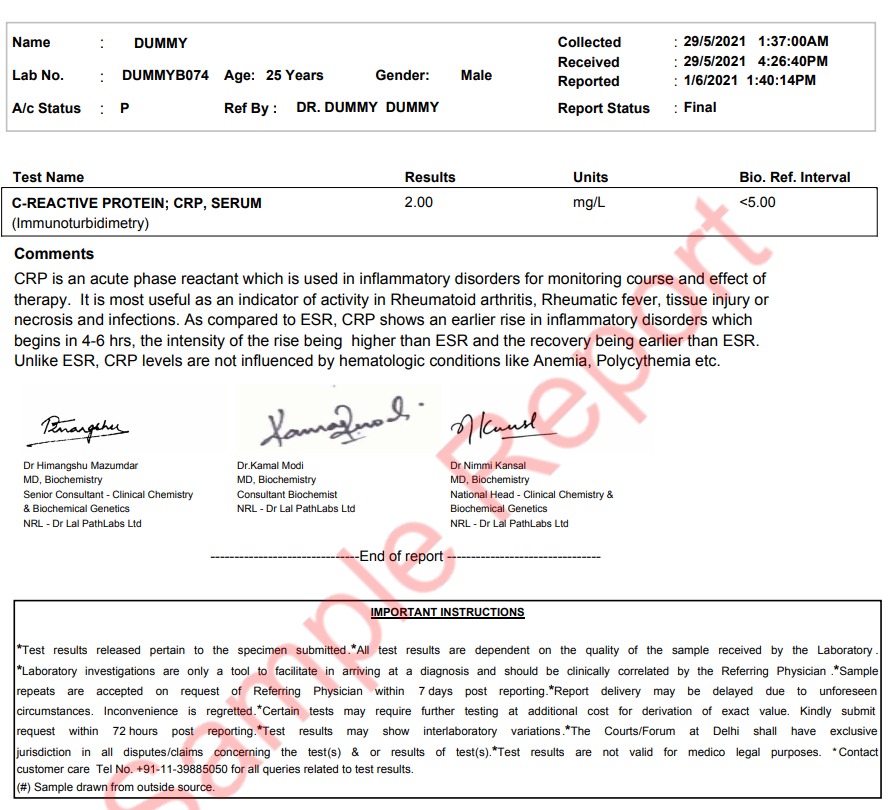
This is a highly nonspecific test. It may determine the presence of inflammation in the body but does not detect its cause or location. Rarely, the test may show a false-positive or false-negative result. Hence, further testing may be required to determine the underlying cause of inflammation. It is best to consult with your doctor or healthcare provider if you have any concerns regarding the test.
A C-Reactive Protein (CRP) test is a blood test that checks for inflammation in the body. It’s an easy test that is commonly done in hospitals and clinics; however, it is not a test that everyone would routinely perform. That said, some people are at higher risks and should consider having the test done as advised by their healthcare provider.
If you have any family history of heart problems, such as heart attack, stroke, or coronary artery disease, you may be at greater risk of developing these problems. A high-sensitivity CRP (hs-CRP) test can help assess your risk of cardiovascular events before symptoms appear. A signal that the CRP levels are elevated is that you could make timely lifestyle changes and or consider medications to reduce your risk.
CRP is a useful measurement of chronic inflammatory diseases, such as:
In these conditions, there are often spikes in the CRP level when the patient is having an exacerbation or flare. This is why your doctor may routinely measure your CRP. The short answer is for your health care provider to evaluate whether the prescribed treatment is providing adequate control of the inflammation.
Increased CRP levels in the post-operative period are typical due to tissue repair. If these levels are elevated, or continuing to rise, this may indicate the following:
A CRP test can also support differential diagnoses for people who have recurring infections, including UTIs, respiratory infections or skin infections, to define how severe the infection is and to identify if any further investigations are required.
The CRP test can help pinpoint inflammation in the body; however there are situations it isn’t necessary or judgement insensitive. Here are some examples of when to avoid getting the CRP test:
If you are healthy, do not have signs of an infection/inflammation, and do not have pathology, you do not need a CRP test.
If you are already diagnosed with a chronic inflammatory disease (e.g. rheumatoid arthritis, lupus) and it is stable, repeated testing for CRP would usually not provide value unless the symptoms deteriorate.
CRP levels can increase as it is a natural effect after a surgical/physical trauma; if you have testing too soon, the reading is not clinically relevant and may mislead.
CRP is not a standard test for annual check-ups unless you have a specific reason to suspect inflammation or the testing is routine as part of the investigation into the long Covid / ongoing Covid condition.
CRP levels will increase during pregnancy, so you might be better to get a test if worried – this could lead to unnecessary anxiety.
The same is true about a self-requested CRP test. Without medical supervision, elevated CRP is not definitive of a condition anyway and requires clinical correlation, which you won’t get with a completely self-requested test.
If your levels of CRP come back to be high, don’t stress out—CRP is a general marker of inflammation, but does not indicate a specific cause. Here’s what to do next:
Your healthcare provider will look at your medical history, signs and symptoms, and CRP results to narrow down the possible cause of the inflammation.
Your doctor may want to do additional tests to achieve a better look, such as:
Try to keep track of how things are changing in your body—pain, swelling, fatigue, fever, and discuss with your doctor.
Depending on the cause, your doctor may recommend medications, dietary changes, or other lifestyle changes to help reduce your levels of inflammation.
In some situations, your doctor may suggest repeating the CRP test in a few weeks to track whether there might be a trend, or to see if there is a difference due to any interventions your doctor suggested.
The CRP test can provide valuable information about a person’s health and helps diagnose and monitor a range of conditions, like infections, autoimmune diseases, heart disease, and some chronic conditions. However, CRP levels can be influenced by other factors, such as age, diet, exercise, and medications. Hence, it is important to consider these factors when interpreting results. In conclusion, the CRP test can be a useful tool in healthcare but should be used in conjunction with other diagnostic tests and clinical evaluations to get a complete picture of a person’s health.
A: Some Health experts recommend checking the serum CRP level routinely along with the cholesterol level; however, this practice is not relevant.
A; It is a condition of irregular and rapid heartbeat. This may lead to blood clots. It may cause CRP release in the blood.
A: A normal range for CRP test results is generally less than 5 mg/L.
A: The CRP test is done by taking a blood sample from a vein in your arm.
A: High CRP levels can indicate an infection, inflammation, or conditions such as rheumatoid arthritis, lupus, or cancer.
A: No, typically no special preparation is required for the CRP test.
A: There are usually no risks or side effects associated with this test.
No, the CRP test is painless, as the CRP test only requires taking a sample of blood, which some people feel a slight pinch and some mild discomfort when the needle goes in, but it is quick and safe.
Indeed, CRP levels can become normal after the reason for the inflammation, for example, infection, injury or flare of chronic inflammatory disease has been treated, or once it resolves on its own. Regular monitoring of CRP can show how well your treatment is working and if the inflammation is being resolved.
How often you get CRP tested varies depending on your health. Your doctor may order CRP testing:
One time to help diagnose a health condition.
Continuously to control chronic inflammation (like arthritis or heart disease).
After treatment to gauge if inflammation has reduced.
Yes. CRP levels can increase or decrease in just a few hours with the onset of inflammation or infection.
Yes. If an infection or inflammation is suspected, a CRP test may be done during pregnancy. It is safe for both the mother and baby and can be repeated.
Yes. CRP goes up due to the low-grade inflammatory stimulus caused by cigarette smoking.
Yes. Children can safely undergo the CRP test when an infection is suspected or when signs of an inflammatory condition appear.
Yes. Chronic heavy alcohol usage increases levels of CRP because of its inflammation-inducing properties, mostly in the hepatic system.
CRP is quicker and more precise in detecting inflammation, whereas ESR works slower and is affected by factors such as age or anemia. CRP is good for acute events.
No. Fasting is usually not required unless the CRP test is part of a larger blood panel. Confirm with your doctor.
Yes. Dehydration can affect CRP levels. Mild dehydration usually brings no major changes, but if dehydration gets severe, it might have a slight impact. So, stay hydrated.
Yes. CRP can detect early signs of arthritis. Doctors may suggest additional testing for an accurate diagnosis.
Yes. Turmeric may lower CRP levels. Consult your doctor before the test so the results aren’t affected.
Yes. Breathing polluted air regularly can cause inflammation in the body, which may lead to an increase in CRP levels over time.

Dr Garima Saroj is a dentist from Manipal college of dental sciences. She has previously worked at ESIC dental college and hospital Delhi and Dentecare multispecialty dental clinic Gurugram. She has a passion for writing for patient education and awareness.
A Discount Providing Platform on all Diagnostic Services at your nearest Labs. 100's of Certified Labs, Assured Quality & Great Discounts.
